Explore the best places
Results for access fast MAKEMUR.COM how to pay for better cell in prison Quebec City in Portugal


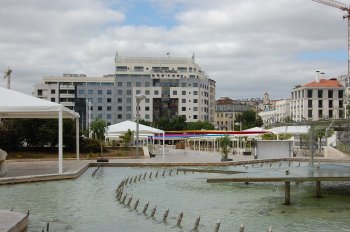
Mercado de Fusão
- art
Praça Martim Moniz
1100, Lisboa
In the cosmopolitan heart of the city, this space is composed of ten food kiosks in the world, several terraces with capacity for 300 people, deck chairs and poufs, piped music, market on weekends, DJs, concerts, workshops and debates focusing on multiculturalism.
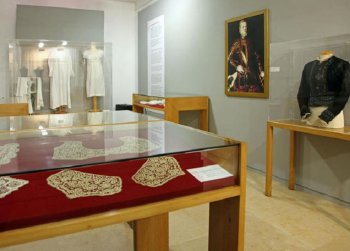
Museu das Rendas de Bilros - Museu de Vila do Conde
- heritage
Rua de São Bento, 70
4480-781, Vila do Conde
Located in a typical city manor of the 18th century, it aims to promote the study of this time honoured art for the new millenium. It includes lovely Bilros Embroideries. In the museum one may view the women who make the embroideries at work.
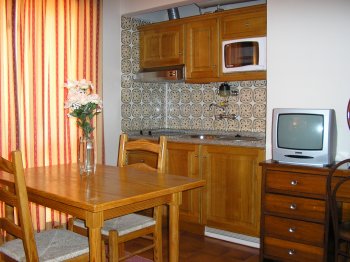
Apartamentos Vitória
- hotels
Rua Serpa Pinto, 60
8000-226, Faro
The project consists of a building of three floors with lift, located on a quiet street in the city centre. Divided into ten one bedroom apartments and 2 studios. All units feature kitchenette, air conditioning, cable TV and balcony.
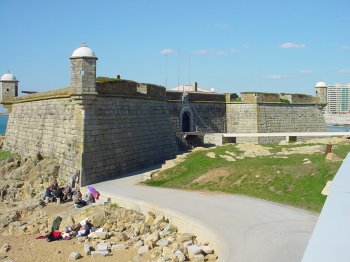
Forte de São Francisco Xavier / Castelo do Queijo
- heritage
Praça Gonçalves Zarco, 20
4100-274, Porto
Built in 1662, in a place called “do Queijo”, to protect the city from the Spanish Fleet. Surrounded by a moat, it presents watch-boxes at the corners. Inside it is the governor’s residence at the time and a chapel. Nowadays it is the stage for many temporary exhibitions.
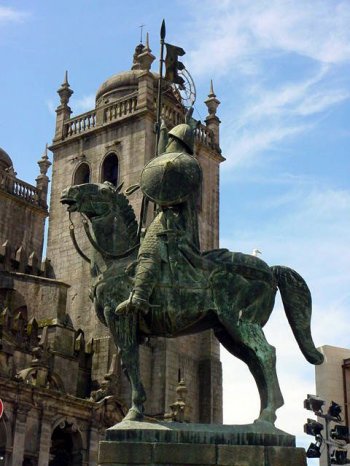
Estátua de Vímara Peres
- heritage
Terreiro da Sé
4000, Porto
Opened in 1968, this equestrian statue in bronze, made by the sculptor Barata Feyo. It represents the mythical nobleman Vímara Peres, the presumable commandant of the troops that occupied the city from 868 to 1071 and that, in some way, presaged Portugal’s autonomy.
Igreja da Misericórdia de Peniche
- heritage
Largo 5 de Outubro, 22
2520-228, Peniche
Temple of the mid-16th century, restored in 1796. This copy of mannerist architecture is situated in the city centre and features a facade of Pombaline trait. Deserves reference to 18th-century carvings and paintings on canvas, attributed to Josefa de Óbidos.
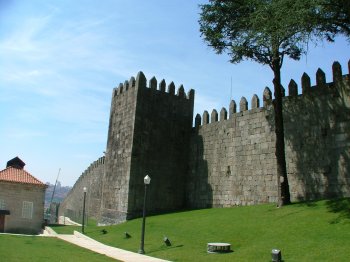
Muralha Fernandina
- heritage
Escadas do Caminho Novo, 17
4050-431, Porto
The Porto city had, along its history, at least two lines of walls, one Romanic and the other Gothic. From the Gothic wall, built between 1336 and 1376, known as Muralha Fernandina there are few visible remains.
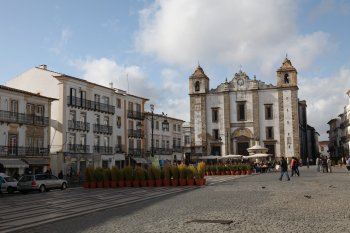
Praça do Giraldo
- heritage
Praça do Giraldo
7000-508, Évora
The center of the city of Évora. Highlighting the typical neoclassical and romantic façades, dominated the wrought-iron balconies. There is the fountain of Praça do Giraldo, work of architect Afonso Álvares, built in 1571, in white marble, crowned by a bronze Crown.
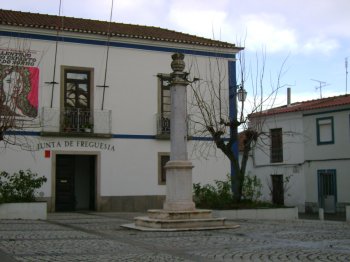
Pelourinho do Cabeção
- heritage
Praça do Município
7490-061, Cabeção
This sixteen hundreds pillory is placed in front of the City hall and it has three steps settled in a square base built in white marble. It has Neo – Manueline zoomorphic elements. It was demolished during the 19th century and rebuilt in 1960.
Pilares da Ponte Pênsil
- heritage
Margem Direita do Rio Douro
4050, Porto
The two bridge-piers, from 1843, are all that’s left of the bridge that would be replaced by the D. Luís Bridge. Between 1843 and 1887 this bridge secured the river crossing between the Porto and Vila Nova de Gaia Cities.
