Explore the best places
Results for go online quick MAKEMUR.com Buying a get out of jail now pay later plan in Portugal


Queda de Água de Cabeça de Águia
- beach
- country
Queda de Água de Cabeça de Águia
8550, Cabeça de Águia
Ten metres high waterfall. There is a thermal spa with a beautiful neo-arab design located near Caldas de Monchique. Around it there is a woodland area with plenty of trees of which pine trees, acacias, eucalyptuses, arbutus-trees, plane trees, cypresses and various fountains stand out.
Lagoa Azul
- food & drink
Rua Marquês de Sá da Bandeira, 380
4400-217, Vila Nova de Gaia
The Blue Lagoon Restaurant, in Vila Nova de Gaia, have snacks all day long, whether for eating at home whether for take out. The restaurant's specialties, cod lures petingas fries, breaded hake fillets, patties, among others, made in a simple and welcoming environment.
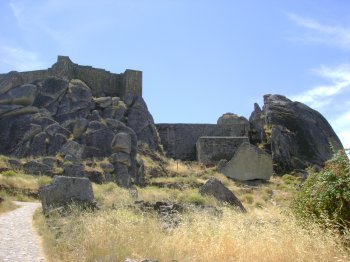
Castelo e Muralhas de Monsanto
- heritage
Rua do Castelo, 32
6060-091, Idanha-a-Nova
According to legend, the foundation of this castle began with a hillfort that allowed Viriato's companions to withstand a seven-year siege. Later, it also withstood Arab, Castilian, and French attacks. It is located amidst a rocky outcrop, at a strategic lookout point. Dom Afonso Henriques granted it a charter in 1174 and donated it to the Templars, who built the castle. Of the imposing medieval fortress, only the quadrangular Torre de Lucena and Torre do Pião remain.
Casa do Capitão-Mor
- heritage
Rua Capitão-Mor, 23
6110-206, Vila de Rei
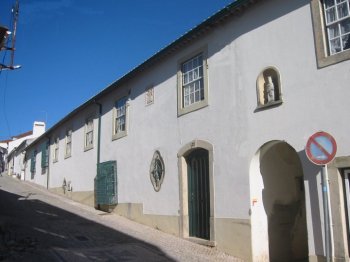
Civil construction from the 17th century, with ten balcony windows, interrupted by the coat of arms of the Mattos e Silva family and by a niche where the image of Queen Saint Isabel appears, alluding to the passage of Dom Dinis' wife through this town who spent the night in a building where this house was later built. During the French invasions, it was the headquarters of the Portuguese-English troops, and the Duke of Wellington and General Beresford stayed here.
Pastéis de Tentúgal
- leisure
Tentúgal
3140, Montemor-o-Velho
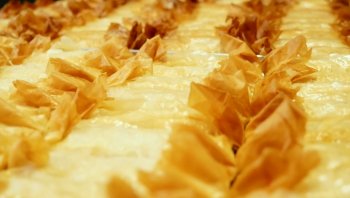
The original recipe for "Pastéis de Tentúgal", once known as puff sticks, belonged to the Convent of Nossa Senhora da Natividade (Carmelo de Tentúgal). Later, after the closure of the Convent, the recipe and secret of making this sweet were taught to Dona Maria da Conceição Faria. Since then, production has grown, maintaining the same characteristics of the original recipe. This delicious pastry is today one of the icons of the old town of Tentúgal.
Forte de Santiago do Outão / Farol do Outão / Hospital Ortopédico do Outão
- heritage
EN379
2900, Outão
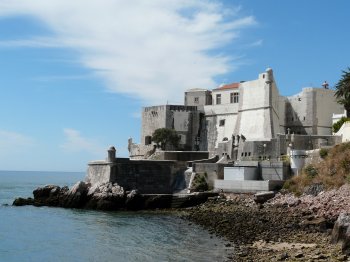
Fort located at the foot of Serra da Arrábida. Its tower is dated from 1390. In 1572 it suffered enlarging works and was completely remodelled after the Restoration War. The chapel, covered with glazed tiles from the XVIII century, is worthy of notice. In the XIX century it was a prison and later the holydays residence of King D.Carlos and Queen D. Amélia. In 1909; it became a hospital for orthopaedic diseases and maintains its function until today.
Igreja Matriz de Carapito / Igreja de Nossa Senhora da Purificação
- heritage
Rua da Igreja
3570-100, Carapito
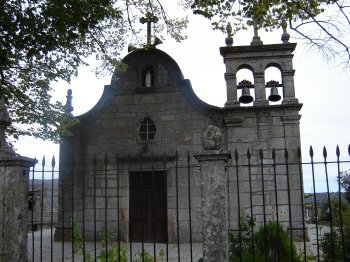
This church, built in medieval times, underwent successive renovations. The facade is in gable clipped, with cone-shaped window and shot false pediment with a niche. In the lateral façades are traces of openings, Windows, doors or graves. Inside, the main altarpiece is a copy of transition, with neoclassical decorative elements but with baroque structure. The internal coverings show neoclassical decorative painting. There are also images of s. Pedro de Verone and some paintings in the side altars.
Igreja de São João Baptista / Igreja Matriz do Cartaxo
- heritage
Largo de São João Baptista
2070-039, Cartaxo
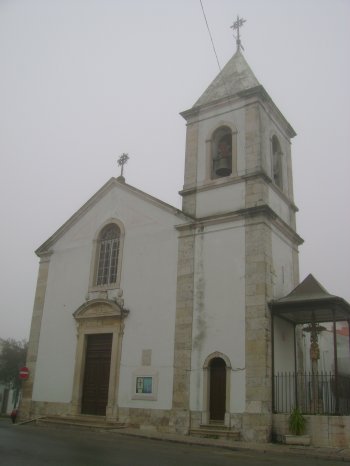
Its patron saint is Saint John the Baptist, and it was built in the 14th century, being rebuilt three centuries later. The tower was demolished by an earthquake in 1909, and inside, it has a single nave, while the wooden ceiling unfolds in three planes. The walls are covered with tiles depicting the life of the patron saint, while the main altar has a gilded altarpiece. It possesses valuable pieces such as a silver chandelier or an image of Our Lady of the Rosary.
Castelo de Montemor-o-Novo
- heritage
Montemor-o-Novo
7050, Montemor-o-Novo
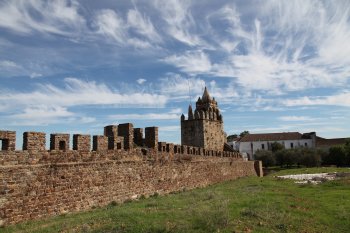
Of the wall, built during the reign of King Dinis, the main section remains, defended by eleven turrets. The fortress, currently in ruins, already existing during the reign of D. Sancho I, has a rectangular plan and is protected by two towers. The Santarém and Sol gates are in good condition; The Angel Gate has some weaknesses and the location of the Évora gate and tower is unknown.
Igreja Matriz de Santo Adrião
- heritage
EM513
5110, Santo Adrião
This church features Baroque architecture and a longitudinal plan consists of nave and chancel. The belfry has a Bell and access on the rear face. The interior features chorus-high and, on the side of the Gospel, baptistery. Side altarpieces of carved polychrome and gilded Baroque style. The main altarpiece demonstrates a transition with baroque structure and national joanino decorative elements. In the sacristy are a Rococo carved altarpiece.