Explore the best places


Fórnea
- country
Fórnea
2480, Alcaria
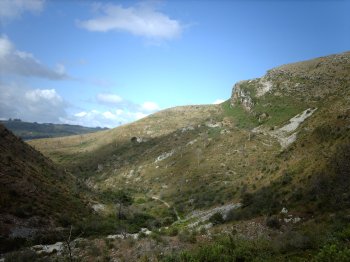
Many hiking trails lead to this location, where it is possible to observe a geological phenomenon that resulted in a natural amphitheater. Inside Fórnea is Cova da Velha, a cavity from which a spring flows down to the Ribeiro da Fórnea stream.
Grutas de Santo António
- country
Rua das Grutas
2480-034, Alvados
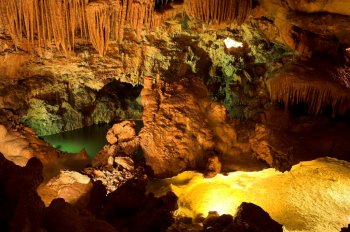
Discovered in 1955, they are part of a group of caves in the Serra de Minde mountain range. Their configuration is gallery/chamber type, with the unique feature of ventilation through a natural chimney. Replete with stalactites and stalagmites, the largest chamber is approximately 6000 m2 and can be visited.
Grutas de Alvados
- country
Rua das Grutas
2480-034, Alvados
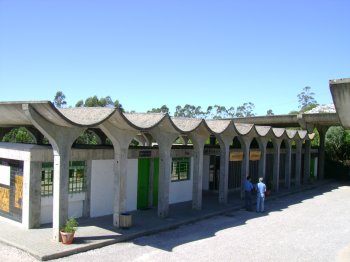
Discovered in 1964, they are found in the Serra de Minde, in an area where these formations are abundant. They have a gallery/chamber/well configuration. Notable features include stalactites, stalagmites, and illuminated lakes in the successive interconnected chambers.
Grutas de Mira d'Aire
- country
Avenida Doutor Luciano Justo Ramos, 470
2485-050, Mira de Aire
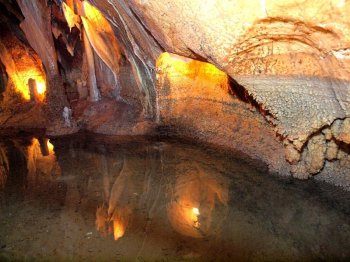
Discovered in 1947, these are the largest caves in Portugal. They have a gallery/room/shaft configuration and their formation is due to erosion and tectonic changes. They feature underground lakes and rooms with beautiful limestone formations. They have two elevators and are 110 meters deep. Here lies the Great Lagoon, formed by the Rio Negro, an underground watercourse that, in winter, forms the Mira de Aire Lagoon. In 2010 it was classified as one of the Seven Natural Wonders of Portugal.
Alvados
- country
- heritage
Alvados
2480, Alvados
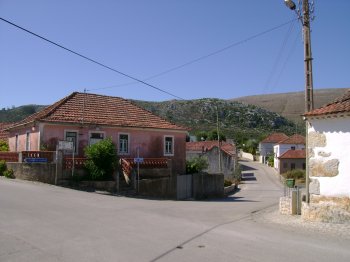
In this area, you should visit the Alvados and Santo António caves, where you can see stalactites and stalagmites, and the lagoon. Surrounding it are the mountains of the Serra dos Candeeiros and it lies on the slopes of the Serra de Aire. Also visit the parish church, the windmills, and the rural houses. In terms of handicrafts, cork work, lace, and embroidery stand out.
Museu Municipal de Porto de Mós
- heritage
Travessa de São Pedro
2480-332, Porto de Mós
The museum has been operating since 1989. It is located next to the Porto de Mós Town Hall building. A highlight of the museum is its exhibition of fossils and dinosaur remains.
Centro de Interpretação da Batalha de Aljubarrota
- heritage
Avenida Nuno Álvares Pereira, 120
2480-062, São Jorge
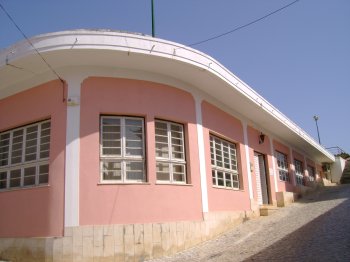
This space is located in the São Jorge Military Camp. It features a documentary exhibition about the historical period 1369-1415 and the battle between the Portuguese and Castilian armies in 1385. The exhibition is divided into four parts corresponding to the Late Middle Ages, the Crisis of 1383-85, the Battle of Aljubarrota, and the Consequences of the Victory. It also has a multimedia space where adventure and scientific rigor meet.
Alqueidão da Serra
- country
- heritage
Alqueidão da Serra
2480, Alqueidão da Serra
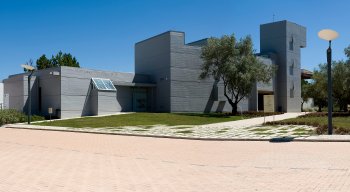
The area features a stretch of Roman road, rural houses, and the chapel of Nossa Senhora do Tojeirinho as notable monuments. The region is rich in natural beauty, particularly the Lapas caves (only accessible with a guide). Black stone is quarried in this area for ornamentation and paving of squares and sidewalks. Rag dollwork is a prominent craft.
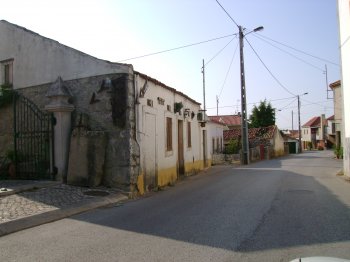
Miradouro de Serro Ventoso
- country
- leisure
Serro Ventoso
2480, Porto de Mós
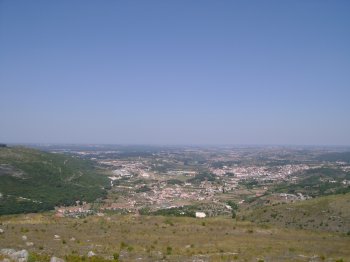
Viewpoint with views of the surrounding hills.
Castelo de Porto de Mós
- heritage
Rua do Castelo, 3
2480, Porto de Mós
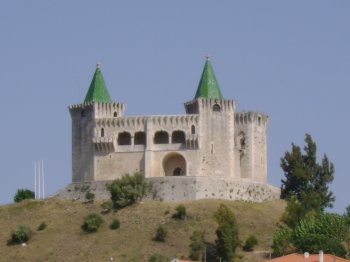
The castle's floor plan is an irregular pentagon. It features a thick wall reinforced at each corner by a tower. Four of the five towers have been restored. The main façade is pierced by a semicircular arch, which provides access, through a vaulted opening, to the entrance door, with a segmental arch inside. On the second floor, there is a loggia with a double lanceolate arcade, resting on octagonal pillars and inverted cone-shaped corbels, with a pointed arch window on corbels on each side. It has four vaulted rooms that open onto a central courtyard, with a cistern in the …