Explore the best places
Results for access fast MAKEMUR.COM how to pay for better cell in prison Quebec City in Portugal


Miradouro da Varanda dos Carqueijais
- country
- leisure
EN339
6200, Covilhã
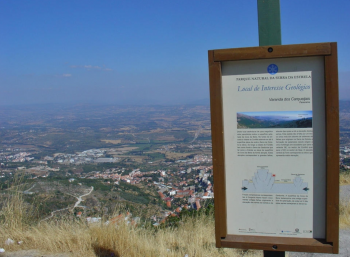
It's a "must-see" stop for anyone heading up to the Serra da Estrela mountain range via the EN339 from Covilhã, as this viewpoint offers magnificent views of the city itself and the surrounding Cova da Beira region. Right next to the road, on a sharp bend, you'll find an exit that allows you to enjoy one of the best panoramic views in the area. Further up you'll find Penhas da Saúde, a mountain village.
Centro Histórico de Beja
- heritage
Praça da República
7800-427, Beja
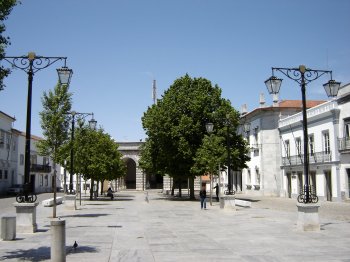
In the city's historic center, noteworthy landmarks include Praça da República, Largo de Santa Maria, Arcos dos Prazeres, Rua Aresta Branco, Rua dos Infantes, Rua do Touro, Rua da Guia, Rua dos Pintores, Rua Manuel de Arriaga, Rua da Ancha, and Rua Abel Viana. Numerous monuments of great architectural and heritage value can be admired here.
Convento da Conceição / Museu Rainha Dona Leonor
- heritage
Largo da Conceição, 5
7800-131, Beja
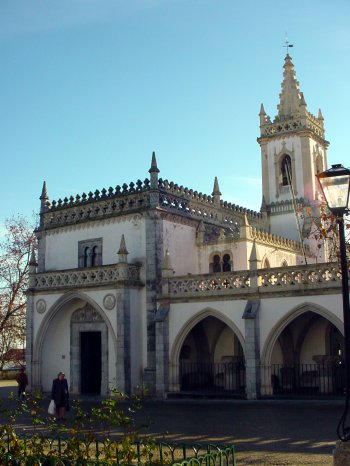
Church of the former Franciscan Convent of Santa Clara, founded in the 15th century. At the end of the 19th and beginning of the 20th centuries, the city of Beja suffered extensive destruction of its heritage, and only the church, the cloister, the chapter house, and adjacent rooms survived from this former convent. The Gothic portal on the facade stands out, and inside, the gilded woodcarving and tilework are noteworthy. The Queen Dona Leonor Museum is now located within the convent.
Capela do Senhor dos Passos
- heritage
Rua Mouzinho de Albuquerque, 25
2070-104, Cartaxo
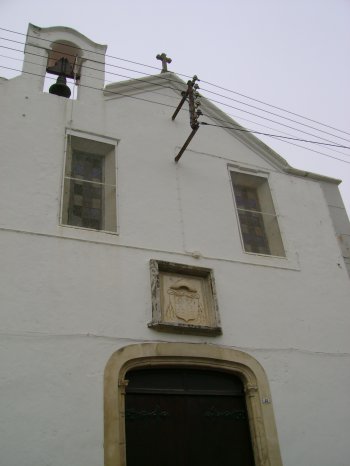
It has a peculiar location, as it is surrounded by two houses on a street close to the main church and the city center. Built in the 16th century, this chapel, of Manueline religious architecture, is attached to a manor house with internal communication through the upper choir. Its most notable features are the quartered coat of arms, the 16th-century portal, the triumphal arch, and the coffered vault. In 1808, it is believed to have sheltered Junot's troops during the French Invasions.
Insensato Café-Livraria
- food & drink
- heritage
Rua da Silva Magalhães, 25
2300-593, Tomar
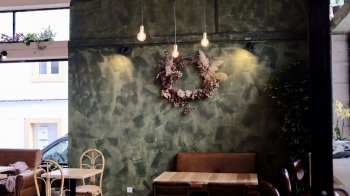
It is the first combined book and coffee shop opened in Tomar, right in the historic centre of the city. The concept explores a new way of being, with a tranquil environment, conducive to literary gatherings. Snacks include healthy meals based on selected and health-friendly products, such as pancakes, rusks, fresh juices and home-made cakes. In the bookshop there are mainly used books, with prices varying between 5 and 10 euros, but also new editions.
Museu Municipal de Arqueologia de Albufeira
- heritage
Praça da República, 1
8200-081, Albufeira
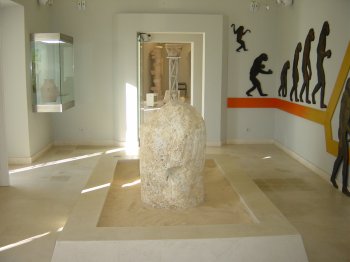
The Municipal Museum of Archaeology is located in the building where, during the 80s, was the City Hall. This space has areas of study, preservation, restoration and storing of the materials. There is also a small thematic library. The museum’s collection is deeply in touch with Albufeira’s history, from the most remote pre-historic days to the 17th century. The collection is divided in five thematic parts: pre-history, Roman period, Visigoth period, Islamic period and modern ages.
Museu Raúl da Bernarda
- heritage
Rua Frei Fortunato
2461-601, Alcobaça
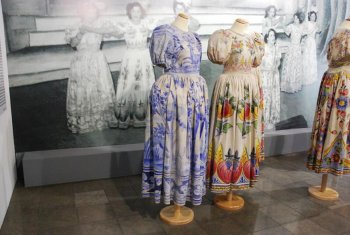
After more than a century of activity, the Raul da Bernarda company decided to open the museum's doors to the public in 2000, on its own initiative, making it possible, since then, to learn about the history of the oldest earthenware factory in Alcobaça. In addition to the "Raul da Bernarda Ceramics Collection," there is also the exhibition "The Costumes of the Rancho do Alcoa, alluding to Alcobaça pottery," which portrays the historical, ethnographic, and artistic memory of the city.
Igreja Matriz de São Salvador / Antigo Colégio de São Francisco Xavier
- heritage
Largo Duque D'Ávila e Bolama
9900-141, Horta
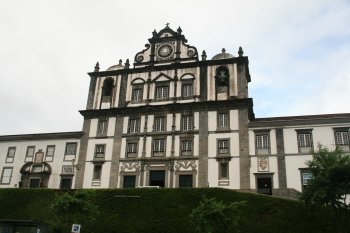
Initially built as the Jesuit College Church, the first stone was laid in 1652. However, construction only began in 1680. The buildings that flank it were never finished and today houses the Museum of Horta and the City Hall. The church became a parish church in 1825, due to the advanced state of degradation of the previous church. The church's facade is made up of four floors and its interior is made up of a single nave and three interconnecting chapels.
Mercado Municipal de Santarém
- heritage
Rua Doutor Jaime Figueiredo, 22
2005, Santarém
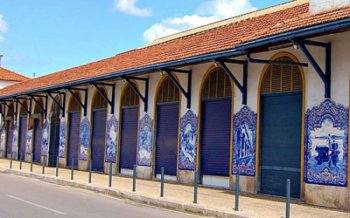
Located near the city's courthouse, this 1930s building stands out for its interesting and extensive collection of tile panels. In total, there are 55 figurative panels, along with eight decorative ones made in the old Sacavém Factory, featuring tourist and regional promotional motifs. The building, which has a distinct architectural style, was built on the site where the old open-air market was held for centuries, in what was known as Praça Velha.
Igreja de Nossa Senhora dos Prazeres
- heritage
Largo dos Prazeres
7800-420, Beja
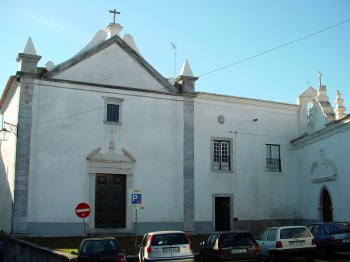
This chapel is dated from 1672 and it is composed by two distinct bodies. The simple façade does not denunciate the artistic richness on its inside. Here it is possible to find one of the most important repositories of sacra art in the city and a joint of beautiful glazed tiles composed by historian panels from 1698 done by the painter Gabriel del Barco. The church body is covered by baroque carving and glazed tiles from the 18th century.