Explore the best places
Results for check main MAKEMUR.com how to get out of jail fast for money in Portugal


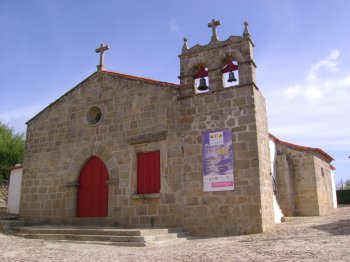
Capela do Divino Espírito Santo
- heritage
Rua da Fonte
5460-472, Valdegas
The chapel in the village of Valdegas, dedicated to the divine Holy Spirit, deployed at the entrance to the village is a granite building, of rectangular plan oriented Northeast\/Southwest. On the main façade, with a porch, has a ported rectangular and in the elongation of the gable, a belfry. Inside this temple stands the high altar in polychrome and gilded housing and a monstrance, religious imaginary in gilt, with a monstrance rifled with a dove, representing the Holy Spirit. This is the chapel which is celebrated the mass of the feast in honour of the divine Holy Spirit.

Ermida e Necrópole de São Sebastião
- heritage
Achada de São Sebastião
7750-295, Mértola
On a platform next to the River, on an ancient Roman necropolis were still visible a few decades the ruins of a chapel that the tradition called São Sebastião. The construction of the high school and a Sports Pavilion have motivated an archaeological intervention, which in turn led to change the deployment of new equipment. Today, on site, plus a part of the Roman necropolis can be visited, is open to visitors the chapel of St. Sebastian, completely rebuilt, where is exposed the main espolio exhumed.
Igreja Matriz de Santiago / Igreja de Santiago
- heritage
Rua Nova da Igreja
5110, Santiago
Mannerist parish church. Presents longitudinal plant composed of ship alpendrada and chancel and vestry and belfry adossados to side front left and right, respectively. The altarpieces are carved polychrome, which extend through the triumphal arch, the national Baroque style. The building also features vestments in masonry, except the chancel and the main façade. The interior shows intense painting on wood decor and talha and the toppings in caissons are hagiographic theme and scenes from the life of Christ.

Igreja Matriz de São Pedro
- heritage
Largo de São Pedro, 60
8000-145, Faro
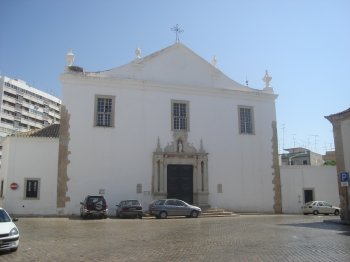
Built in the 16th century in the place of a hermitage where the sailors went to pray, it was deeply modified after the earthquake of 1755. The main chapel is decorated with a panel of the end of the 17th century, which belongs to the experimental baroque epoch. A stone image of Nossa Senhora da Esperança and yet another image of Santa Ana, credited to the sculptor Machade de Castro, ar part of this church's assets, that also includes paintings and images from several convents.
Igreja Nossa Senhora da Atalaia
- heritage
Rua Antonio Joaquim Marques
2870, Atalaia
A Mannerist building, rebuilt in the 18th century. The interior walls are covered in 17th-century blue and white tiles depicting scenes from the life of the Virgin Mary. At the back of the church is a eucalyptus grove that ends in a fountain, the Fonte da Senhora or Fonte Santa, where, according to legend, Our Lady of Atalaia appeared. The traditional symbolic "Lavagens" are still held there today during the parish's main pilgrimage, which takes place on the last Sunday in August.
Igreja Matriz de Aguiar / Igreja de Nossa Senhora da Assunção
- heritage
Largo 25 de Abril, 8
7090-226, Viana do Alentejo
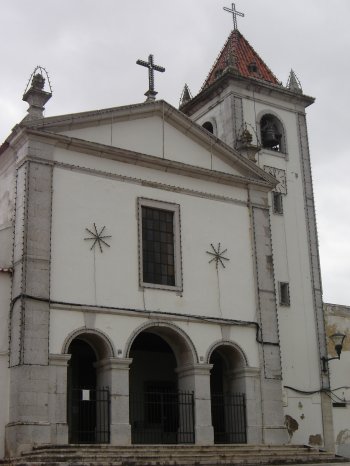
Its exact foundation is unknown. However, it is mentioned in royal documents from 1320. In the 17th century, its main elevation underwent major architectural changes. It features a granite portal, a lintel, a triangular pediment topped by a stone cross, a spire at the north end, and a robust, sharp-pointed bell tower opposite, made of masonry decorated with artistic sgraffito, two eyelets, and an equal number of cast bronze bells, the oldest dating from 1772.
Edifício do Lar Juvenil da Santa Casa da Misericórdia
- heritage
Rua Doutor António José de Almeida, 12
7160-275, Vila Viçosa
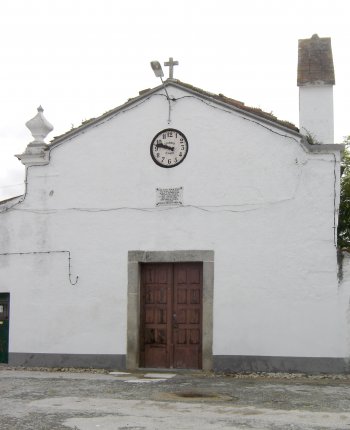
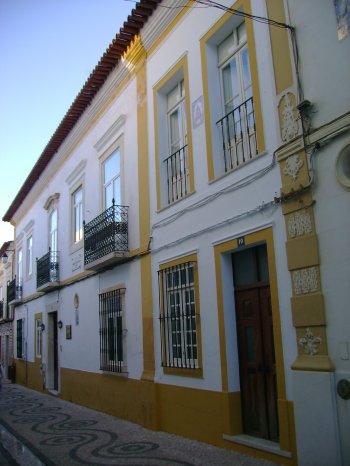
Residential building, two floors, situated in the street that leads to the Town Hall. Here lived the doctor and benefactor of the Earth Christian Garden, duly honored, as can be read in the inscription which appears beside the central window. On the main façade, the prominence goes not only to the sobriety of the lines, highlighted by white and ochre paint, as well as for the tiles of Nossa Senhora da Conceição. It is currently owned by Santa Casa da Misericórdia and works as a juvenile home.
Judiaria de Castelo de Vide
- heritage
Rua da Judiaria
7320-190, Castelo de Vide
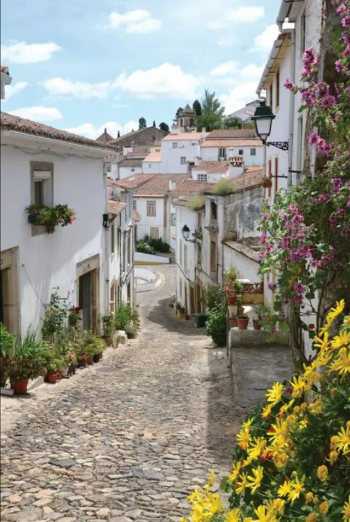
It is located in the medieval area of the village of Castelo de Vide, next to the castle, in the former Jewish quarter, as documented in the 14th and 15th centuries. The neighborhood was crossed by one of the castle's main communication routes, and its disintegration began during the reign of King Manuel I, following the decree imposing Catholic obedience on the Jews who, to avoid being forced to leave the village, gradually converted to New Christians. Hebrew symbols can be seen on some doorposts.
Mamoa da Senhora da Livração
- heritage
Paio Afonso
5470-384, Pondras
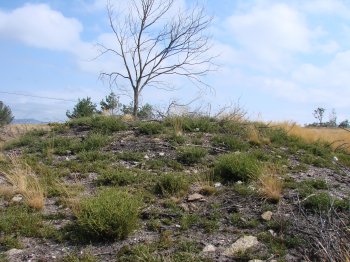
About 30 metres from the main estradão and along the access path that connects to the chapel of Senhora da Livração, a tea, is a megalithic burial monument whose tumuli is relatively high. Has at least 13 meters in diameter and about 1.5 meters high, is fairly revolved; features deep depression and identifies any central mainstay. Near this monument identifies what could be another, is fully covered with stones, which made it impossible to confirm.
Igreja de Santa Maria do Castelo
- heritage
Largo de Santa Maria, 14
6400-410, Pinhel
This religious monument consists of a three-bay nave, a chancel, side chapels, a sacristy, and a bell tower. The main façade consists of a rounded portal and a circular oculus, flanked by a bell tower, the upper one having a double bell tower. This façade features a window overlooking the Stations of the Cross. The interior features the baptistery, which houses the baptismal font, the Mannerist niche, the painted panels of the chancel and altarpiece, and the Christ the Redeemer statue on the tabernacle door.