Explore the best places
Results for Mosteiro dos Jerónimos in Portugal


Museu Cargaleiro
- heritage
Rua dos Cavaleiros, 23
6000-189, Castelo Branco
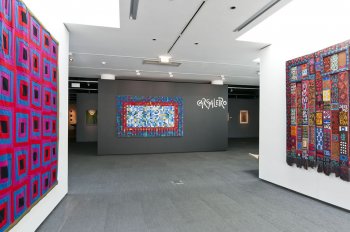
Located in the historic area of Castelo Branco, this museum dedicated to the work and life of the artist Manuel Cargaleiro includes two buildings that complement each other. One is Solar dos Cavaleiros, an 18th-century palace, and the other is a contemporary building, inaugurated in 2005. Visitors can appreciate a remarkable set of works part of the Manuel Cargaleiro Foundation collection, which includes works ranging from painting to ceramics, including sculpture, tiles and tapestry.
Teatro Municipal de Vila do Conde
- art
Avenida Doutor João Canavarro
4480-668, Vila do Conde
Opened to the public in 1949 and closed in the 80, the Teatro Municipal de Vila do Conde has been recently recovered and includes a capacity of about 800 places, provided with all conditions of comfort for the spectators. There is also a rehearsal room, a bar in support of various support services and equipment to the activity, including foyers and dressing rooms. All the rooms are endowed with régie with analog film projection equipment and digital video and sound and light production unit.
Igreja de Santiago / Panteão dos Cabrais
- heritage
Largo do Castelo
6250-067, Belmonte
Located in Largo do Castelo, this small church with a romantic style also features Mannerist and Gothic elements. It was built in the 13th century and its “ex libris” is the beautiful Pietá, in granite and polychromatic, which impressed the writer and Nobel Prize José Saramago, as reported in his book “Journey to Portugal”. Mural paintings and traces of a triptych with Our Lady, S. Tiago and S. Pedro can still be seen. The Cabrais Pantheon is next to the church.
Igreja da Misericórdia de Mangualde/ Casa do Despacho
- heritage
Rua Albertino de Macedo, 5
3530-219, Mangualde
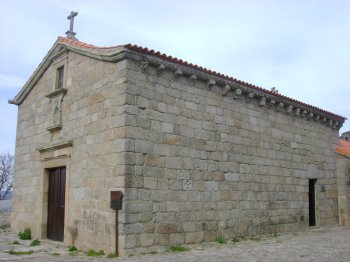
Its construction took place between the years 1721 and 1724, on a project by the architect Gaspar Ferreira. It comprises a nave, a sacristy and a dispatch room. The filling it received for the interior turned it into a fine example of Baroque art from the Johannine period. Highlights include tile panels with Christian symbolism, referring to scenes from the New Testament, scenes from the lives of Mary and Jesus, tiles from Fábrica do Rato in the sacristy and details of the main altarpiece.
Igreja da Misericórdia de Oleiros
- heritage
Rua Dr. Francisco Rebelo de Albuquerque
6160-413, Oleiros
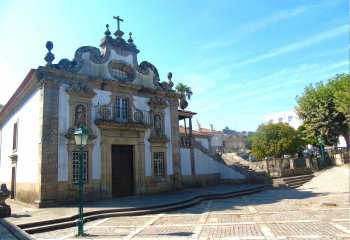
Religious architecture built during the reign of D. Manuel I, with a single nave and niche on the main facade, on which appears the inscription with the date 1714, which probably indicates the year in which the reconstruction works were completed. Inside you can see the national style gilded altarpiece and the images of: S. João Evangelista, Nossa Senhora das Dores, Senhor dos Passos and Senhor Morto. These images are life-sized and highly expressive.
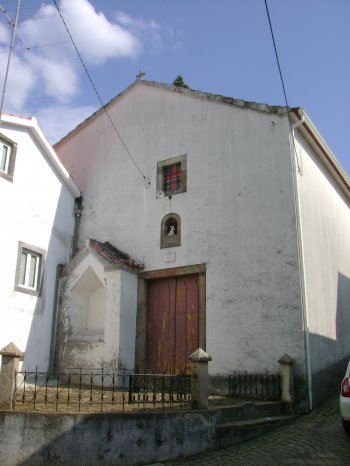
Igreja da Trindade
- heritage
Rua da Trindade, 115
4000-220, Porto
Planned by the architect Carlos Amarante, this church was built along the XIX century, by initiative of the Ordem da Trindade, at the Largo do Laranjal. The façade is classical and the walls are filled with neo classical retables. It stands out, in the principal chapel, a big panel representing the Baptism of Christ, by the painter José de Brito. The religious order also has several painting works, such as the Resende’s portraits and several copies of Italian painters, such as Rafael, Ticiano and Caravaggio.
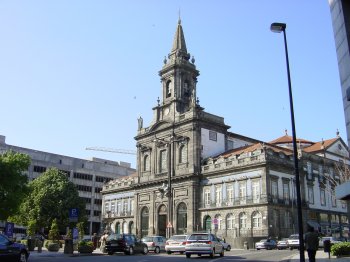
Muralhas de Évora / Cerca Medieval ou Cerca Nova
- heritage
Porta de Alconchel
7000, Évora
The mediaeval city enclosure was defined by the towers and the walls from the 14th and 15th century. Presently there still exist the towers from some doors such as Avis, Baluarte and S. Bartolomeu, Public garden, Aqueduct, Rampa dos Colegiais, the ones close to Calvário Convent and the one located between the Alconchel and Raimundo doors and also the angle in front of the Malagueira road, the connection on the Fernandina Wall with the bulwark of Lippe Count and the wall next to the chivalry headquarters.
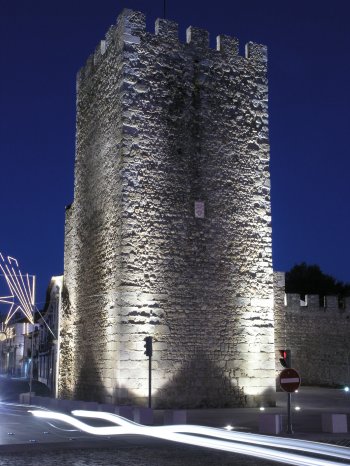
Torre de Vilar
- heritage
Lugar da Torre
4620-886, Vilar do Torno e Alentém
Built between the second half of the 13th century and early 14TH century, the Tower of Vilar is a symbol of Lordly power over the territory and proof of the existence of a "domus fortis", a fortified manor house in Vale do Sousa. It is a five-story building with granite Ashlar. The lighting of this tower was made through loopholes of the Romanesque style and access through an arch with tympanum. Underwent restoration between 2005 and 2006 as part of the Route of the Romanesque of the Sousa Valley.
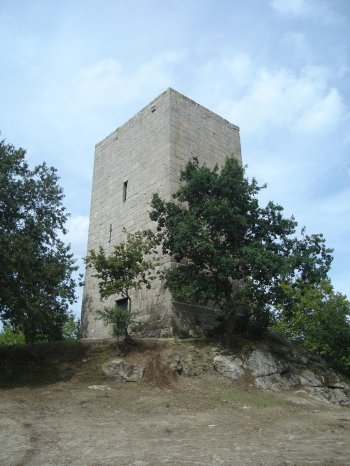
Teatro Municipal de Vila do Conde
- heritage
Avenida Doutor João Canavarro
4480-754, Vila do Conde
Opened to the public in 1949 and closed in the 80, the Teatro Municipal de Vila do Conde has been recently recovered and includes a capacity of about 800 places, provided with all conditions of comfort for the spectators. There is also a rehearsal room, a bar in support of various support services and equipment to the activity, including foyers and dressing rooms. All the rooms are endowed with régie with analog film projection equipment and digital video and sound and light production unit.
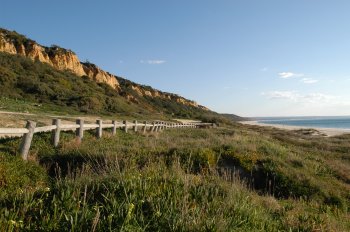
Paisagem Protegida da Arriba Fóssil da Costa da Caparica
- country
Estrada Florestal - Praia da Rainha
2825-412, Costa da Caparica
Overlooking the so-called “Terras da Costa”, the approximately 13 km of this area of protected landscape, between Cova do Vapor (Costa da Caparica) and Lagoa de Albufeira, are a set of beautiful erosion forms, with high geological and paleontological interest. There, traces of living beings can be found, namely of plant origin. In areas adjacent to the cliff (pine forests of Medos and Aroeira) we can find some typical flora of the area.