Explore the best places
Results for visit main site MAKEMUR.COM Looking to pay the DA to drop assault charges Monroe County Jail in Portugal


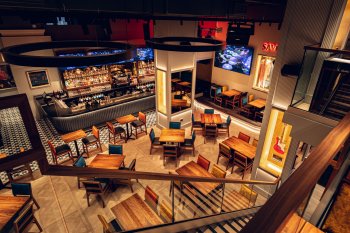
Hard Rock Cafe
- food & drink
Rua do Almada, 120
4050-031, Porto
O Hard Rock Cafe Porto combina a historicidade da cidade invicta com a irreverência e o caráter da marca Hard Rock. Com uma área total de 1450 m2, com capacidade para até 400 pessoas, propõe os míticos hambúrgueres, saladas e cocktails, enquanto experiencia a história do rock and roll.
Fajão
- country
- heritage
Fajão
3320, Fajão
This place was a small town and the parishe's siege until 1855. Of difficult access, the mountain landscapes and its primitiveness are its main attractions. Nearby, at the Fajão cliffs, there are several exotic caves, namely the Casa dos Mouros (House of the Moors), the Gruta de Camões (Cave of Camões) and the Forno dos Mouros (Oven of the Moors).
Magnólia
- hotels
Rua da Maternidade, 51 R/C
4050-369, Porto
Just minutes from the historic centre of the city, the Magnolia Hostel has seven themed rooms that can accommodate up to eight people. The location and the proximity to some of the main monuments of the city influence the decoration of this hostel housed in a traditional building properly recovered. The common areas include a garden that invites you to relax.
Conjunto Fortificado de Caminha
- heritage
Calçada da Escola
4910-111, Caminha
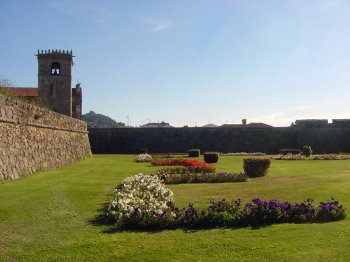
Of this set of 18th-century curtain walls and bastions, the bastions of the main church and Santo Antônio church, the Graça wall, and the Clock Tower stand out. The rectangular tower features a small terrace where the bell tower rests. Above the arch of the gate, which once defended the town, is an image of Our Lady of the Conception.
Capela de S. Mateus
- heritage
Rua Central
5460-512, Carvalho
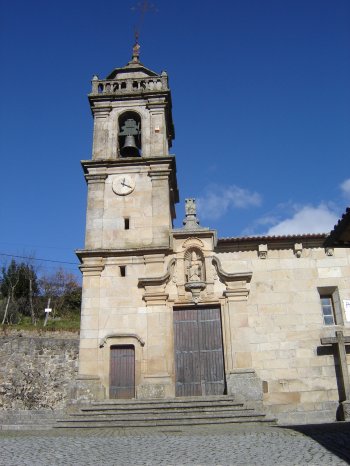
The chapel dedicated to s. Matthew is a granite building, rectangular plant oriented Southeast\/Northwest. The front facade has a simple rectangular portal and in the elongation of the gable boasts a Bell Tower crowned by a Celtic Cross. Within stands, at the head, the main altar in carved and painted with Golden motifs, which houses religious imaginary.

Igreja Matriz de Cerva / Igreja de São Pedro
- heritage
Igreja
4870-042, Cerva
Medieval parish church, Mannerist and Rococo. With nave, chancel and Bell Tower. Features inside-high wooden choir, pulpit and baptistery in the Gospel side, lateral altarpiece, altar-piece of the epistle side and the main altarpiece revivalists, polychrome and gilded carvings, and the Mannerist Gospel side. The roof of the nave has Rococo painting.
Igreja Matriz de Cinco Vilas / Igreja de Santa Maria Maior
- heritage
Largo Padre João Mendes Garcia
6440-051, Figueira de Castelo Rodrigo
It is believed that the original temple was built in the 14th century or 15TH CENTURY by the order of Christ, dating the current church of 1694. Presents a longitudinal plan consists of a nave divided into three sections, a narrower chancel and a vestry and a Bell Tower adossados. Inside, the baptistery, the pulpit on the side of the Gospel and to the main retable of gilt national style.
Edifício da Escola Industrial do Marquês de Pombal
- heritage
Rua dos Lusíadas
1300-364, Lisboa
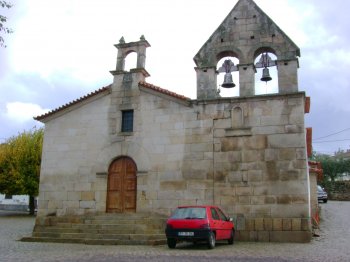
Its construction began in 1886, according to design by the architect Pedro Avila. The main body of a more prestigious, announces the function of traditional teaching. The workshop building, built later, was created in the image of the industrial architecture of the time, in an attempt to adapt to functions for which had been conceived. Is currently the high school Fonseca Benevides.
Edifício do Teatro Viriato / Antigo Teatro Boa União
- heritage
Largo Mouzinho de Albuquerque, 160
3501-909, Viseu
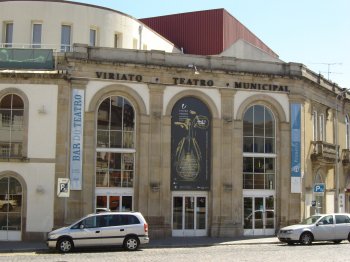
This thetre, built at the end of the 19th century, was named Theatro Boa União until 1889. In 1960 it closed to reopen only 38 years later and become one of the main cultural spaces in the city of Viseu. It has several shows of music, theatre, dance and poetry. It also organizes workshops, ateliers and temporary exhibitions.
Palácio do Álamo
- heritage
Largo Barreto Caldeira
7440-049, Alter do Chão
This Manor house was built in 1649 and remodeled in 1732. It has baroque outline with rectangular plan and two floors. On the main floor it stands out the seventeen hundreds decoration with paintings and the ceiling. The house is surrounded by a typical Portuguese garden with different interesting motifs, such as the houses for agricultural purposes, the watering systems, the waterwheel, the lakes and the tanks.