Explore the best places
Results for PROBLEMGO.COM acheter un certificat de maladie incurable pour une libération anticipée de prison in Portugal


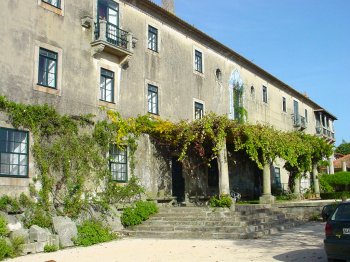
Museu de Etnologia do Porto
- heritage
Largo de São João Novo, 11
4050-554, Porto
When it was created, in 1945, it was called “Museu de Etnografia e História do Douro Litoral”. Since that time it is placed at the Plácio de São João Novo, dated from the XVIII century. This monument has been suffering a huge degradation, being, in 1989, under the guardianship of the IPPC and, in 1991, of the IPM. Closed to the public since 1992, the IPM has being transferring its collections to various museums. Works in the façade and the coverings of the palace have being made and, after the inventory systematization, the intension is to solve the problem definitively.
Museu do Som e da Imagem
- heritage
Alameda de Grasse
5000-703, Vila Real
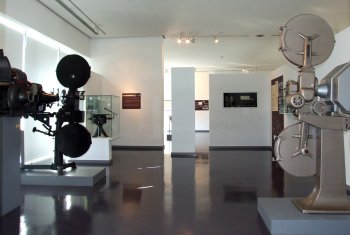
The Museum of image and sound, integrated in the network of museums in the municipality of Vila Real, based at the Teatro Municipal de Vila Real, preserves the important acquis of this theater. The space is distributed by seven classrooms, with interactive sections, devoted to the first Teatro de Vila Real (1846), theatre-circus (1892), the Teatro Avenida (1930), history of photography, the history of film and other unique temporary exhibitions. There's also an educational service and audiovisual archive, where they develop various initiatives, since the display of publications to the exhibition of contemporary art projects.
Teatro de Vila Real
- art
Alameda de Grasse
5000-703, Vila Real
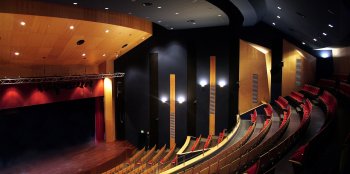
Espaço onde se realizam os mais diversos espetáculos culturais, constituído por um Grande Auditório, com capacidade para 500 pessoas, um Pequeno Auditório, com capacidade para 150 pessoas, um Auditório Exterior, com capacidade para 700 pessoas, um Foyer, o Museu do Som e da Imagem, uma sala de exposições, uma oficina de artes, a Galeria-Bar, o Café-Concerto e algumas esplanadas.
Igreja Matriz e Cripta de São João de Deus
- heritage
Terreiro de São João de Deus, 6
7050-128, Montemor-o-Novo
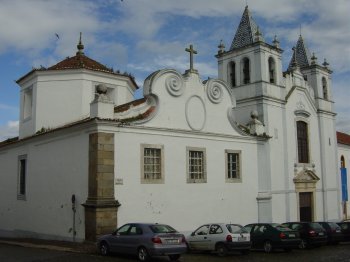
This 17th century construction is sided by two towers with pyramidal domes draped in glazed tiles. It has one only nave with vaults decorated with wall paintings dated from the 18th century. It possesses six lateral chapels opening to the nave by perfectly vaulted arches, linked each other in the corbels level. Below the main chapel there is São João de Deus chapel where, according to the tradition it is located the house from street Rua Verde where in 1495 João Cidade (São João de Deus) was born.
Forte de Santa Cruz
- heritage
Rua Vasco da Gama
9900-017, Horta
Strong pentagonal plant, once intended for the defense of the city of Horta and its port of pirates attacks. Have been named, initially, of Forte de Santo António and was built in the second half of the 16th century. The original defensive system only the outer walls. Was ceded, in 1927, the Town Hall of Horta to be torn down and increase the avenida marginal. However, the lack of funds meant that the plans were not fulfilled. In 1947 it was classified as National Monument and in 1969 an Inn was built in its interior, today "Pousada de Portugal".
Edifício da Antiga Bolsa dos Comerciantes
- heritage
Rua do Infante Dom Henrique, 47-53
4050-297, Porto
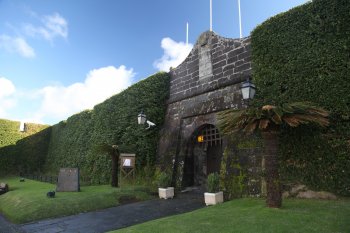
Building where the XV century Porto’s trade exchange ran. It has the medieval arms of the Casa de Avis, which recall the role of the King Dom João I on the renovation of the present Infante Dom Henrique Street. The building was restored in the reign of Dom Afonso V and became, also, the entrance to the Casa da Moeda (mint), from which you still can see the XVI century door. It was the Crown’s and the morgados de Fermedo property, one of the families that ennobled this important street and business centre of the old town.
Igreja de São Pedro de Roriz
- heritage
Rua do Mosteiro de Roriz
4780, Roriz
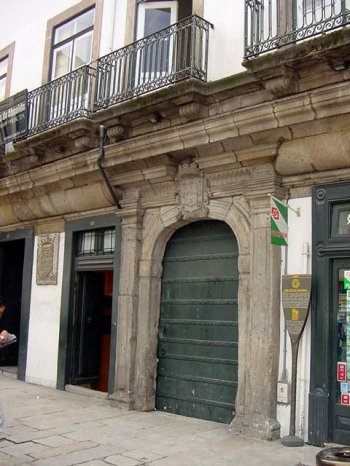
The Monastery of São Pedro de Roriz was founded by Lady Unisco Godiniz, in the year 978. Its affiliation with the Benedictine Order dates back to 1902. In the 17th century, notable works were carried out, directed by Frei João Turriano, which results in the current appearance of the monastery. Its interior is rich in gilded carving and reveals traces of one of the most notable carvers of the "Braga school", Frei José de Santo António Ferreira Vilaça. Its style shows influences from French and German Baroque and Rococo.
Igreja de Santa Maria / Igreja Matriz de Óbidos
- heritage
Praça de Santa Maria
2510-002, Vila de Óbidos
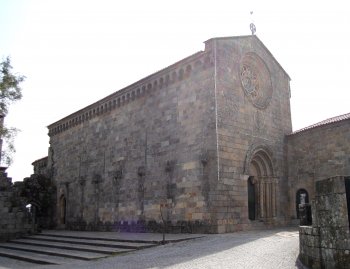
This building with three naves has a prismatic bell ringer tower with ashlars irregular on the corners, covered by a pyramidal dome and with traces from the Manueline. The altarpiece is in golden carving with a sacrarium with a mannerist structure. It presents a mannerist doorway and on its inside it stands out the glazed tiles coverage from the 17th century and the paintings from the 17th century from Baltazer Gomes and from Josefa de Óbidos. Also, worthy to mention is D. João de Noronha tomb considered a masterpiece from the Portuguese Renaissance.
Palácio Pancas Palha
- heritage
Rua de Santa Apolónia, 12
1100-468, Lisboa
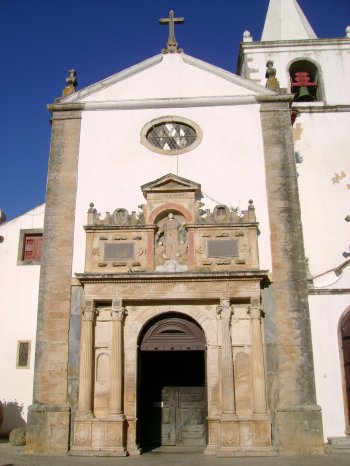
Building ordered by D. Luís de Meneses, lord of Pancas and Ponte da Barca, foreiro of the Comendadeiras de Santos-o-Novo in the second half of the XVII century. In the middle of the XIX century it was sold to the judge of the high court José Pereira Palha. In 1968 the City council buys it to the Van Zeller family. It is a manor house with open yard for the carriages and the noble staircase. Inside there’s a small room decorated with rural motifs – the frescos room – dated probably from the XIX century, the chapel, the gardens and …
Quinta do Mosteiro de São Salvador
- heritage
Rua Conselheiro Luís de Magalhães
4470-616, Moreira
The Quinta do Mosteiro (Monastery Farm) was founded in 1060 by the religious order of the Agostinhos da Santa Cruz. Abandoned for years, it was only in the 17th century that its reconstruction began, ordered by the prior Brandão, and came to a conclusion in 1622. By the end if the 19th century, The Quinta do Mosteiro reached all its splendour, when it was the property of Luís de Magalhães which was the friend of many writers such as Oliveira Martins and Eça de Queirós. Nowadays, the Farm maintains its imponence, being the property of the Sottomayor and the Vanzeller …