Explore the best places
Results for Mosteiro dos Jerónimos in Portugal


Casa do Mosteiro
- heritage
Rua do Mosteiro, 1
4780, Roriz
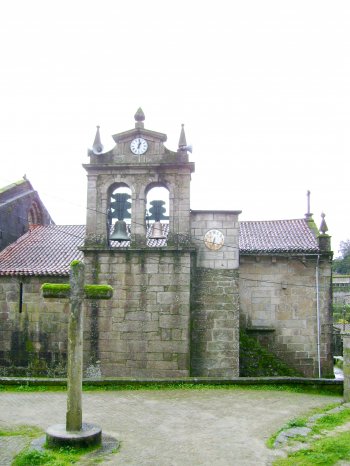
Quite old building that, according to some opinions, you can remount the time of national training. The original House, formed by the main body, rests on stone arches. This solar suffered many modifications over the centuries, has given the current aspect.
Equestre do Mosteiro
- leisure
Quinta do Mosteiro
4470, Moreira
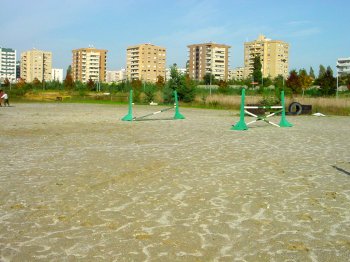
A horse riding centre with horse-riding classes that is also the stage for jump competitions and therapeutic sessions for handicapped children. It has a riding-school, an obstacle field, boxes, paddocks and green spaces for horseback rides.
Coreto de Mosteiros
- art
Largo da Igreja
9555-150, Mosteiros
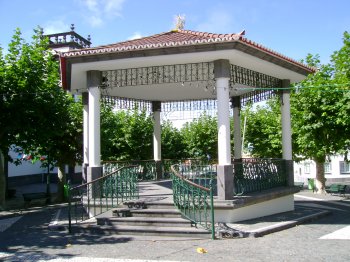
Typical gazebo where, on feast days, Act the local philharmonic bands.
Cruzeiro em Mosteiro
- heritage
Junto à Igreja Velha de Gondar
4600, Gondar
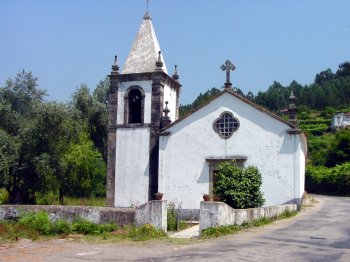
Cruise very simple and rustic. Boasts a Latin cross without decoration.
Mosteiro de Alcobaça
- heritage
Praça 25 de Abril
2460-018, Alcobaça
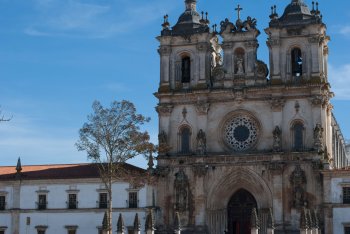
Built by Cistercian monks between 1178 and 1254, the Monastery consists of three sections: the Church and the North and South Wings, which respectively housed the apartments of the kings and visiting court, and the residences of the Abbot and the monks. The original façade retains the battlements on the side roof, the Gothic portal, and the large side windows. The Church is the largest in Portugal and contains the tombs of King Pedro I and Inês de Castro. Also, noteworthy are the Ambulatory and the Chapel of St. Bernard, the Chapel of Relics, and the Chapel of the Lord …
Mosteiro de Arouca
- heritage
Largo de Santa Mafalda
4540-108, Arouca
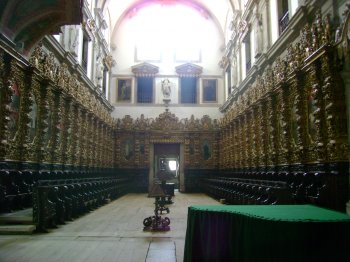
It began with a dual community – male and female – having become a female monastery and adopted the Rule of Saint Benedict at the end of the 11th century. The affiliation with the Cistercian Order, which occurred in the 13th century, is associated with the figure of Infanta D. Mafalda, daughter of D. Sancho I, who, in 1220, decided to incorporate the nuns into the new Order. Endowed with a vast patrimony, it became one of the most important Portuguese female monasteries. Retreating to the convent, D. Mafalda gained a reputation for holiness, to which the discovery of the …
Mosteiro de Celas
- heritage
Avenida Bissaya Barreto, 105
3000-132, Coimbra
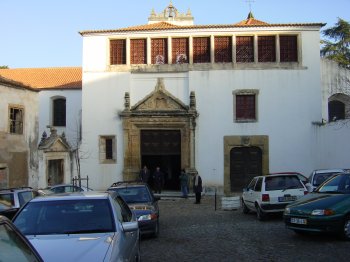
The Celas Monastery is a construction of sober character, showing the influence of several architectonical styles. At the church are worthy of notice the manueline arched roof, a 17th century glazed tiles panelling and several portals and arches with renaissant and manueline characteristics. The cloisters’ galleries present pictures representing memorable events at the chapiters.
Mosteiro de Cucujães
- heritage
Largo da Igreja, 60
3720-391, Vila de Cucujães
The primitive moth conventual building nothing remains due to various transformations that was targeted. The set of buildings is composed by the Church and the cloister, the result of a 17th-century reform. The cloister features Doric columns based directly on the floor, forming seven spans in each ward.
Mosteiro de Ermelo
- heritage
Ermelo
4970-140, Arcos de Valdevez
Despite its integration into the Cistercian Order, the life of this monastery was turbulent and short. During his visit in 1553, the Abbot of Clairvaux found it in a state of complete neglect and poverty, which is why it was secularized in 1560, becoming a parish church. What we see today in Ermelo is a beautiful Romanesque church adapted to the life of a small parish, first in the 16th century and again in the 18th century. Of the nave that stood to the south, only the beautiful triumphal arch remains, now open to the sky outside. The monastery's dependencies …