Explore the best places
Results for proceed to portal PROBLEMGO.com pay for early release from jail HMP Berwyn in Portugal


Igreja de Nossa Senhora da Boa Morte
- heritage
Monte de Nossa Senhora da Boa Morte
4990-288, Correlhã
Is a temple of three naves with wooden cover to form cross with the ribs painted, separated by arches full on pillars of quadrangular section. The choir-high is about pilasters, with wooden balusters and subcoro painted with representation of hell, celestial Court and others. Enhancement for the altarpiece in talha, from 1719. It should be noted that the classification includes all elements that are part of the set of sanctuary of pilgrimage and the place in which they deploy.
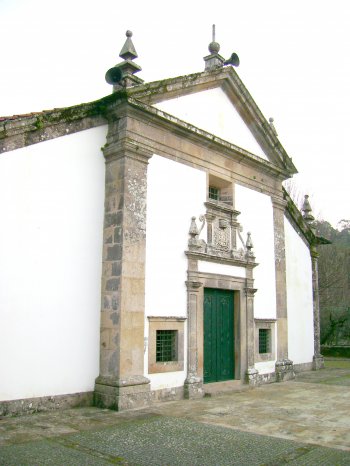
Igreja de Nossa Senhora da Purificação
- heritage
Rua da Igreja
2070-403, Pontével
This is the main church of Pontével, a town located about five kilometers from the municipal seat. It is believed to have been founded in 1302 and has been rebuilt several times, most recently in the 17th century. Some of its most distinctive features are the three bronze bells, with intricately worked edges, in its bell tower, as well as the late 16th-century tiles and the baptismal font.
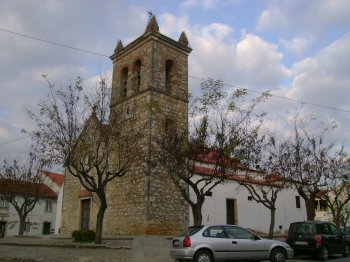
Necrópole de São Gens e Penedo do Sino
- heritage
Lavandeira
6360-302, Celorico da Beira
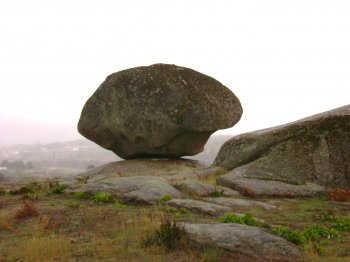
This is an ancient cemetery with four types of tombs: bathtub-shaped, triangular, anthropomorphic, and carved into movable stones. Near these graves is the Penedo do Sino, a pedunculated granite block, shaped by weathering, and well-known for its strange and beautiful balance. This site was occupied between the 1st and 2nd centuries and later between the 12th and 13th centuries, although it is believed that this necropolis dates from the 6th to the 14th centuries.
Núcleo de Arte Rupestre da Faia
- heritage
Cidadelhe
6400-191, Cidadelhe
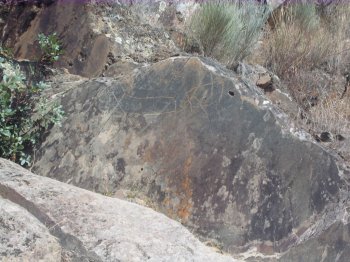
A core composed of figures engraved in granite, representing two opposing bovids and a sequence of four bovid heads pointing toward the ground, which are associated with schematic paintings from recent prehistory. Certain painted lines add unengraved details, suggesting the hypothesis that some of the elements are Paleolithic. It is a UNESCO World Heritage Site (1998) and a National Monument by IGESPAR, part of the Côa Valley Archaeological Park.
Núcleo de Arte Rupestre de Vale de Moinhos
- heritage
EN222
5150, Vila Nova de Foz Côa
This is one of the rock art sites in the Valley of the Coa, forming a rare set of this type of art, essentially composed of stone engravings dated from the Upper Paleolithic. This core consists of two rocks that have support writing of filiform reasons. On the left bank of ribeira is a vertical panel in shale showing how central motif equidae, while on the right bank can observe various Zoomorphic representations.
Palácio da Mitra
- heritage
Largo Félix da Silva Avelar Brotero
2660-119, Loures
Former residence of archbishops, Palácio da Mitra or Palácio dos Arcebispos is a 16th-century building in the shape of a "u", which features typical Portuguese tiles in the rooms, also characterized by the thematic decoration of the time (representations of rural scenes, seasons or cooking). The church was completely rebuilt in the 16th century. The statues that decorate the interior rooms of the palace are from this period, as well as the monumental fountain, in Baroque style.
Muralhas de Setúbal
- heritage
Centro Histórico de Setúbal
2900, Setúbal
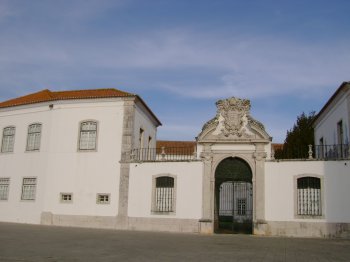
Setúbal was once surrounded by two belts of walls. The first, called Muralha Afonsina for being constructed during the reign of King D. Afonso V, traced out the boundaries of Setúbal. This wall was made to protect this fishermen community from the attacks of pirates. The second wall was constructed during the reign of King D. João IV and was made to protect the village that expanded outside the first walls.

Quinta do Assentista
- heritage
Rua Elias Garcia, 116
2700-708, Amadora
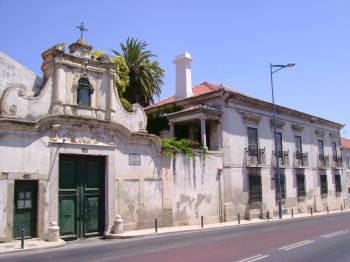
Also known as Quinta dos Intendentes, the main façade dates from 1746, in which the Johannine gate stands out, despite the simplicity of the façade's features. At the top you can see a niche that houses the image of Nossa Senhora da Saúde. Inside, it has a living area, patio and gardens, in which you can admire various tree species, fountains, garden benches and a chapel.
Quinta dos Cónegos
- heritage
Rua do Souto, 363
4470-215, Maia
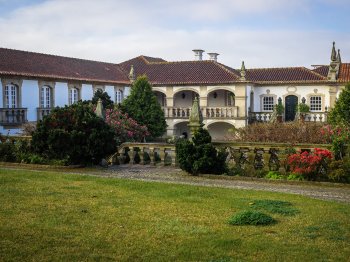
The former recreational estate of the Bishops of Porto, comprising a beautiful 18th-century house in the purest Baroque style and with a strong influence from the school of Nicolau Nasoni – it is thought that the statuary and some architectural elements may even be his work. Here we find the beautiful "Gardens of Maia", fountains, chapels and a swimming pool. Inside, the chapel with its 17th-century gilded altarpiece deserves mention.
Paço do Campo Belo
- heritage
Rua Rei Ramiro, 25
4400-283, Vila Nova de Gaia
A building located in the historic area of the city of Vila Nova de Gaia, near the port wine cellars and dated from the 17th century. It has an L architectural structure with two floors and a stone staircase leading to the noble floor. On the west side one may view the chapel and the gardens. The chapel and the entire surrounding set, the gardens included, ar classed as a Public Interest Construction.