Explore the best places
Results for come on in MAKEMUR.COM pay to destroy evidence in my criminal case in Portugal


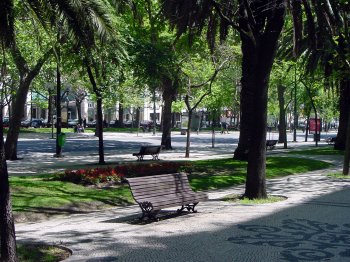
Jardim da Avenida da Liberdade
- country
- leisure
Avenida da Liberdade
1150, Lisboa
The avenue, former “Passeio Público”, was a residential area, although there are still remains of the walkway, with trees and lakes. Along the avenue are several monuments, from which stand out the monument paying homage to the word war dead soldiers, the statue of Alexandre Herculano, Almeida Garrett and Oliveira Martins.
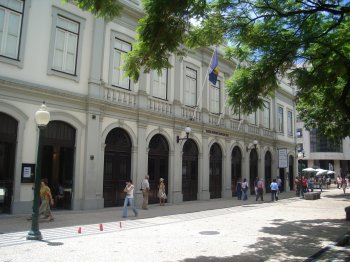
Teatro Municipal Baltazar Dias
- art
Avenida Arriaga
9000-060, Funchal
Theatre built in the end of the XIX century by the architect Tomás Augusto Soler. It was first called Teatro Dona Maria Pia, and then changed to Teatro Funchalense, after that to Teatro Manuel de Arriaga and at last Teatro Baltazar Dias, paying homage to the Madeira dramaturge from the XVI century.
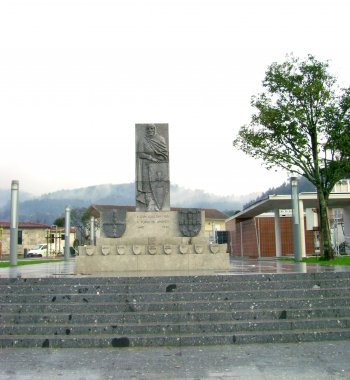
Escultura a Dom Gualdim Pais
- heritage
Rua José Alves Leite
4720-022, Amares
Tribute to DOM Gualdim Pais, Portuguese Crusader, Templar Friar and Knight of Afonso I of Portugal (1128-1185) and founder of the city of Tomar, where he established the order of the temple, which became Grand Master. Despite being buried in Tomar, born in Amares, in the year 1118.
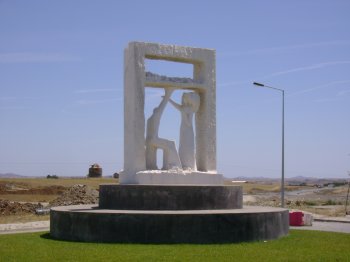
Planície Mediterrânica
- heritage
Rua da Esteva
7780-159, Castro Verde
This monument was inaugurated in the framework of the festival "Mediterranean Plain" invokes the man in its relationship with the landscape and the plain. Being the Castro Verde landscape representative of Mediterranean culture, this piece, depicting a man and a woman, on which lies the plain and the urban profile of Castro Verde, intends to pay homage to this locale.
Forno dos Mouros (vestígios)
- heritage
Rua dos Moinhos
4755-116, Carvalhos
Monument to the iron age baths featuring a lobby, an anteroom, a camera and an oven. The Atrium, partially buried, was of rectangular plant, showing traces of lajeado irregular. The antechamber, much destroyed, was also just like the rectangular Chamber. The oven was subcircular plant, growing in false dome and gave to the camera. Are classified as Property in the public interest.
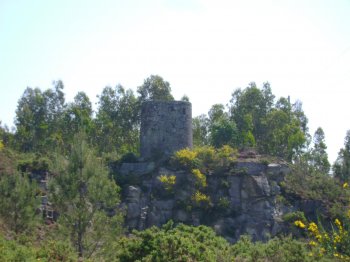
Forte de Lovelhe / Forte de São Francisco
- heritage
Rua Forte de Lovelhe
4920-084, Vale de Flores
Small fort, pentagonal in plan and composed of five irregular bastions. It has no foundations, resting directly on the natural soil. Its construction began in 1642 and 1663, during the Restoration Wars, and was then restored in 1797. In 1809, it was destroyed by General Soult's troops, and is currently in ruins. This fort is located very close to the Lovelhe archaeological site.
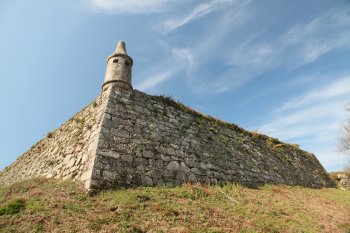
Igreja de São Vicente
- heritage
Adro de São Vicente
2200-231, Abrantes
The original temple was founded in 1148 by King Afonso Henriques and destroyed in 1179. It was rebuilt in the 12th century and subsequently underwent several renovations. It has three naves with six bays and Doric columns. Of particular note are the 16th-century chapels and the 17th-century tiles. The façade features a Mannerist portico that is quite rich in decoration.
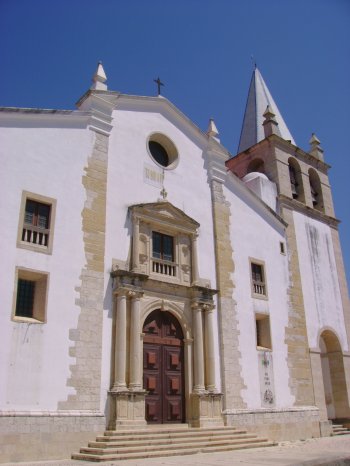
Igreja do Convento do Carmo
- heritage
Rua do Carmo, 16
3800-127, Aveiro
The church, dated from 1628, is all that’s left from the 17th century Carmo Convent, built in 1613. In the XVII century were placed the golden wood decorated panels and in the XIX century the convent area was destroyed and an altar was built in one side of the transept. IT has beautiful sculptures and paintings representing the Passion of Christ.
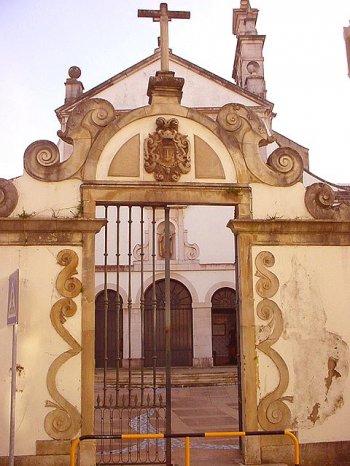
Hotel Rural Quinta do Silval
- hotels
Quinta do Silval
5085-104, Vale de Mendiz
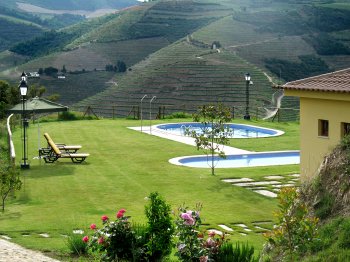
The Hotel Rural Quinta do Silval is situated on the left bank of the river Pinhão, being the first wine hotel of the demarcated Douro region. This is a charming hotel that combines all the comfort, refinement and new technologies with an architectural moth typically Douro. Provides the visitor the evidence room and dining area, where you can taste the typical dishes of the region.
Museu de Artes Decorativas
- heritage
Largo das Portas do Sol, 2
1100-411, Lisboa
The museum, opened in 1999, shows a collection selection of 200 objects – furniture, utilitarian objects and glass objects- organized chronologically to evidence the design evolution since 1937 till nowadays. It has works from designers such as Alvar Aalto, Gio Ponti, Tom Dixon and Philippe Starck, as well as the Portuguese Siza Vieira, Pedro Silva Dias and Damiano Costa.