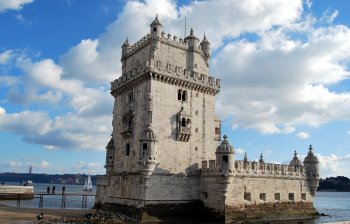
This work, a symbol of Portuguese expansion, is one of Lisbon's ex-libris. The exterior is decorated with carved stones and the Gothic hall is an austere space that was a weapons warehouse and prison. The tower's private premises are worth a visit for the Renaissance arcade and the panorama that can be seen from there.
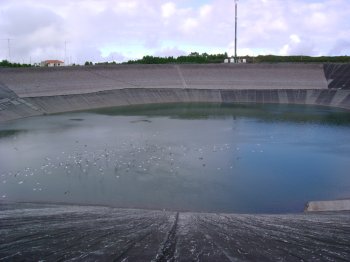
Lagoon located in the crater of a volcano, forming a spectacle of great natural beauty. It was recently waterproofed, now allowing more correct water retention.
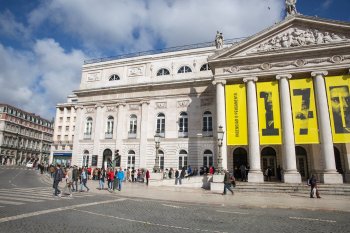
Placed on the north side of Rossio, the National Theatre Dona Maria II, which name pays homage to the daughter of Dom Pedro, was built in the 1840s by the Italian architect Fortunato Lodi. The façade of this neoclassic building is composed by six columns coming from the São Francisco Convent and is ended by a triangular fronton where the figures of Apollo and the Muses are sculpted. On top of the fronton is possible to see the statue of Gil Vicente, maybe the most important Portuguese dramaturge of all times, considered to be the father of the national theatre.
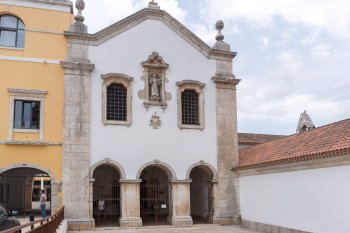
Built in the 14th century, it was only in 1562 that the church became sacred. It was remodeled over the centuries, with Renaissance and Baroque details in the side chapels. At the beginning of the 20th century, its demolition was planned, but it survived as a prison and, from 1920, it was transferred to Companhia Leiriense de Moagens.