Explore the best places
Results for MAKEMUR.COM comment sortir de prison sans payer la totalité in Portugal


Capela de Nossa Senhora da Encarnação
- heritage
Rua Doutor Roberto Alves, 52
4520-220, Santa Maria da Feira
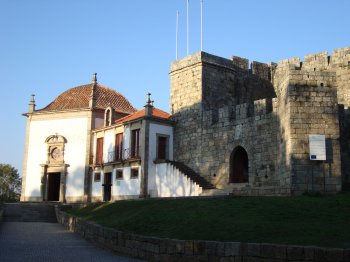
This chapel is attached to the walls of Feira Castle, having been built in 1656 by order of the Countess of Feira, D. Joana Forjaz Pereira de Meneses e Silva. It is a learned building, with a hexagonal section, revealing the influence of important centrally planned chapels in the region. Inside, the floor forms a radial design from the center, and there are gilded altarpieces on five walls. Attached to the chapel is the chaplain's house.
Capela de Nossa Senhora dos Remédios
- heritage
Herdade do Esporão - Apartado 31
7200-999, Reguengos de Monsaraz
Chapel built in the 16th century, under the protection of the Archbishop Alexander of Braganza and with the contribution of the architect Francisco de Mora, responsible for the plant. Its main features are the altar in gilt in the chancel, nave of rectangular plant and its simplicity, given the severity of manners and the conduct of the "Discalced Carmelites". In January 2005 the intervention works were initiated for recovery and boosting the building multipurpose cultural, tourist and social level.
Antigo Convento e Igreja de São Francisco / Museu de Angra do Heroísmo
- heritage
Ladeira de São Francisco
9700-181, Angra do Heroísmo
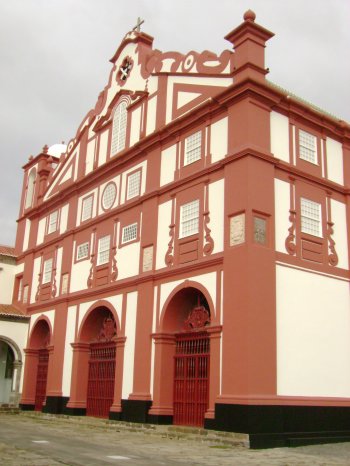
Baroque convent where works, currently, the Museu de Angra do Heroísmo. It is an 18th century building which was built on two earlier closures Franciscan. Featuring sober lines, with facades where Tower the pilasters and the window openings. Attached to the convent, a church dedicated to Nossa Senhora da Guia, with the interior divided into three naves. Highlighting the gilded altarpieces and for some Baroque paintings.
Fábrica de Chá da Gorreana
- leisure
ER1-1
9625-304, Maia
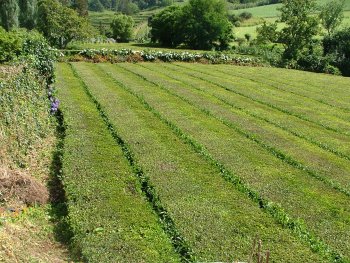
For a long time, São Miguel Island was the only place in Europe where tea was manufactured. The Fábrica de Chá Gorreana began planting tea in 1874, but it was only in 1883 that the first tea came off the production line. The retrospective of tea production can be visited daily at the Gorreana farm. Then, among ancient tea production machines, enjoy an aromatic tea. It has a private park.
Gaspacho à Alentejana
- leisure
Cuba
7940, Cuba
O gaspacho é um prato fresco, normalmente confecionado no verão. Esta sopa fria é oriunda das regiões do Alentejo e do Algarve. Normalmente acompanhada com pão em pedaços e temperada com azeite, vinagre e sal a gosto. Para que fique mais fria, é comum serem adicionados cubos de gelo.
Morcelas (Açores)
- leisure
Ponta Delgada
9500, Ponta Delgada (Açores)
Prato típico português, a morcela é mais confecionada no Alentejo, Beira Baixa e também nos Açores. Por tradição, são servidas fritas, com ovo estrelado e batatas fritas. No entanto, começou a ser apreciada na companhia de ananás natural. É frequentemente servida como complemento do cozido à portuguesa ou com feijoada.
Negalhos
- leisure
Coimbra
3000, Coimbra
O negalho é um prato típico que deriva de uma receita também muito conhecida desta região da Beira litoral: a chanfana. Consta-se que teve origem nas invasões francesas, quando o exército ocupante se viu confrontado com a fome e foi obrigado a aproveitar toda a carne, inclusivamente as tripas dos animais.
Olaria Regional de Nisa
- leisure
Praça da República, 53
6050-350, Nisa
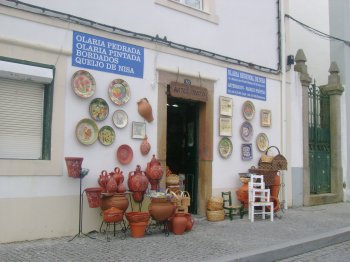
Os desenhos nos barros, motivos florais simétricos, são riscados pelos oleiros no barro ainda fresco e preenchidos com pequenas pedras brancas. Este trabalho é feito, habitualmente, por mulheres. As peças mais conhecidas são as vasilhas para a água. A olaria de Nisa tem características que a distingue da restante olaria do país.
Tibornada com Batatas a Murro
- leisure
Coimbra
3000, Coimbra
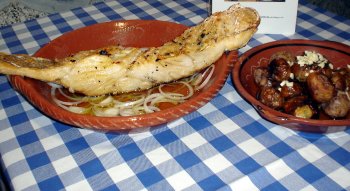
A tibornada, prato típico da Beira Litoral, era o nome dado à ceia que se preparava nos alagares aquando do fabrico do azeite ou da aguardente. Mandava a tradição que todos se serviam da mesma travessa, acompanhando o prato com pão e vinho caseiros, num serão de alegre convívio.
Termas de Nisa
- beach
- leisure
Lage da Prata - Fadagosa de Nisa
6050-201, Arez
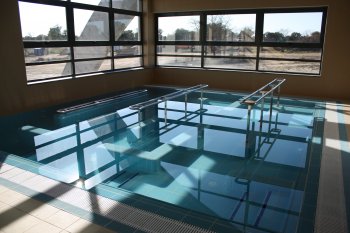
Once used freely by the population since the end of the 18th century, the Termas da Fadagosa de Nisa is today a modernly equipped thermal set. The Fadagosa spring is located 11 kilometers from the town of Nisa, and its waters are especially suitable for respiratory tract disorders, skin diseases and dermatological pathologies, physical medicine and rehabilitation, metabolic-endocrine diseases and rheumatic and musculoskeletal disorders.