Explore the best places
Results for come on in MAKEMUR.COM pay to destroy evidence in my criminal case in Portugal


Museu Eduardo Tavares
- heritage
Praça da República, 1
5130-332, São João da Pesqueira
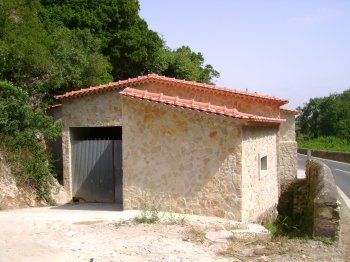
The Eduardo Tavares Museum honors and publicizes part of the work of artist Eduardo Tavares. It presents an archaeological nucleus, coming from various locations in the municipality, with assets chronologically dated to six thousand years ago. The municipality's tourist office, as well as a library related to the Douro, are integrated into the museum space.
Pelourinho de Arcos
- heritage
Largo da Nogueira
5120-023, Arcos
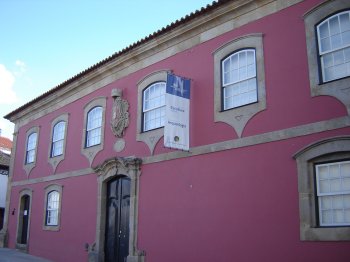
Built on the 16th century this pillory was reconstructed in 2001. It has a square platform with three steps. Here lays a square plinth from where a prismatic shaft comes out finished by a small octave ring. The capital is prismatic and octagonal and delimited by concave frames on the base and top and crowned by a pyramid.
Capela de Nossa Senhora do Desterro
- heritage
Largo do Rio da Fonte
2070-397, Pontével
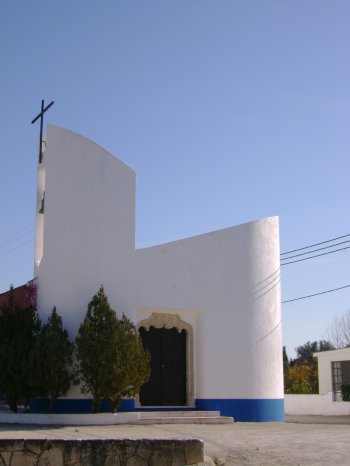
The early church was built in the 16th century, which remains the Manueline portal. In 1970 was destroyed to make way for that today. The façade is rounded and consists of nave, chancel, belfry and vestry. Inside you can see 17TH century tiles and a wooden bench at the entrance, 1635, rebuilt during the rebuilding of the new Church. Currently, in late August, receives the feasts of Nossa Senhora do Desterro.
Igreja da Misericórdia de Pinhel
- heritage
Rua Silva Gouveia
6400-455, Pinhel
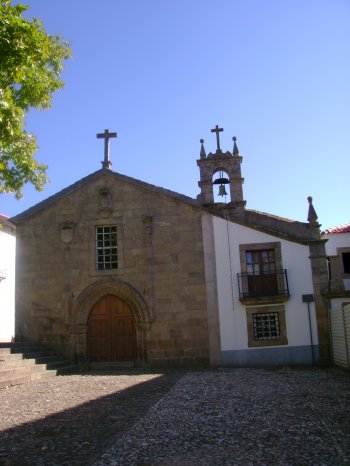
16th century church with Manueline portal, consisting of nave and chancel. The façade is distinguished by the Royal arms, with the date of 1808, and a Latin cross in the top. Inside are an altarpiece of João de Rouen, the talha, the paintings of the caissons and the two painted canvas of lateral cloths, representative of the visitation and da Nossa Senhora da Conceição. In 1810 was the target of attack by the French troops who destroyed the registry's mercy.
Palácio dos Maldonados
- heritage
Rua do Esquível, 21-29
7800-162, Beja
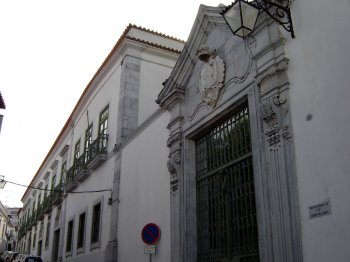
The palace was built in the mid-16th century on the initiative of a local family called Furtado Mendonça, whose coat of arms can still be seen above the main door. The building has a Renaissance profile, evident in the design of the main portico and the fine arcade found in the inner courtyard. At the end of the 19th century, the palace was used as the headquarters of the Beja High School, a situation that lasted for 35 years. Currently, the building houses a student residence.
Passeios no Sado
- heritage
Praça Pedro Nunes, 1
7580-125, Alcácer do Sal
Tours conducted in typical craft the nature reserve of the Sado estuary. Can be done individually or in a group, lasting a full day or half-day. The definition of route is made depending on the duration of the ride. Don't come true all year, being advisable to consult the local tourism sector to check availability.
Foz do Rio Cávado
- beach
- country
Foz do Rio Cávado
4740, Esposende
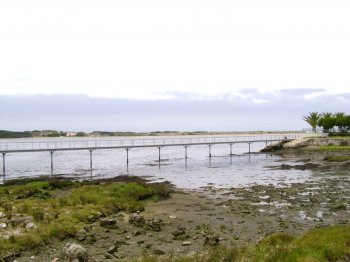
When it comes to its mouth, in lovely Esposende, the Cávado river forms almost a tidal stream. It leaves 130 km behind, since the Larouco Hill. In the ocean, by the mouth, there is a group of rocks named Cavalos de Fão (Horses of Fão). By the mouth of the Cávado river there is an old lighthouse and its house.
Forte e Bateria do Zavial
- heritage
EN1257
8650-404, Raposeira
This small, rectangular fort was built in the 18th close to the location of a previous fort dedicated to St Ignacio. This previous fort, located on a cliff, was destroyed when the cliff fell into the sea during the 1755 earthquake. This lead to the new fort being built further back than the one dedicated to St Ignacio. The presence of a fort at this site was necessary for protecting the tunny traps located througout the coast. The fort is now in ruins.
Aldeia de Piódão
- heritage
Largo Cónego Manuel Fernandes Nogueira
6285, Piódão
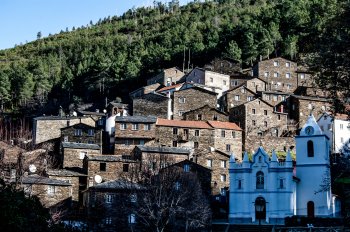
Designated a Property of Public Interest in 1978, the village of Piódão is located near the Hermínios Mountains and is one of the oldest settlements in the country, unique for its clustered layout surrounded by an extensive green expanse. The village originated from the need for concentration and settlement of shepherds who lived in the surrounding area. Its landscape and architectural ensemble is remarkable (with schist being the main material used in construction). Due to its difficult access, the village is known as a refuge for notorious criminals. Of particular note are the parish's four chapels: St. John, St. Barbara, …
Azenha da Columbeira
- heritage
EN8-4
2540, Columbeira
Very old watermill, but still working. This is a small house, built on a levada that take water directly to the mill. The levada has a gap of two or three meters, leaving the water through a nozzle-tube that carries water to the Caster. When the water comes out the mouthpiece, falls on the feathers of the caster, causing it to rotate.