Explore the best places
Results for browse now PROBLEMGO.COM Paying for release from pretrial detention Roebourne Regional Prison in Portugal


Forte de São Clemente
- heritage
Largo de Brito Pais
7645-234, Vila Nova de Milfontes
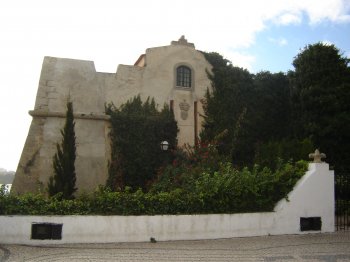
From this fortress, built at the end of the 16th century, one can view almost the entire Vila Nova de Milfontes. Originally built with a polygonal plan, with canon areas and two triangular bastions, it was damaged in seevarl ways in 1638. During the reign of D. João IV it underwent changes and its military capacity grew bigger. A model of the military mannerist architecture, it was later turned into a residence and a medieval turret with battlements was added to it. Currently, the trench and the walls are surrounded by vegetation and flowers.
Fortim do Faial
- heritage
Tojal
9230-067, Faial
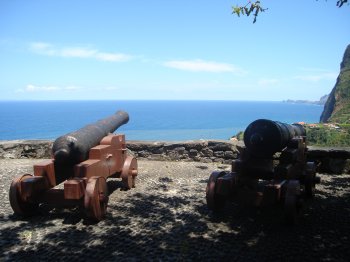
Built at the beginning of the 20th century, the Faial Fortress recreates a military battery, semicircular in plan, with ten English cannons that were fired during celebrations dedicated to Our Lady of the Nativity. It has a support house where the São Roque do Faial Parish Council exhibition room is located. From this point it is possible to observe a large stretch of the coast and, on clear days, Porto Santo, Serra da Penha d'Águia and the northern part of Ponta de São Lourenço.
Igreja Matriz de Bucelas / Igreja de Nossa Senhora da Purificação
- heritage
Largo do Espírito Santo
2670-655, Loures
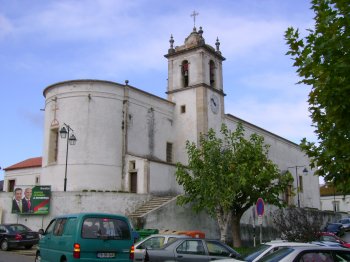
This fifteen hundreds temple has three naves with five ranks with round arches. The walls coverage is done with green and white glazed tiles and the tunnel vault are decorated with paintings from the 17th century. The sacristy has crossed vaults. On the main chapel stands out the polychromes glazes tiles, one altarpiece in baroque carve and four sixteen hundreds paintings. It is also worthy to mention the lateral altars carve and the sixteen hundreds candelabra, as well as a gothic pediment on the entrance right side.
Igreja Matriz de Nossa Senhora da Assunção de Arronches
- heritage
Praça da República
7340-012, Arronches
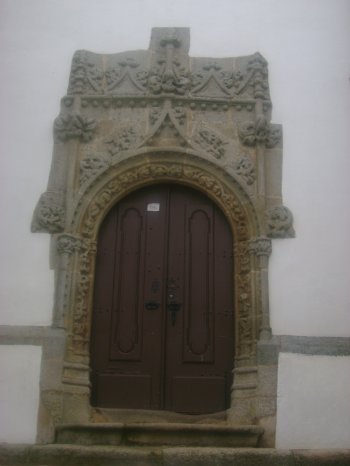
Temple from the 16th century, of Manueline design, with a Renaissance main portal, with a round arch, decorated with eight carved cherubs and two warrior busts in high relief. The main façade, supported by two stone pilasters, was rebuilt in the 18th century. The interior has three naves, vaulted with ribs, highlighting the main altar, made of marble, flanked by twelve wooden chairs. The original church dates back to 1236, with construction completed in 1242. The current church was built at the beginning of the 16th century.
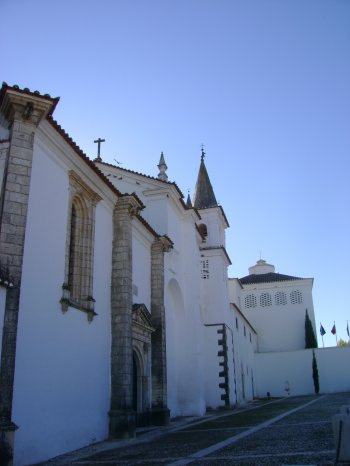
Igreja e Claustro do antigo Convento Real das Chagas de Cristo / Pousada Convento de Vila Viçosa
- heritage
Terreiro do Paço
7160-251, Vila Viçosa
The Church is small in size, with the strangled apse forming the corner of the vast block occupied by the complex. The cymatium of the nave and the apse are interlocked in deeply framed masonry, ornamented by zoomorphic figuration gargoyles. The nave is covered with tiles from 1626 and the vault with fresco paintings. The altarpiece is by King João V. The classic cloister, by King João III, has two floors and twin arcades. The chancel also has an ogival vault of a single section, tiny, with a tribune and an altarpiece in baroque gilded woodcarving.
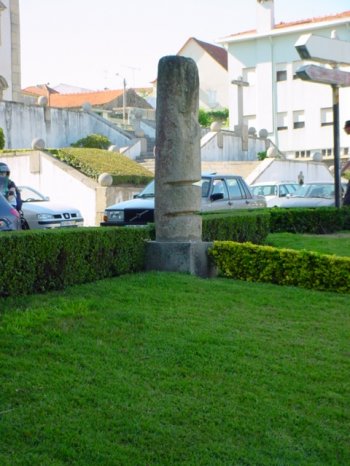
Marco Miliário da Rua Doutor Bento Carqueija
- heritage
Rua Doutor Bento Carqueija
3720-214, Oliveira de Azeméis
The milestone, one of the testimonies of the Antiquities of Oliveira de Azeméis, was found during the demolition of the Church of Ul, in the late 18th century. Removed from their place of origin had several locations, finding itself today exposed at the square near the Church. This milestone marks the 12TH Mile until Langobriga (Civitas in Fiães, Santa Maria da Feira) and probably the Mile route between 16TH LX Braga and Lisbon, and was erected during the rule of Emperor Tiberius, between 23 and 24 of our age.
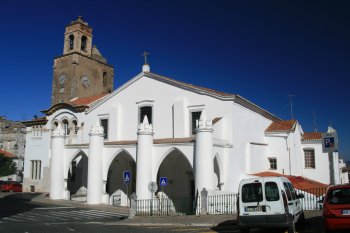
Igreja de Santa Maria
- heritage
Largo de Santa Maria
7800-133, Beja
Santa Maria Church is placed in a square with old buildings from which we stand out the Torrinha house, the former building for the City Hall and another Manueline building with a Coat of Arms on the door. It still preserves the apse structure, the porch, the baroque altars and the “Tree of Life” represented on a lateral chapel. It has undergone some transformations on the 15th, 16th, 17th and 19th centuries and it was restore in 1960. The classification as a Property of Public Interest includes the joint of buildings belonging to the church and to the attached watch …
Igreja Paroquial de Pinho
- heritage
Rua Central
5460-472, Pinho
The parish church of pine, dedicated to Santa Marta, is deployed in the Centre of the village of Pine. Is a granite Temple, restored in the 18th century, flanked by a churchyard partly paved with granite graves covers. Inside are three gilded altars, the high altar and two side altars, religious imaginary housing. In this church there is still an exceptional Panel, on fabric, dating from the 17th century, representing one of the stations of the "Via Dolorosa". In addition to the Sunday masses, is in this temple are celebrated crafts the religious feast in honour of Santa Marta.

Muralhas e Portas de Santarém
- heritage
Jardim das Portas do Sol
2000, Santarém
Anyone traveling from the neighboring municipality of Almeirim to Santarém via the Don Luís Bridge, which crosses the Tagus River, will find the walls of the Ribatejo capital before them. However, little remains of Santarém's imposing and ancient fortifications, although in the Jardim das Portas do Sol, which sits atop the walls, it is still possible to find three turrets. Several sections of walls and a stretch of the Porta de Santiago are other vestiges of what was once an important medieval castle.
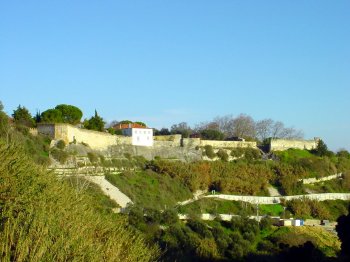
Quinta da Aveleda
- heritage
Rua da Aveleda, 2
4560-570, Penafiel
It is the most well-known and important farm in the municipality, marking the landscape with its vineyards. Of particular note is the Quinta's manor house (from the 18th century) and the romantic garden that surrounds it, where you will find the Torre das Cabras (Tower of the Goats), the Tea House (in Victorian style and decorated internally with Portuguese faience), the Fountain of the Four Seasons (executed by Master João da Silva), ancient trees and, above all, the Janela da Reboleira (Reboleira Window), in Manueline style, which is a national monument.