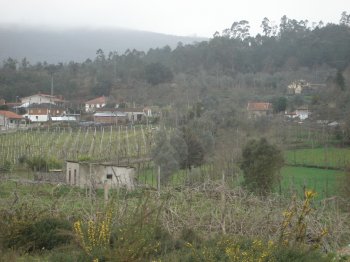
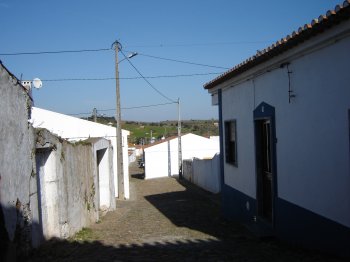
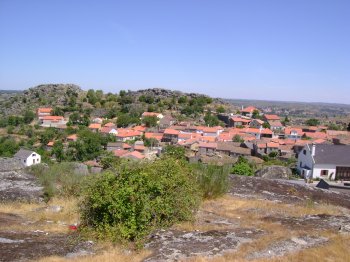
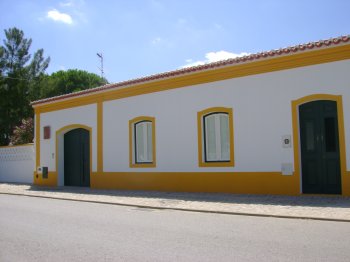
A small group of typical rustic houses of the Alentejo region, namely the House of Granja, adapted to rural tourism. A special note to the crucifix and to an 18th century church.
A place where olive oil, wine, and cereal production, small businesses, and pastoralism are prominent. Among its architectural heritage, the most notable monuments are the Roman bridge (a National Monument), the Roman dam, the chapel of St. Sebastian, the chapel of Senhor da Ladeira, the old town hall building, and the jail. Crafts include cork, lace, and oak chairs.
It may date back to before the foundation of Portugal. It is located by the springs of the brook that crosses Condeixa. The monuments include the mother church, rebuilt in the 18th century, the chapel of Our Lady of the Adro (churchyard), with an 18th century retable, and an 18th century house with ioninc columns and a balcony.
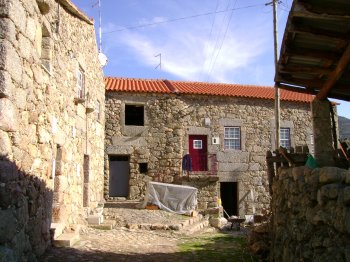
This is one of the small villages of the Natural Park of the Estrela Mountain, at an altitude of 580 metres. Most of its inhabitants are farmers these days, even though the culture of linen used to be an activity until quite recently. The houses are made of granite, which is an architectural feature of this region. Nearby, one may visit the Caldeirão dam or practise mountaineering.
Donated to the Templars by Dom Afonso II, this village still has some important military features. There are just a few vestiges of the old castle. Currently, the village is divided in three areas: castle, calvary and the collective fields, still widely occupied. A special note to the walls of the old castle and of the citadel, the mother church, the 16th century mother church, with a Renaissance pulpit, the Hermitage of Saint Lázaro, the manuelin window and the 16th century granite pillory.
Centennial field House and completely rebuilt, surrounded by a pleasant outdoor space. The tranquility promotes relaxation in this agricultural area, however, offers swimming pool, gym and tennis court. Is only three kilometres from Spain.