Explore the best places
Results for view web MAKEMUR.com Looking to buy a not guilty from the jury foreman Christmas Island in Portugal


Ponte Pedro e Inês
- heritage
Coimbra
3000, Coimbra
The Pedro and Ines footbridge, designed by engineer Cecil Balmond and Adam da Fonseca, was built under the program to link the banks Polis, right and left of the Mondego River. Inaugurated in November 26, 2006, presents 275 meters long, four wide, having half a square, with eight feet wide. The bridge is in wood and guards from the Board (protection grids) present four glasses different colors: yellow, blue, green and pink. The crossing was already regarded as an icon of architecture.
Ponte Velha de Cabril
- heritage
Cabril
5470-013, Montalegre
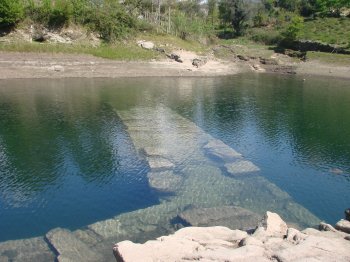
Roman bridge of solid masonry construction of granite, dating from the Medieval period. Features a round arch erected with a care unit isódomo, which wins a gap about two feet wide. The Board rises in easel and the bow is heavily consolidated on the banks through two divergent pegões. The pavement consists of regular slabs and has no guards. It lies on the river Cabril, being most of the year submerged, with only noted when the water levels of the albufeira de Salamonde descend.
Via Romana XVII do Itinerário de Antonino
- heritage
Penedones
5470-069, Montalegre
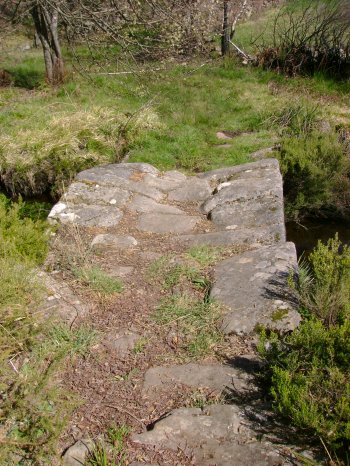
This Roman road emerges from albufeira about one kilometre south-west of the chapel of Saint Alexius, in Penedones, next to the graves. This location until Tariq, the former EN 103 adopted the route of Via romana, passing West of castro de São Vicente, the village of Chã, Peirezes, Peirezes and Gralhós bridge. It was built in the time of the first Roman Emperor Augustus, as evidenced by the anepígrafo milestone. Is an integral part of the route of the Via romana XVII, between Braga and Astorga.
Via Romana de Peireses
- heritage
Peireses
5470-068, Montalegre
This Roman road emerges from albufeira about one kilometre south-west of the chapel of Saint Alexius, in Penedones, next to the graves. This location until Tariq, the former EN 103 adopted the route of Via romana, passing West of castro de São Vicente, the village of Chã, Peirezes, Peirezes and Gralhós bridge. It was built in the time of the first Roman Emperor Augustus, as evidenced by the anepígrafo milestone. Is an integral part of the route of the Via romana XVII, between Braga and Astorga.
O Tamanco Camping & Cantina
- hotels
Rua do Louriçal, 11
3105-500, Carriço
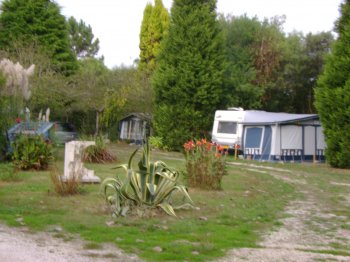
The campsite the Clog is an area characterized by its picturesque and familiar environment, far from the stress and confusion of the cities. Here you will have the possibility to relax and observe nature in its pure State, in the shade of fig trees, pine trees, Chatti and other trees. You can select the accommodation in tents or if you prefer something more comfortable has available two bungalows for rent. All this in a family atmosphere, cosy and lively which is reflected also in the moment of meals at the Bar or restaurant.
Parque de Campismo de Fão
- hotels
Rua São João de Deus
4740-380, Esposende
The Parque de Campismo de Fão, located in the typical village of Fao, surrounded to the North by the waters of the river Cávado and the West by the Atlantic Ocean, benefits from the proximity of the extensive beaches of fine sand, dunes and pinewoods. Highlight is the riverside promenade and the iron bridge, the streets and alleys, the narrow-mindedness of the local people and their hospitality. The beaches of Fao and Ofir and the Cávado River are perfect places to practice sport fishing, canoeing, surfing, among other water sports. We suggest a visit to the medieval necropolis.
Parque de Campismo de Ortiga - Mação
- hotels
Estrada da Barragem
6120-525, Mação
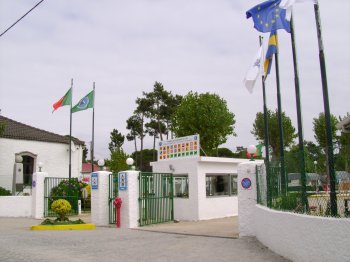
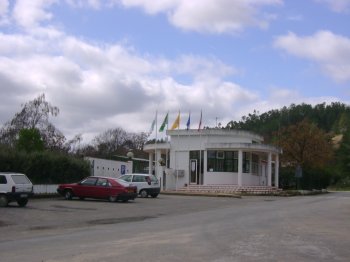
The campsite of Ortiga offers all conditions, not only rest, but also to organize and develop group activities and active tourism in direct contact with the natural environment. Overlooking the resevoir dam of Ortiga, and only 75 minutes from Lisbon, offers various facilities for their users, since hot water, recreation room, area for caravans and tents, telephone, amphitheatre, among other services. Ideal for organizing that week, weekend or even an unforgettable holiday with your family and friends. Delight in the Green Information horizon.
Santuário do Senhor Jesus da Piedade
- heritage
Avenida da Piedade
7350-094, Elvas
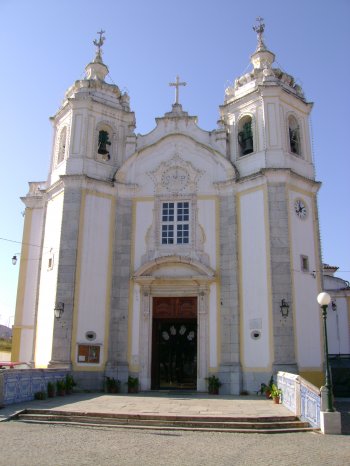
This large, religious-style architecture is an example of one of the most symbolic Baroque monuments of the reign of King João V, built in 1753. The church we see today replaced a chapel. Among other notable features are the tiles from the second half of the late 18th century that decorate the walls; inside, the two marble altars of various hues are another highlight. The week-long pilgrimage to the Lord Jesus of Mercy takes place every year around September 20th.
Sinagoga Bet Eliahu
- heritage
Rua da Fonte da Rosa, 41
6250-041, Belmonte
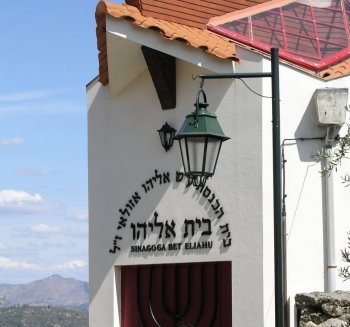
It is in the area of the old Jewish quarter, on the street Rua Fonte da Rosa, and is very popular among Jews, who make their prayers there, and curious people from other religions, who seek to know more about the Jewish community. Inaugurated in 1996, the Synagogue can only be visited by appointment, at the Jewish Museum. It is oriented towards Jerusalem and its name is a tribute to the worthy Jew who financed its construction. The Jewish community also has its own cemetery.
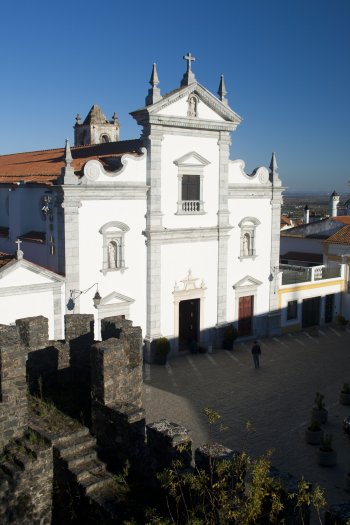
Sé Catedral de Beja / Igreja de São Tiago
- heritage
Largo do Lidador, 7
7800-265, Beja
This 16th-century building retains its hall-church structure. The church stands out for its large dimensions, the creation of a unified space, and the influence of formal solutions taken from treatises that recall one of the elaborate creations of the Plain Architecture in the south of the country. Inside, some proto-Baroque altars and a set of paintings by André Reinoso deserve special mention. Also, noteworthy are the gilded and polychrome altarpieces, the tile panels, and the statuary. It was rebuilt in 1590 on the site of the original church of Santiago Maior.