Explore the best places
Results for proceed to portal PROBLEMGO.com pay for early release from jail HMP Berwyn in Portugal


Grutas da Berlenga
- country
Grutas da Berlenga
2520, Ilha da Berlenga
The caves belong to the Berlenga Natural Reservation, in the Berlengas archipelago, located at a distance of 10 km from the continental shoreline and 5.7 miles away from the Cape Carvoeiro. They are 45 minutes away from the nearest road.
Sé Velha de Coimbra
- heritage
Largo da Sé Velha - Rua do Norte, 4
3000-383, Coimbra
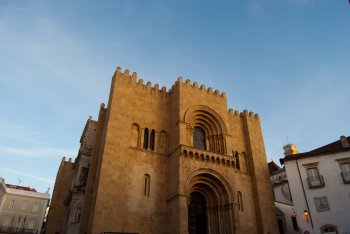
This is one of the most beautiful Portuguese Romanesque monuments, with an external appearance resembling a fortified church. The current construction began in 1162, during the reign of King Afonso Henriques. It served as the Episcopal See until 1772 and subsequently belonged to the Misericórdia (a charitable institution) until 1778. From 1785 to 1816 it was occupied by the Third Order of Saint Francis, and after that date it became the seat of the parish of São Cristóvão. The main façade features a magnificent portal, formed by arches supported by columns with decorated capitals. The 13th-century cloister was the first …
Capela de S. Mateus
- heritage
Rua Central
5460-512, Carvalho
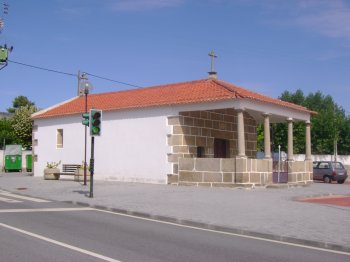
The chapel dedicated to s. Matthew is a granite building, rectangular plant oriented Southeast\/Northwest. The front facade has a simple rectangular portal and in the elongation of the gable boasts a Bell Tower crowned by a Celtic Cross. Within stands, at the head, the main altar in carved and painted with Golden motifs, which houses religious imaginary.

Capela de Santa Bárbara
- heritage
Avenida das Tílias, 113
6355-339, Vilar Formoso
Urban and isolated Chapel, with identical structure to the chapel of the Holy Christ of the cross, in the same region, because it has a porch supported by Tuscan columns. The facade is in granite, and, in the portal, you can see a color chart that has entered the date in which the works were finished (8 September de1867). In the 20th century was restored.
Capela de São Pedro
- heritage
Avenida Dr. Joaquim Guilherme Correia de Carvalho
6270-492, Seia
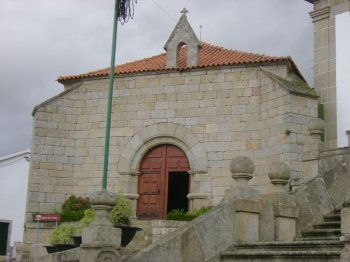
Romanesque chapel, rebuilt in the 16th century on an ancient temple built between the 12th and 13th century. Features a Bell Tower and diagonal buttresses that support a starry dome of coverage. The altar is covered the hispano-Moorish edge tile. The primitive Temple exists the portal, flanked by two inscriptions identifying the periods of construction and reconstruction.
Sé da Guarda
- heritage
Praça Luís de Camões
6300-725, Guarda
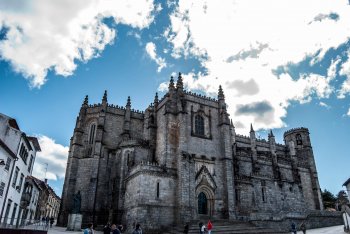
Built between the 14th and 16th centuries, this Cathedral has two portals, one Gothic and the other Manueline. There are two octagonal bell towers, gargoyles and pinnacles on the outside, an altarpiece by João Ruão, columns, the chapel of Pinas and chairs. Due to successive reconstructions, it presents several different styles that marked the 14th and 15th centuries.
Sé de Lisboa
- heritage
Largo da Sé, 1
1100-585, Lisboa
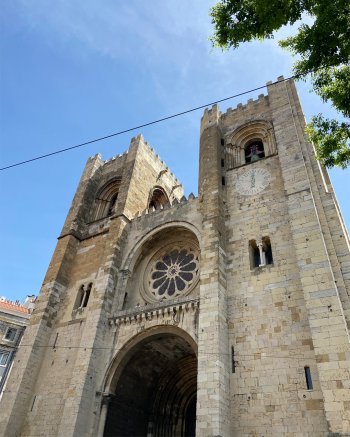
It is a mixture of architectural styles, the result of the amount of times it has been restored. You can visit the Gothic cloister and the treasury, with a very varied collection of silver objects, ecclesiastical vestments, images, manuscripts and relics related to São Vicente. On the outside, the façade stands out, with a porch and portal with four primitive Romanesque archivolts.
Sé do Porto
- heritage
Terreiro da Sé
4050-603, Porto
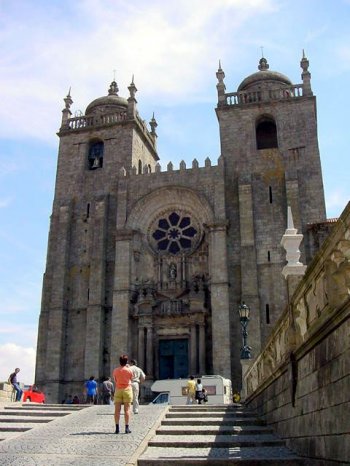
The Sé is the main church in the city of Porto. It was built in the twelfth and thirteenth centuries. The first mass was held in the year 1120. In the 13th century alterations were made that completely altered the main portal. Rebuilt in the Baroque style, it kept only the rose window of its original construction. Nicolau Nasoni was the author of a galilee on the north façade, and also intervened in the decoration of the sacristy. The interior retains the images of Nossa Senhora da Vandoma (14th century), the "silver altar", an important Gothic cloister, the "old cloister", …
Igreja de Santa Maria / Igreja Matriz de Óbidos
- heritage
Praça de Santa Maria
2510-002, Vila de Óbidos
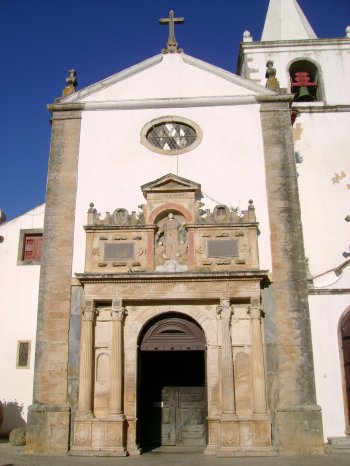
This building with three naves has a prismatic bell ringer tower with ashlars irregular on the corners, covered by a pyramidal dome and with traces from the Manueline. The altarpiece is in golden carving with a sacrarium with a mannerist structure. It presents a mannerist doorway and on its inside it stands out the glazed tiles coverage from the 17th century and the paintings from the 17th century from Baltazer Gomes and from Josefa de Óbidos. Also, worthy to mention is D. João de Noronha tomb considered a masterpiece from the Portuguese Renaissance.
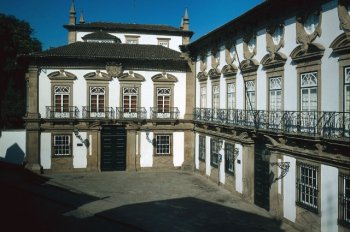
Museu dos Biscaínhos
- heritage
Rua dos Biscaínhos
4700-415, Braga
The Biscainho Museu is located in a patrimonial ensemble with a house and historical gardens from the XVIII century. This is a manor-house from the baroque period, integrating decorative art collections of Portuguese furniture and ceramic from the XVII and XVIII centuries.