Explore the best places
Results for castelo in Portugal


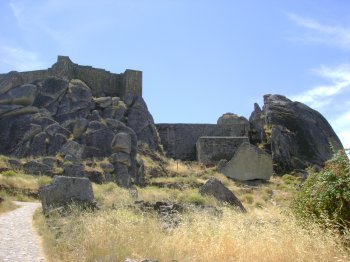
Castelo de Santo Estêvão
- heritage
Rua do Castelo, 10
5400-750, Santo Estevão
This fortress was built by Sancho I, having been restored during the reign of King Dinis. The castle remains, at present, the keep with twinned Windows and crowned by battlements polygonal. Over the centuries this site received several fortifications.
Castelo de São Romão (Vestígios)
- heritage
Telhado
5470-527, Montalegre
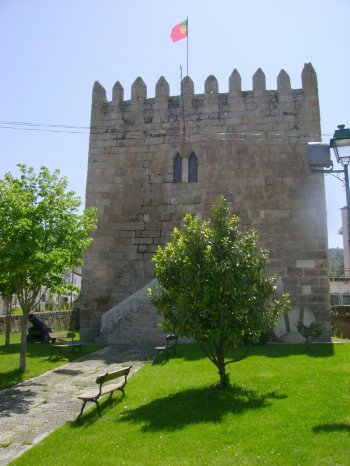
At the foot of the Serra do Larouco, among o Corgo o Corgo and do Fojo of the Goatherd, 1090 ft maximum altitude is a rugged Hill that was once a fortified settlement of pre-Roman times. For the whole lot are visible remnants of alignments of structures, with higher incidence on the upper deck, where you will find the highest concentration of ceramic materials. There are also remains of walls. Of North and Northwest defence was natural. Iron age fortified settlement, taking into account the ceramic booty found.
Castelo de Torre de Moncorvo
- heritage
Rua Tomás Ribeiro, 6
5160-294, Moncorvo
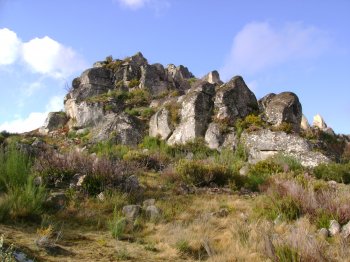
This castle was built by King Dinis between the 13th and 14th centuries. Some of the walls that surrounded the old town remain from the original construction. The area where the wall existed is currently occupied by housing.
Castelo de Torres Novas
- heritage
Rua General António César de Vasconcelos Correia
2350-421, Torres Novas
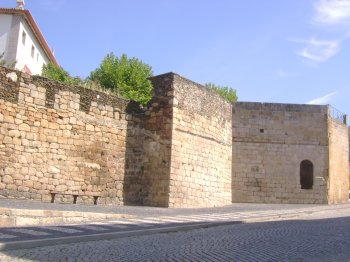
The castle was built during the reign of Dom Sancho I, on the ruins of an older fortification. During Dom Fernando's reign, it underwent restoration work and, in 1755, suffered extensive damage in an earthquake. Later, French invaders left the castle in a state of great degradation, which led to its complete abandonment. Today, it preserves some 14th-century towers, including the keep. The castle grounds have been transformed into a garden and are a pleasant place for leisure.
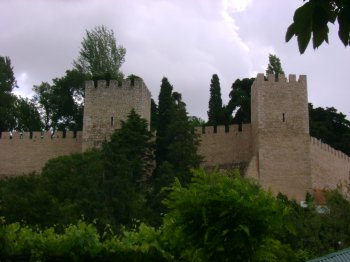
Castelo de Torres Vedras
- heritage
Largo Coronel Morais Sarmento
2560-602, Torres Vedras
Castle located on top of a hill, in an area surrounded by the village. The walls were raised by the Arabs and, later, D. Dinis expanded the fortification and D. Manuel ordered its reconstruction. This castle was part of the defensive system of Linhas Torres. Ruined by the 1755 earthquake, it still retains some sections of the wall and the large semi-circular turret that defended the entrance to the former Palace. Inside the wall, in an oval shape, there is a chapel, the citadel that includes the keep and three cisterns.
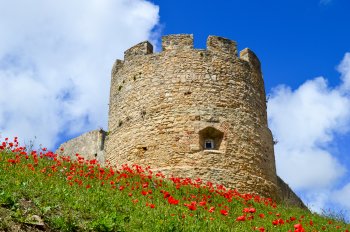
Castelo de Viana do Alentejo
- heritage
Largo de São Luís, 7
7090-271, Viana do Alentejo
Originally called "Viana de a par de Alvito," the town was repopulated in the 13th century by King Gil Martins. In 1313, King Dinis granted it a charter and privileges and ordered the construction of the castle, which, rebuilt by King João II, still retains the characteristics of the original design. It is a pentagonal monument with cylindrical towers with cruciform arrow slits at its corners.
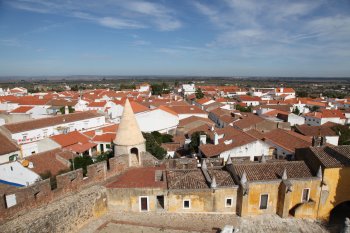
Castelo de Vila Flor
- heritage
Rua Dom Dinis
5360-377, Vila Flor
Only the Porta da Vila or Arco de Dom Dinis and a section of the wall remain from this medieval castle. The main door is flanked by a tower flanked by two semicircular defensive towers. The town of Vila Flor was part of a border defense zone against attacks from Castile and León.
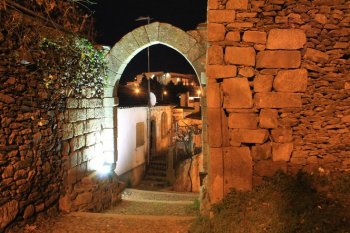
Castelo de Vila Viçosa
- heritage
Rua Sacadura Cabral, 2
7160-209, Vila Viçosa
Square-shaped castle surrounded by a moat and two cylindrical turrets. Access is via a classic Roman doorway. It is a rare example in the panorama of Portuguese military architecture, with the medieval fence, towers and doors coexisting with the Renaissance fortification. The Alcáçova dos Duques de Bragança stands out, with rooms with marble columns and ribbed vaults.
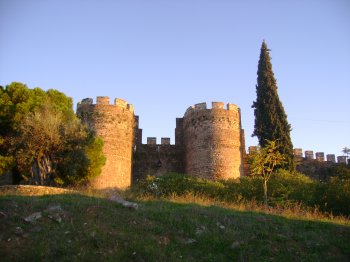
Castelo de Vila do Touro
- heritage
Rua dos Templários
6320-592, Sabugal
Castle probably dated from the Bronze age and rebuilt during the reign of Dinis. In 1319 moved to the hand of the order of Christ. At the time of the restoration War, residents erected a stronghold around, with defensive purposes. Consists of a walled perimeter that includes a single door with double row of staves.

Castelo e Muralhas de Monsanto
- heritage
Rua do Castelo, 32
6060-091, Idanha-a-Nova
According to legend, the foundation of this castle began with a hillfort that allowed Viriato's companions to withstand a seven-year siege. Later, it also withstood Arab, Castilian, and French attacks. It is located amidst a rocky outcrop, at a strategic lookout point. Dom Afonso Henriques granted it a charter in 1174 and donated it to the Templars, who built the castle. Of the imposing medieval fortress, only the quadrangular Torre de Lucena and Torre do Pião remain.