Explore the best places
Results for enter now fast MAKEMUR.COM pay a judge to shorten my time in prison in Portugal


Fazenda Nova Country House
- hotels
Estiramantens
8800-504, Santo Estevão
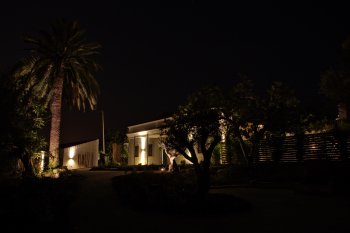
Fazenda Nova is a villa with 10 suites, a real refuge in the rural heart of Tavira in the Eastern Algarve. This is the authentic algarve, rural, of salinas, the small towns, fishing ports and characteristic of a great variety of beaches entered into the Ria Formosa nature reserve. The perfect location to explore the culture, gastronomy and natural beauty of this area almost intact.
Museu Nacional da Resistência e Liberdade
- heritage
Fortaleza de Peniche - Campo da República, 609
2520-607, Peniche
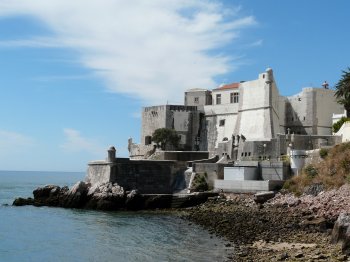
Located in the Peniche Fortress, this space arose from the recognition of this fortress as a memorial site and a major symbol of the struggle for freedom on a national scale. Its mission is to preserve the historical memory of the Peniche Fortress and the struggle of the Portuguese people, and in particular, the resistance to the dictatorship, for freedom and democracy. There, visitors can see the cells, visiting rooms, and the recreation yard of the prison, which also served as a residence for Germans and Austrians during World War I.
Forte de Santiago do Outão / Farol do Outão / Hospital Ortopédico do Outão
- heritage
EN379
2900, Outão
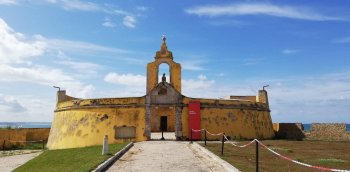
Fort located at the foot of Serra da Arrábida. Its tower is dated from 1390. In 1572 it suffered enlarging works and was completely remodelled after the Restoration War. The chapel, covered with glazed tiles from the XVIII century, is worthy of notice. In the XIX century it was a prison and later the holydays residence of King D.Carlos and Queen D. Amélia. In 1909; it became a hospital for orthopaedic diseases and maintains its function until today.
Torre de Centum Cellas
- heritage
Rua dos Bombeiros Voluntários, 26
6250-056, Belmonte
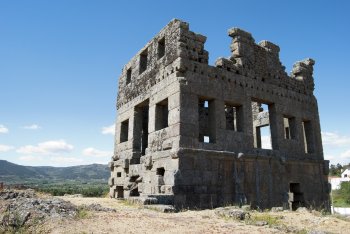
It is on the way to Colmeal da Torre that you can find this enigmatic building of Roman origin, classified as a National Monument since 1927. There are several theories and legends linked to this rectangular building with three floors, whose initial function remains undefined, but which was possibly integrated into a Roman villa. One of these legends maintains that it was a prison with 100 cells, where Saint Cornelius, who formerly also named it, would have been imprisoned.
Fajã dos Padres
- country
Rua Padres António Dinis Henriques, 1
9300-261, Quinta Grande
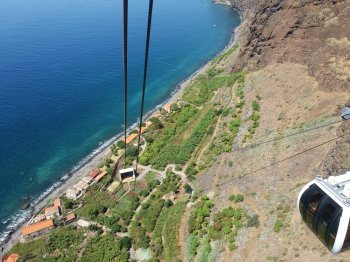
A paradisiacal place, located in a cove at the bottom of the famous Cabo Girão cliff. Until 1998, access was only possible by boat, but now there is a modern glass elevator. There is a small tourist resort here that includes a restaurant, good conditions for sunbathing and fishing, and some tourist accommodation.
DoubleTree by Hilton - Lisbon Fontana Park
- hotels
Rua Engenheiro Vieira da Silva, 2
1050-105, Lisboa
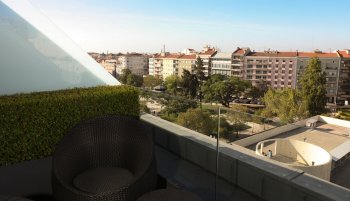
Since October that the management of this unit of four stars went to the Hilton, who gave him a new philosophy and a new badge. The Fontana Park Hotel is now DoubleTree by Hilton-Lisbon Fontana Park. With the new management arrived the quality standards of the international hotel chain
Museu da Cultura Castreja
- heritage
Rua do Solar
4805-509, Briteiros Salvador
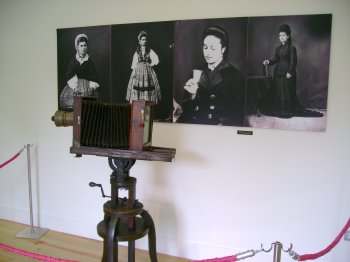
A museum located in the Solar da Ponte (Bridge Manor), an 18th century building, that exhibits vestiges of the "castreja" culture (of the Iberians and the Celts), a culture that only eexisted in the northwest of the peninsula. It used to be the house of the family of Francisco Morais Sarmento and now belongs to the Martins Sarmento Society.
Núcleo Museológico Municipal de Valença
- heritage
Rua Mouzinho de Alburquerque
4930-734, Valença
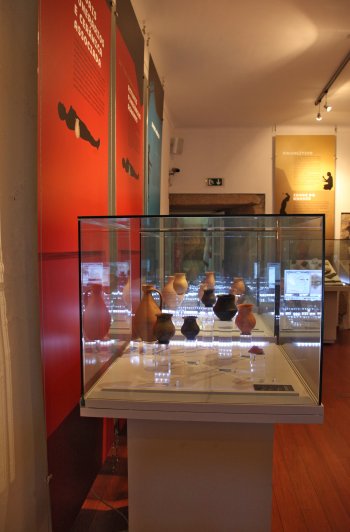
The former jail and "Domus Municipalis," one of the oldest and most emblematic buildings in Praça-Forte, now houses memories of the most significant moments in Valença's history. The archaeological remains, a glimpse into the medieval fortification, and the military heyday of Praça-Forte in the 18th century are the highlights of this center.
Forte de São Tiago
- heritage
Travessa do Forte, 8
9060-123, Funchal
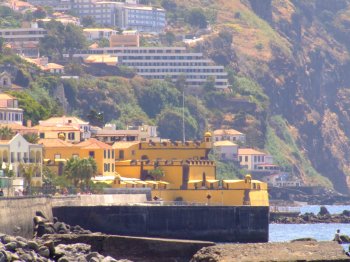
Fortress built in the XVII century to protect the city against pirates’ attacks, being enlarged in the XVIII century. It was used with military ends until 1992, year in which it was given to the Regional Government, which turned it into a cultural space, so that now is the Contemporary Art Museum.
Igreja de São Francisco de Paula
- heritage
Rua do Olival, 63
1200-773, Lisboa
The church was founded in 1719 and built, as it is now, in 1753 by Inácio de Oliveira Bernardes. The façade is ended with two strong towers. The inside, lined with rich materials, has the tomb of the queen Dona Mariana Vitória, sculpted by Machado de Castro, classified as National monument.