Explore the best places
Results for [COKHERE.com] order hydromorphone Wanaka private pure product in Portugal


Convento dos Capuchos
- heritage
Serra de Sintra
2710, Sintra
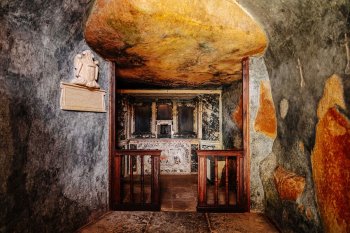
Built amidst cliffs and vegetation, this convent is also known as the Convent of Santa Cruz da Serra or of Cork. A simple, rustic construction, it was founded in 1560 by D. Álvaro de Castro, fulfilling a vow he made to his father, D. João de Castro. Everything in this space is miniature: the cells, lined with cork, the refectory, and the small church with its marble altar, whose vault was carved from the rock itself. It is believed to have been abandoned in 1834, following the suppression of religious orders decreed by the liberal regime.
Museu Municipal Leonel Trindade
- heritage
Praça 25 de Abril - Convento de Nossa Senhora da Graça
2560-286, Torres Vedras
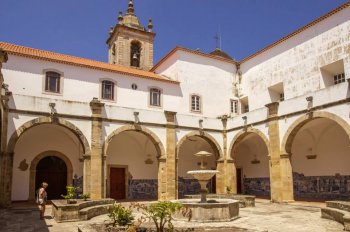
Founded in 1929 by Rafael Salinas Calado, it started out as an annex to the Church of São Pedro. After being transferred to the building of the former headquarters of the Irmandade da Santa Casa da Misericórdia, he would still move again. It is currently installed in the building of the former Convent of Graça, of the Order of Augustine Shoes. The main exhibition is an archaeological and ethnographic show with various pieces extracted from the surroundings. Of note is the Medieval Room with paintings and tombstones and the Linhas de Torres Room where you can admire documents, uniforms and …
Núcleo Museológico do Palácio de Monserrate
- heritage
Estrada de Monserrate
2710-405, Sintra
The current Palace, with an exotic Oriental plan, was built from an 18th century building that imitated a medieval castle. A possession of the Mello e Castro family, it was rented to Gerard DeVisme at the end of the 18th century, who bulit a neogothic manor. In 1856 it was acquired by Francis Cook, who built a new Oriental palace, with revivalist motifs, a true testimony to the romantic architecture. He also ordered the plantation of the Moserrate Park, that combines exotic and local plants, currently an important botanical museum. Nowadays, one may only visit the gardens.
Igreja de São Pedro de Roriz
- heritage
Rua do Mosteiro de Roriz
4780, Roriz
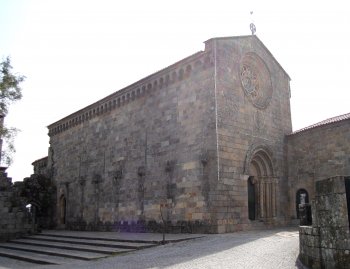
The Monastery of São Pedro de Roriz was founded by Lady Unisco Godiniz, in the year 978. Its affiliation with the Benedictine Order dates back to 1902. In the 17th century, notable works were carried out, directed by Frei João Turriano, which results in the current appearance of the monastery. Its interior is rich in gilded carving and reveals traces of one of the most notable carvers of the "Braga school", Frei José de Santo António Ferreira Vilaça. Its style shows influences from French and German Baroque and Rococo.
Palácio Pancas Palha
- heritage
Rua de Santa Apolónia, 12
1100-468, Lisboa
Building ordered by D. Luís de Meneses, lord of Pancas and Ponte da Barca, foreiro of the Comendadeiras de Santos-o-Novo in the second half of the XVII century. In the middle of the XIX century it was sold to the judge of the high court José Pereira Palha. In 1968 the City council buys it to the Van Zeller family. It is a manor house with open yard for the carriages and the noble staircase. Inside there’s a small room decorated with rural motifs – the frescos room – dated probably from the XIX century, the chapel, the gardens and …
Mosteiro de Santa Maria de Coz
- heritage
Rua de Santa Rita
2460-396, Cós
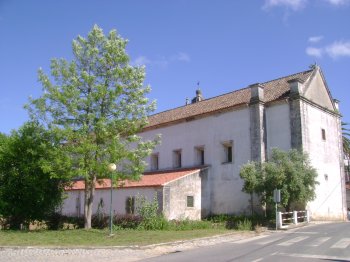
Founded in the 13th century by the abbot of Alcobaça, the Monastery of Santa Maria de Coz was one of the most important monastic complexes in the region and the most important monastery of the female branch of the Cistercian Order. The current building, of impressive simplicity, derives from works carried out mainly in the 17th century. The sober aspect of the exterior of the building contrasts with the Baroque interior. The church, about 50 meters long, reveals the grandeur of the old monastery and has coffered wooden ceilings, 17th-18th century tiles, and gilded altarpieces.
Quinta da Trindade
- heritage
Avenida do MUD Juvenil
2840, Seixal
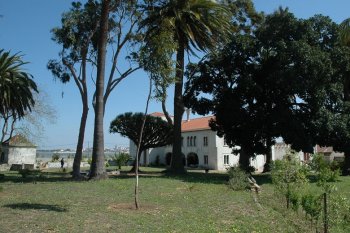
This 17th-century building has undergone later alterations. The tilework covering the staircases and rooms is particularly noteworthy. Throughout the building, one can also find 18th-century ceiling paintings and architectural elements from various periods, including remnants of statuettes from convents, monasteries, and churches that were abandoned after the suppression of religious orders in 1834. In the garden, there is a centuries-old dragon tree, a remarkable specimen of Dracaena graco. To visit Quinta da Trindade, it is necessary to make an appointment with the Educational Service of the Seixal Municipal Ecomuseum.
Castelo de Sortelha
- heritage
Largo do Pelourinho
6320-536, Sabugal
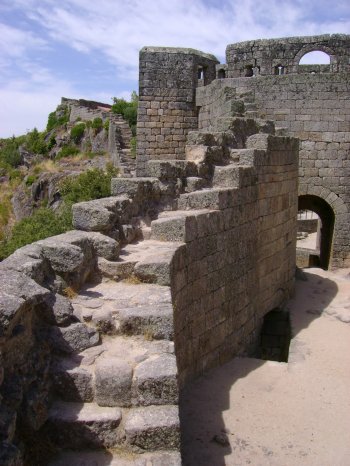
A castle of probable Muslim construction, whose oldest written document mentioning it dates from the reign of King Sancho I, who ordered repairs to be made to the castle. Later, King Manuel I benefited from restoration works, marked by the insertion of the Manueline coat of arms on the castle walls. The alcazaba remains, with machicolations and loopholes protecting the entrance to the enclosure, and inside, a cistern. In the center of the citadel is the keep, with a square plan and a single floor. The walled enclosure, with two gates flanked by towers, completely surrounds the town.
Comboio Histórico da Linha do Douro
- heritage
Estação de Comboios de Peso da Régua
5050, Peso da Régua
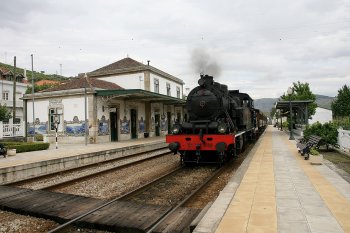
The Douro Line, which totals approximately 200 kilometers, runs partway close to the river, offering a wonderful panorama of it and the surrounding vineyards. On Saturdays from June to October, a 1925 steam locomotive runs between Régua and Tua stations, transporting us to another time. Along the way, you can enjoy a glass of port and a slice of regional football, accompanied by traditional songs. Stop at Pinhão station and taste or purchase local wines and gourmet products, and admire the fantastic tile panels outside the building.
Quinta das Lágrimas Palace
- hotels
Rua António Augusto Gonçalves
3041-901, Coimbra
The hotel Quinta das Lágrimas in Coimbra, offers three distinct environments: the rooms of the Palace, the garden and the SPA. Elegance and comfort are reflected in every room of this luxury space. The environment and the service of the hotel recreates the romance of centuries past, offering all the comforts of modern times. The kitchen uses the traditional products of the region to create unique flavor recipes, which are continuously renewed to the rhythm of the seasons. The restaurant's table arcades, you can taste the herbs garden of smells, as well as oranges, lemons and avocados from the farm.