Explore the best places
Results for enter now fast MAKEMUR.COM pay a judge to shorten my time in prison in Portugal


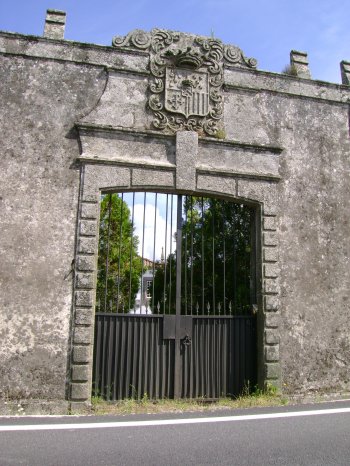
Centro Histórico de Óbidos
- heritage
Óbidos
2510, Óbidos
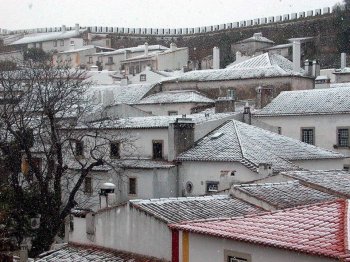
Along its narrow, almost exclusively pedestrian streets, the marks of time are visible, showcasing monuments with Gothic, Baroque, and Renaissance characteristics. The typical streets feature whitewashed houses with flowers on their balconies and windows. Passing the Camões Monument, you'll find the pillory, the Church of Santa Maria, the Church of Mercy, and Óbidos Castle.
Reserva de Burros
- leisure
Estrada dos Capuchos
2705-516, Sintra
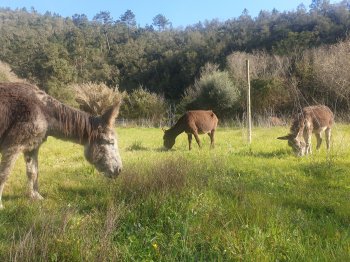
The reservation of donkeys, founded in 1987, has as its main activity the exploitation of animals of the species asses. At the same time provides tours and programs for all ages, taking advantage of the extraordinary qualities of donkeys in the interaction with people. Also conducts workshops, thematic environmental workshops, games, among other recreational activities.
Termas de Melgaço
- beach
- leisure
Parque do Peso
4960-207, Melgaço
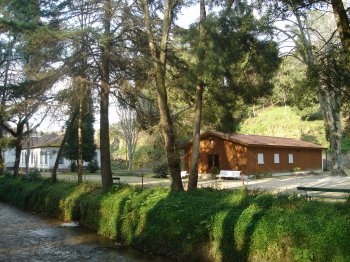
The fame of these spas dates back to Roman times, but the first written reference dates back to 1884. Located in upper Minho, it provides rest and the treatment of some illnesses. Its waters of medium mineralization, carbonated, calcium/magnesian bicarbonate and ferruginous, are especially indicated for the treatment of digestive, metabolic-endocrine and rheumatic diseases.
Núcleo Museológico de São Cucufate
- heritage
Estrada de Vila Alva - Casa do Arco
7960, Vila de Frades
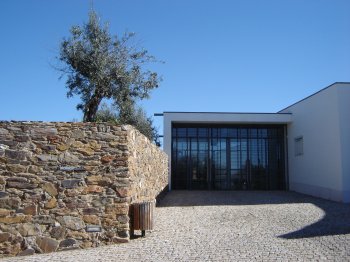
The archaeological ruins of S. Cucufate date from the 1st century AD and testify the passage of Roman civilization through the region, at a time when a villa was installed here, in the center of a farm. The archaeological excavations that were being carried out on the land also allowed the discovery of the medieval cemetery of the friars and mural paintings.
Teatro Sá da Bandeira
- art
Rua Sá da Bandeira, 108
4000-427, Porto
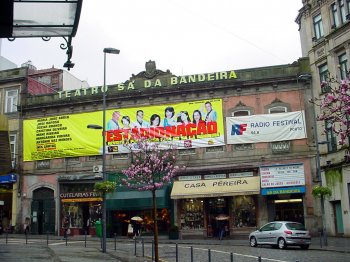
The Sá da Bandeira Theatre – initially Teatro-Circo and, after, Teatro do Príncipe Real – was open on August, 4th, 1855, being at the time a wood hut. In 1867 it was destroyed and, at the same place, a stone house was built. A week after the Republic Implantation, in 1910, it was called Teatro Sá da Bandeira.
Galeria Casa dos Cubos
- art
Praceta Alves Redol
2300, Tomar
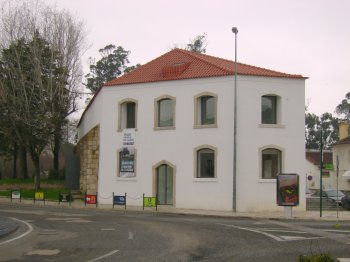
New cultural space in the city, situated on the banks of the river Nabão. Its name derives from the ancient measures of ability, the bushel and almude, time, currently designated as "cubes". Some of the services available are: cultural animation Division services, monitoring and environmental interpretation Center, senior University and space for exhibitions and training.
Forte da Baleeira
- heritage
Sagres
8650, Sagres
Baleeira fort was built around 1573 and was part of a group of forts that were around at the time of the Infante D. Henrique. In 1587 it was attacked by English ships lead by the corsair Sir Francis Drake. During this attack precious archives, as well as the Infante’s library, were lost. Currently only traces of the walls remain.
Porca de Murça
- heritage
Largo 31 de Janeiro
5090-111, Murça
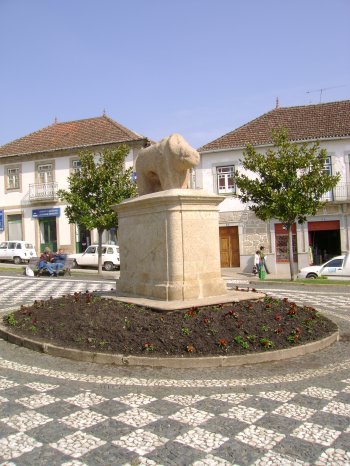
Shrouded in popular legends and its origin or purpose not known for certain, Porca de Murça (Murça´s Female Pig) is an unequivocal symbol of the town, even giving its name to well-known region's wines. It is a zoomorphic stone sculpture from protohistoric times and is thought to be a votive statue to sacred animals.
Villa Lusitano-Romana de Torre de Palma
- heritage
EN369
7450, Vaiamonte
It is one of the largest and most important archaeological sites from Roman and medieval times on the Peninsula. From the town of Basilii, the foundations, the walls, floors and structures that were below ground are preserved. Among the finds made in archaeological excavations, the following stand out: the mosaic of horses, the mosaic of muses and an inscription dedicated to Mars.
Solar de Cortegaça
- heritage
Cortegaça
4905-631, Barroselas
Solar type "Tower House", with plant in Z consisting of bodies built at different times, unified by a 16th-century tower. Features a small chapel, where highlights a tile baseboard reused, some of the late 17th century and other Johannine production. He currently works as the unit of Turismo de Habitação.