Explore the best places
Results for see site MAKEMUR.com How to hire someone to post bail for me with no money upfront in Portugal


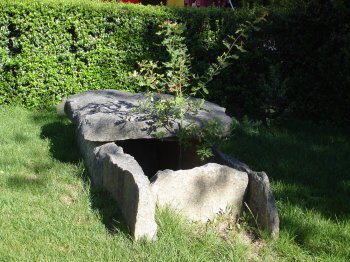
Cistas da Portela do Gorgulão
- heritage
Gorgulão
5470, Vila da Ponte
Set of two monuments that are believed to have been graves for adults, of which there is only the second. The first monument was an individual grave, CIST-type, built with slabs of local granite, with an approximate height of 0.50 meters and 1.5 meters in length. She was found in March 1931 when it carried out farm work on-site, owned three ceramic vases, fragmented at the time of the finding. Currently, no longer exists. The second the Gorgulão CIST was found in 1994, when the construction of the current accommodation "Cista", containing only a ceramic vase. Lateral slabs has approximately …
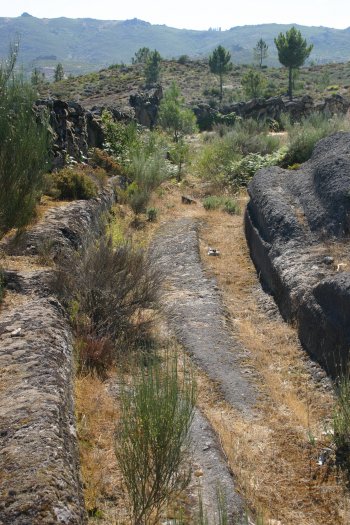
Via Romana XVII do Itinerário de Antonino
- heritage
Arcos
5470-051, Montalegre
Via built during the Julio Claudian, considered one of the most important sections and with more loot Via XVII of the Antonine itinerary. Starting from Gralhós, this route follows the path of Avessó, Ribeira do Cargual, Porto da Geia and Suavila, to enter the village of bark, in the parish of deer. It is believed that on this site via could have two strokes; the first beneath the village, plus the right, between a vampire, now flanked by walls, which possibly in winter would be soaked and another stroke at the top of the village. These two routes are then …
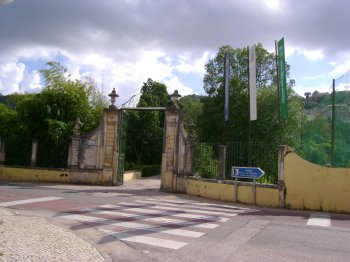
Percurso pelos Parques e Jardins de Coimbra
- country
Estrada das Lágrimas
3040, Coimbra
To take a walk or rest for a while, there nothing better than the tour through the parks and gardens of Coimbra. Starting at the Choupal, a shelter for students’ loves, continue to the Quinta das Lágrimas, where the tradition locates the drama of D. Pedro and D. Inês. Next, get to know the Botanic Garden, where thousands of exotic and autochthones species are gathered, and add to this, decorative elements such as fountains and ponds. The Sereia Garden, so-called because there is a fountain with a triton the people called a mermaid, was the place meant for entertainment and …
Vistas sobre o Rio Douro a partir de Miragaia
- country
Rua da Restauração
4150, Porto
Along the high levelling that was made in order to level the Rua Nova da Alfãndega Street runs the typical Miragaia Street, bellow the level of the main street, with its houses laid on arcades. This zone is one of the most interesting areas of Porto and where you can see buildings with signs from the XV and XVI centuries as well as many others from the XVII and XVIII centuries. Of those streets, we point out three: Viela da Baleia, name that remembers the mandible of a wale that used to be there; Ancira Street (right in front of …
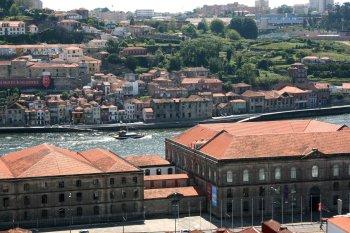
Hotel Mestre de Avis
- hotels
Rua Dom João I, 40
4810-422, Guimarães
The Hotel Mestre de Avis – Master of Avis, is one of the best situated hotels of Guimarães. Located in the city center and being part of the world heritage of UNESCO with its Toural, which is the main square as well as the most idylllic spot of the city and by car only five minutes away from the motorway. The hotel, located in a historical building, was found in 1998. It has a total of 16 rooms on 3 floors, offering its guests a pleasant stay to a very accessible price. By car or even on foot you can …
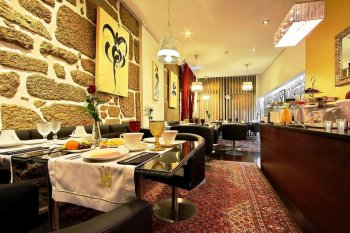
Castelo do Portelo/ Coto de Sendim
- heritage
Sendim
5470-342, Padornelos
The castle of Portelo\/frontier lift was implemented in a dividing line of country, being most of the lot belonging to Portugal. On the West side are well visible remains of walls, with about 1 meter in height and 0.70 meters wide average; If the defense was natural. The castle was built on rocky hills from the top, where they observe nesting tears the lines of Defense. This castle, such as the Piconha, the de Montalegre, Monforte de Rio Frio and Keys was intended to defend the valleys of the Tâmega and Cávado therefore places open dry streak and difficult frontier …
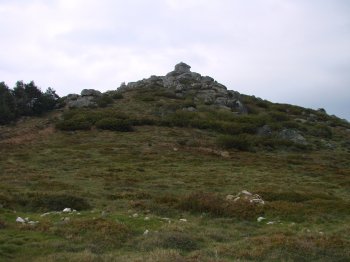
Repositório Histórico do Vinho dos Mortos
- heritage
Rua de Santo Aleixo, 29
5460-330, Boticas
Small museum dedicated to the theme of the "Wine of the dead". Were the French invasions that came cause the appearance of this today is a real ex-libris of Boticas. It was during the second French invasion (1808) and in face of the advance of the troops commanded by General Soult, which in its passage all pillaged, pillaged and destroyed, the population of Boticas, to try to defend its heritage, decided to hide by burying, what was more valuable. The wine was buried in the floor of cellars, on clay, under the cask and mills. Later, after the French were …
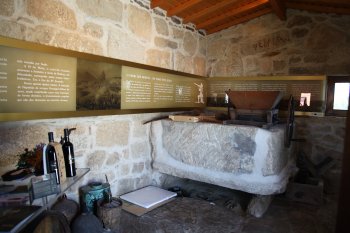
Castro de Codeçoso
- heritage
Venda Nova
5470-501, Venda Nova
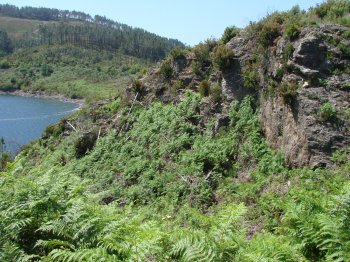
Fortified village, whose defense is composed of two lines of surrounding walls and a deep moat excavated in the rock on the South side. One of the features of this pre-Roman settlement is little spacing between the two lines of wall (about 10 meters). Within the second, on the north side, building alignments are visible. With the construction of the albufeira of Venda Nova, in the Decade of 1940, this place got the configuration of a peninsula. On the hillside East of castro, spent the 17th via romana to prove it we have the milestone of Claudius I, with 38 …
Convento da Arrábida
- heritage
Rua de São Lourenço
2925, Azeitão
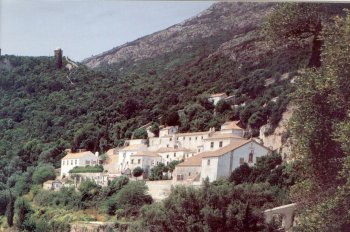
Commissioned in 1542 by Friar Martinho de Santa Maria, the Convent presents an austere architecture, being practically devoid of ornamentation. Inside, the only noteworthy features are sculptures of saints and Christs, made of terracotta and wood, placed in niches, the tiles that adorn the chapels, and also the inlaid work composed of small stones mixed with shells and shards of earthenware, used in the decoration of fountains, walls, and chapels. The ceramic and wooden sculptural pieces, stonework and flagstones, painted ceilings, and gilded woodcarving stand out. Over the centuries it underwent several renovations, and in 1863 it was acquired by …
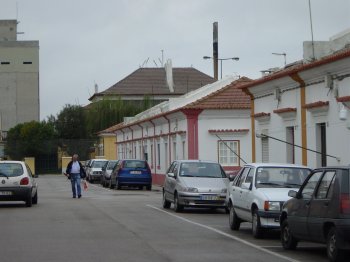
Bairro Operário da CUF
- heritage
Rua Lavoisier - Rua da CUF - Rua Liebig
2830, Barreiro
In the beginning of the 20th century, most precisely in 1907, Afredo da Silva buys a plot of ground from the Bensaúde family in the Lezíria, between the North Beach in Barreiro and the Moinhos Beach in Lavradio, and there he builds the C.U.F. factories. It started labouring in the next year with an olive husk transformation unit in order to produce soap, which employed 100 workers. In 1909 appears the first factory of sulphuric acid and super phosphate to produce fertilizers. As the century went on, the industry continued growing and this old village of fishermen and millers, with …