Explore the best places
Results for Mosteiro dos Jerónimos in Portugal


Fonte na Cerca do Mosteiro de São Gonçalo
- heritage
Rua do Mercado
4600, São Gonçalo de Amarante
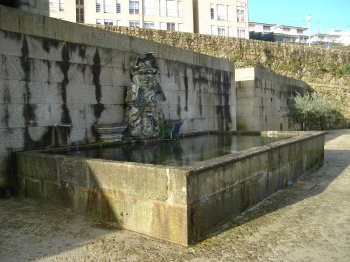
Mannerist source whose backrest is crowned by friezes decorated by heads of angels. The font is lined with 17th century pattern tiles.
Cruzeiro do Mosteiro de Leça do Balio
- heritage
Rua dos Santos Leça
4465, Leça do Balio
A crucifix that stands on a circular base, with a column that has an ornamented ring and a gothic inscription in the middle. The monument is finished by a cross with Christ and has the Coelhos' coat of arms below. It is classified as a National Monument.
Fonte da Cerca do Mosteiro de Refojos
- heritage
Rua de São Miguel
4860-502, Cabeceiras de Basto
The source presents two stones of arms of Benedictine congregation, a reservoir, and the other, of large dimensions, asymmetric, in the tank.
Igreja do Antigo Mosteiro de Fráguas
- heritage
Rua da Igreja
3460-302, Mosteiro de Fráguas
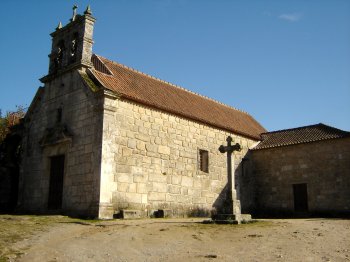
The Church of the monastery of Fráguas is a simple Temple moth, a single nave with Ashlar walls, open in a narrow facade and with barrel vault ceiling. Reference still on the Church Bell. The Church has a Bell Tower, of archaic trait, with square cutout where open two Bell faced at mid-height on the cornice around. Inside the church there is a frameset to the taste and style of the artists of Viseu. If not, at least, the workshop of Vasco Fernandes, have affinities with Grão Vasco and belong to the school of Viseu.
Igreja do Mosteiro de Pombeiro de Ribavizela
- heritage
Lugar do Mosteiro
4610, Pombeiro de Ribavizela
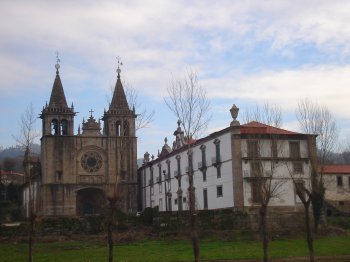
The Romanesque church of the monastery of Pombeiro was one of the few in Portugal to obey the plan of three naves, which reveals the importance of this House in the medieval context of the country. Over time, Pombeiro became head of the land of Shah, arriving to take under its patronage 37 parishes. This Romanesque period only the two absidíolos and the main portal, four archivolts.
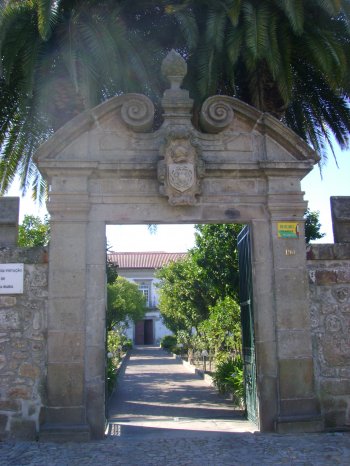
Mosteiro de Nossa Senhora da Assunção de Tabosa
- heritage
Largo do Convento
3640-030, Tabosa do Carregal
The Monastery of Nossa Senhora da Assunção de Tabosa was the last Cistercian monastery to be founded in Portugal. Integrated into the Douro nucleus of monasteries and convents of the Cistercian Order, in the extreme south of the Varosa valley, and located in the so-called "Lands of Devil", they maintain the spirit of silence and recollection of their foundation.
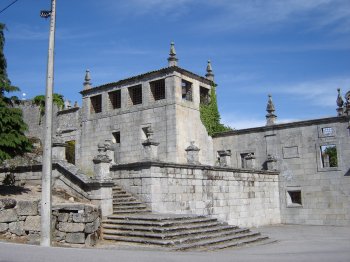
Mosteiro de Santa Clara-a-Nova
- heritage
Calçada de Santa Clara
3040-270, Coimbra
The first stone of this building was laid on July 3, 1649, during the reign of King John IV. The new Monastery was built to house the body of Queen Saint Isabel and the Poor Clare nuns from the original Convent of Santa Clara, which was in an advanced state of disrepair. The church, with a single nave, consists of a choir and a chancel. In the lower choir is the original tomb of Queen Saint Isabel, executed by Master Pero in 1330, a work sculpted from a single block of limestone. On the walls, tiles and altarpieces from the …
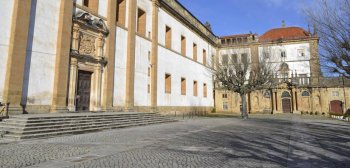
Mosteiro de Santa Clara-a-Velha
- heritage
Rua Baixo, 57
3040-266, Coimbra
The monastery was originally founded by Dona Mor Dias in 1283. In the 14th century, Clement V granted permission to Dona Isabel of Aragon to found a new monastery, which was established on the same site, with the renovation and expansion of the old buildings. The church was consecrated in 1330 and suffered its first floods in 1331. The degradation caused by the floods led to its abandonment in 1677. The church, with its vaulted nave, is an example of mendicant Gothic architecture. Notable features include the remarkable Hispano-Moorish tile panels, the rose window on the western façade, and the …
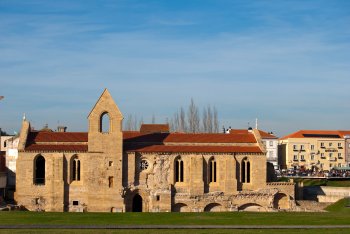
Mosteiro de Santa Maria de Bouro
- heritage
Largo do Terreiro
4720-633, Terreiro
Although the conventual part is in ruins, the church, rebuilt in the 18th century, presents a harmonious façade dominated by five sculptures representing the four evangelists and Saint Louis. Inside, the gilded altarpiece and the Joanine sacristy stand out with paneled and painted ceilings, and walls covered in historic tiles. The cloister is made up of seven sections of arcades with Tuscan columns. It is currently adapted as a guesthouse.