Explore the best places
Results for Santa Maria do Bouro in Portugal


Igreja de Santa Maria de Negrelos
- heritage
Santa Maria de Negrelos
4780, Roriz
The classification refers to the 15th century fresco painting, located on the back wall of the chancel. The fresco represents Saint Peter and Saint Paul, with traces of three angels in the center.
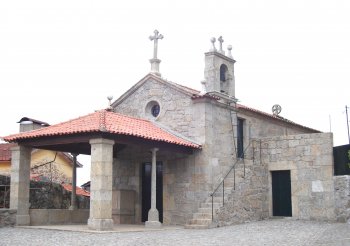
Igreja de Santa Maria de Verim
- heritage
Rua da Igreja, 6
4830-795, Igreja
Typically Romanesque church, with some traces of the former Benedictine monastery, as is the case of the cross and the font.
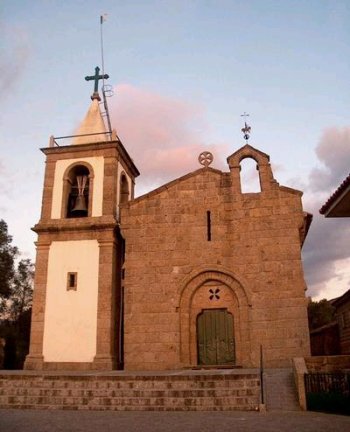

Igreja de Santa Maria do Castelo
- heritage
Largo de Santa Maria, 14
6400-410, Pinhel
This religious monument consists of a three-bay nave, a chancel, side chapels, a sacristy, and a bell tower. The main façade consists of a rounded portal and a circular oculus, flanked by a bell tower, the upper one having a double bell tower. This façade features a window overlooking the Stations of the Cross. The interior features the baptistery, which houses the baptismal font, the Mannerist niche, the painted panels of the chancel and altarpiece, and the Christ the Redeemer statue on the tabernacle door.
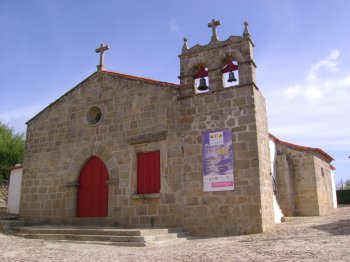
Igreja de Santa Maria do Castelo
- heritage
Rua da Piscina
6000-776, Castelo Branco
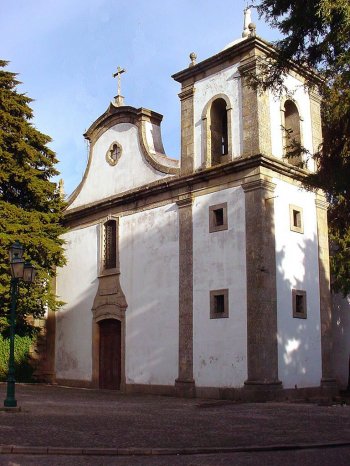
Built, probably, in the XII century, it was rebuilt in the XIII century by the Templar, and suffered later various acts of vandalism, being reduced to ruins. It suffered successive interventions and is now a work mainly from the XIX century.
Igreja de Santa Maria do Castelo
- heritage
Calçada de Santa Maria
8800-606, Tavira
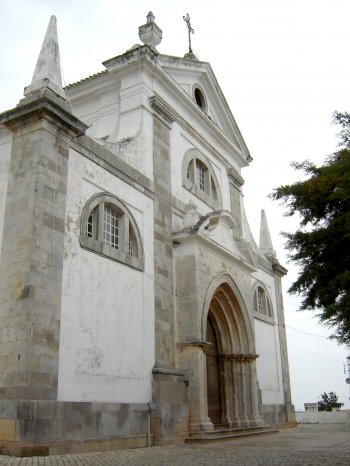
13th-century building, rebuilt after the 1755 earthquake. It maintains the Gothic structure and portal. In the main chapel is the tomb of the seven Knights of the Order of Santiago killed by the Moors in an ambush, which legend associates with the conquest of the city. From the collection of sacred art, comprising pieces of goldwork from the 16th and 18th centuries and vestments, a missal stand from the 16th / 17th centuries, from Japan (“nambam” art) deserves special mention.
Igreja de Santa Maria do Castelo
- heritage
Rua Doutor Adriano Franco, 69
2530, Lourinhã
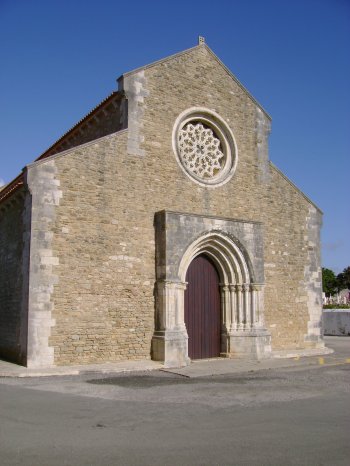
A Gothic temple whose decorative design extends beyond the church's structure. The main façade features a portal topped by a rose window. The three-nave interior features eight arches supported by columns with capitals decorated with phytomorphic motifs. A highlight is the Gothic-style holy water font.
Igreja de Santa Maria do Castelo
- heritage
Rua Dom Francisco de Almeida
2200-242, Abrantes
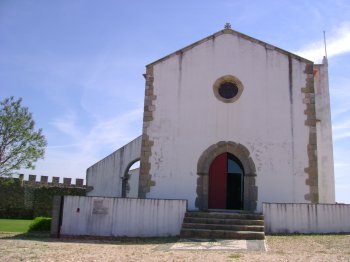
Commissioned by King Afonso II in 1215, this church was destroyed by an earthquake in 1429 and rebuilt from 1433 onwards. In the last quarter of the 15th century, the tombs of Don Diogo and Don Lopo were built here. Of particular note are the Gothic triumphal arch, the 16th-century tombs, the Mudéjar tile panels, and part of the original altarpiece. In 1921, the Abrantes Regional Museum was established here.
Igreja de Santa Maria do Castelo
- heritage
Castelo Mendo
6355-051, Vilar Formoso
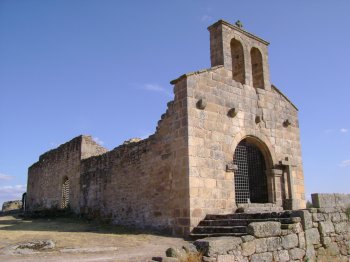
Architecture of religious type, consisting of chancel, nave, sacristy, belfry and side chapel. This is private and belongs to the family Pinto da Fonseca. This construction there are only ruins, but you can still see the square base of the pulpit and the respective ladder, the triumphal arch broken and, laterally, the tables of the side altars.
Igreja de Santa Maria dos Olivais
- heritage
Rua Aquiles de Mota Lima
2300-455, Tomar
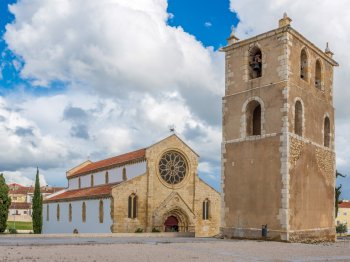
Temple from the 13th century. It appears to have been part of a Convent of Benedicts, still in the period when the town was called Nabância. It was rebuilt by D. Gualdim Pais, in 1160, who made it the pantheon of the Templars in Portugal. Its structure presents transition elements from the Romanesque to the Gothic style, the latter being predominant. A large rose window stands out on the façade, surmounting the portico with four archivolts. Over the rose window you can see the mark of the Knights Templar, the Signum Salomonis. In the sacristy, with a 16th century vault, …