Explore the best places
Results for visit fast MAKEMUR.COM Need a fixer to make my probation end early for money Albany in Portugal


Percurso Pedestre “Do Rio à Várzea”
- heritage
Foz do Trancão
2685, Sacavém
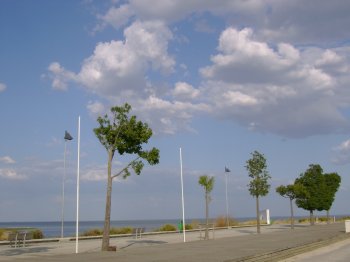
Pedestrian path starting near the mouth of the Trancão River, passing by the parishes of São João da Talha and Finland, ending at São Julião do Tojal. Always accompanies the River, even along the shores, going through various points of interest such as the Chiesa Madre (mother church) of Santa Maria de Sacavém, the convent of our Lady of martyrs, the Redoubt of Monte Sintra, the former factory of Sacavém dishware and a Roman bridge.
Trilho do Vento
- country
Subestação do Parque Eólico das Terras Altas de Fafe
4820, Fafe
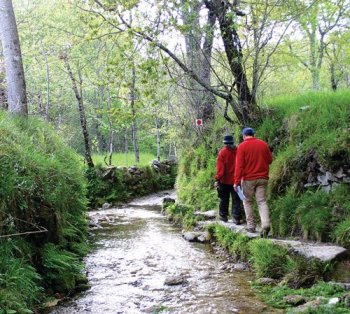
Trilho do Vento is a short walking route that starts and ends at the Terras Altas de Fafe Wind Farm substation, in Lagoa, in Fafe. It was created with the aim of improving knowledge about wind energy. Along its 14 kilometers, the entire process of creating wind energy is explained, from the formation of wind to its use to generate electricity. The route also serves to promote emblematic places and local historical heritage.
Convento da Conceição / Museu Rainha Dona Leonor
- heritage
Largo da Conceição, 5
7800-131, Beja
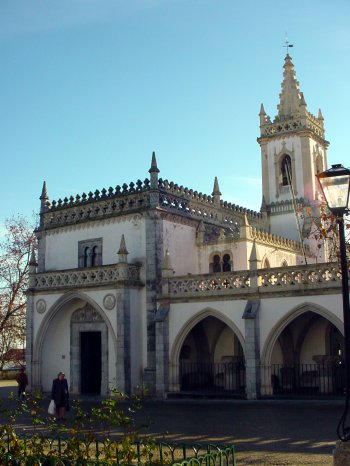
Church of the former Franciscan Convent of Santa Clara, founded in the 15th century. At the end of the 19th and beginning of the 20th centuries, the city of Beja suffered extensive destruction of its heritage, and only the church, the cloister, the chapter house, and adjacent rooms survived from this former convent. The Gothic portal on the facade stands out, and inside, the gilded woodcarving and tilework are noteworthy. The Queen Dona Leonor Museum is now located within the convent.
Igreja de Nossa Senhora da Assunção / Igreja Matriz de Alvito
- heritage
Largo da Trindade, 2
7920-018, Alvito
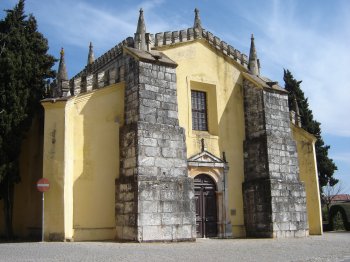
Church built at the end of the 15th century, it underwent several expansion works in the following centuries. This temple brings together several styles, from Gothic to Baroque, including Manueline, Renaissance and Mannerism. On the south side is the bell tower that boasts a marble sundial. The interior body of the church is shaped like a cross and has three naves with vaults that feature Gothic and Renaissance elements. Much of the interior is covered in 17th century tiles.
Igreja de Santo Ildefonso
- heritage
Rua de Santo Ildefonso, 11 - Praça da Batalha
4000-542, Porto
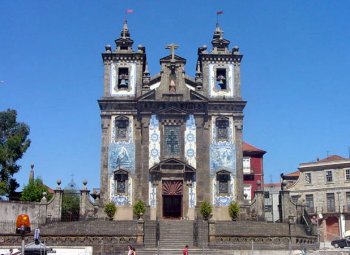
The Santo Ildefonso Church is placed at the beginning of the street with the same name. This church stands out immediately for its azulejos (tiles), which cover almost all of it. Its reconstruction started in 1730, because the first church was in ruins, and ended in 1737. The walls have Jorge Colaço’s azulejos (1932), with scenes from Saint Ildefonso’s life and Eucharist allegories. The lateral altars are neoclassical works and the co-lateral altars are rococo.
Palácio dos Maldonados
- heritage
Rua do Esquível, 21-29
7800-162, Beja
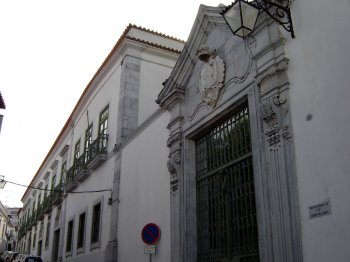
The palace was built in the mid-16th century on the initiative of a local family called Furtado Mendonça, whose coat of arms can still be seen above the main door. The building has a Renaissance profile, evident in the design of the main portico and the fine arcade found in the inner courtyard. At the end of the 19th century, the palace was used as the headquarters of the Beja High School, a situation that lasted for 35 years. Currently, the building houses a student residence.
Igreja de Mondrões / Igreja de São Tiago
- heritage
Lugar da Igreja
5000-325, Vila Real
In the 18th century the church was reconstructed over an older one. It has a curious façade ofe the final baroque. Above the portico, sided by the images of Saint Peter and Saint Paul, the sculpture of Daint Jack "mata-mouros" (killer of Moors) stands out. It has a bell tower and the interior has one nave covered by an ogival dome of jagged ends. A special not to the carvings in the pulpit, the baptismal washbasin and its supporting column.
Serra da Gardunha
- country
Serra da Gardunha
6230-045, Fundão
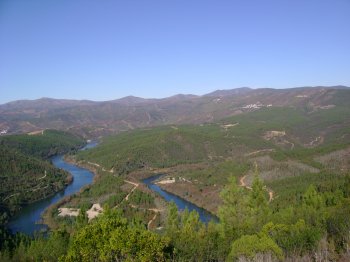
This mountain belongs to the Old Massif of Entre Douro e Tejo and its highest point is at 1227 meters. It also has a dense afforestation due to the extensive planting work, namely chestnut trees, carried out at the end of the 13th century, during the reign of Dom Dinis. It presents a great diversity of flowers, having some unique species in Portugal. A popular pilgrimage is held annually at the top of the mountain in the chapel of São Macário.
Praia do Pintadinho
- beach
Praia do Pintadinho
8400, Lagoa
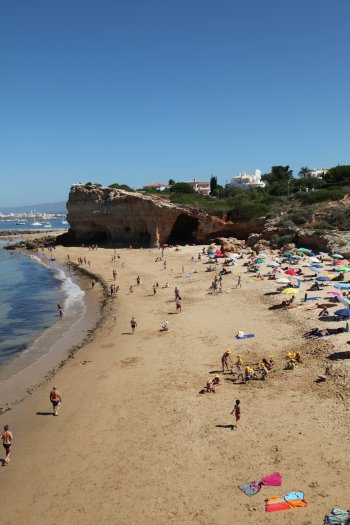
A beach located on a hill, pleasant and with good quality water. There are restaurants of relativ quality there with high prices. The Pintadinho Beach is the first maritime beach in the parish of Lagoa, right after the mouth of the Arade river. A stone and cement wall ending in a small lighthouse separates the river and the sea and belongs both to the Pintadinho Beach and to the Molhe Beach. One may get to the beach by following the river course to its mouth or by a rather steep cliff.
Zaafran
- food & drink
Largo Dona Estefânia, 7
1000-126, Lisboa
Indian restaurant with the name of one of the most typical spices of Indian cooking, to indict the flavors here can prove it. Its gastronomy intends to chart a gastronomic route starting in India, passing through Mozambique and ending in Lisbon. Presents a fusion cuisine with Indian influences, Mozambican and Portuguese, Arab. At lunch, the atmosphere is relaxed and slight, while the dinner becomes more sophisticated and intimate. At lunch, offers menu for 9.90 euros.
