Explore the best places
Results for browse main MAKEMUR.com pay someone to make domestic violence case disappear Jerusalem in Portugal


Casa de Serralves
- heritage
Rua de Serralves, 97
4150-708, Porto
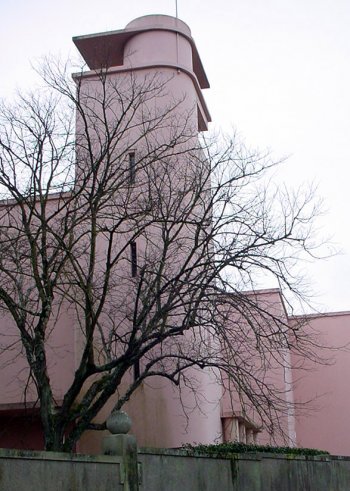
Serralves is one of the best spots in Porto, whose splendour and green spaces charms everyone. Its importance has been growing for years, since art is now a part of the pleasant walks you may do while you visit. Modernity has a leading role in this scenery. There is a rural place to visit also: the Riba de Ave farm, former Conde de Vizela farm. The assortment includes the main house, annexed gardens, rural area and agricultural houses.
Capela de S. Frutuoso
- heritage
Rua Trás da Cruz
5460-370, Secerigo
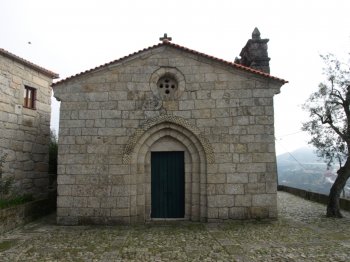
Secerigo Chapel, dedicated to Saint Frutuoso, is deployed in a walled courtyard, on the East side of the old core of the village. Rectangular plant building, oriented northeast\/southwest, on the main façade has a ported rectangular and in the elongation of the gable, a Bell Tower crowned by a cross. Inside this Chapel the altar in marbled wood, in the central part of the headboard, with carved Corbels that support the religious imaginary devocionário popular. This is the chapel which is celebrated the mass of the feast of s. Fruitful, which is held annually in April.

Capela de Santo António
- heritage
Largo de Santo António
5460-010, Alturas do Barroso
The main facade of the chapel of Santo António has a ported rectangular overmatched by a bell tower with a little Bell, topped with pinnacles and a cross in clover. Inside, stripped of ostentatious, excels in the colourful ceiling, lined in wood, painted and decorated in the central part, an oval medallion with the image of Nossa Senhora do Amparo, former patron of this temple. The high altar, in gilt, occupies the entire head of the Chapel and religious devocionário's imaginary location: Nossa Senhora do Amparo, Santo António and São Caetano.

Capela de Santo António do Telheiro
- heritage
Largo de Santo António do Telheiro
4465, São Mamede de Infesta
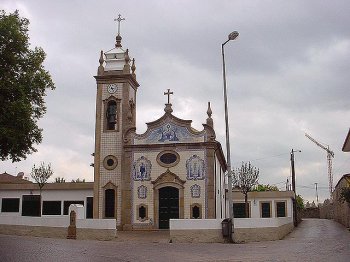
A neoclassicist chapel, dating back to the 18th century, with a longitudinal plan and the interior decorated with neoclassicist retables. In 1956 the main façade was covered by white and blue tiles. On the left side we can see Saint Anthony and read and inscription that says: "Fábrica do Carvalhinho" (Carvalhinho Factory) and below "Capela de Santo António do Telheiro" (Chapel of Saint Anthony of Telheiro). On the right side we can see an image of Our Lady of Fátima and an inscription that reads: "Restored in the year 1956".
Amoras Country House
- hotels
Rua Comendador Assis Roda, 25
6150-577, Proença-a-Nova
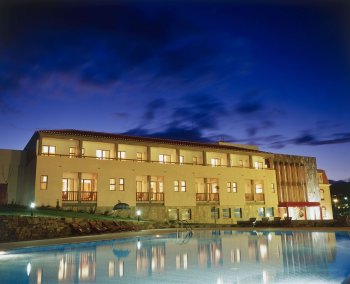
The Hotel of Blackberries is deployed in a building dating from the late 19TH century, with a modesty and quiet environment, conducive to rest. It was built from Baptista Diniz family farm, along with a small palace dating from 1905. In 2004 was turned into tourist drive, taking advantage of an old farmhouse, which recovered the main building. A new wing was added, where the 33 rooms in which the modern furniture fits together with Brown schist walls, a harmonious contrast with the remaining white walls.
Casa da Quinta Calçada
- hotels
Oliveira do Douro
4690-420, Cinfães
In Oliveira do Douro, Mesão Frio, with unique views to the River Douro and surrounding areas, lies the imposing Casa da Calçada, a pre-18th century Manor House, whose Chapel talk. Today is characterised also by harmonious link between the rustic and modern style. The main house consists of eight rooms and on the outside by the pool, there's a House with two rooms fully equipped. In addition to the activities possible in the interior of the House, the exterior offers swimming pool, garden and tennis court.
Igreja Matriz de Vilar Formoso
- heritage
Largo da Igreja
6355-264, Vilar Formoso
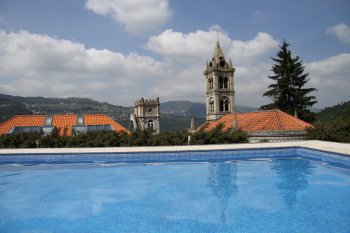
It is assumed that this church was built in the 13th century or 14TH CENTURY, by the Templars. Inserted in the center of the first urban core of this parish, the Igreja Matriz de Vilar Formoso retains elements of its original building. It consists of nave, chancel, vestry and Chapel located near. The chancel has Mudejar ceiling of "alfarge" style, painted; the main altarpiece is in gilt and Mannerist structure, although, in the attic, to be visible to transition to the national style, dressing room and painted side panels. The font is the primitive.
Igreja Matriz de Bucelas / Igreja de Nossa Senhora da Purificação
- heritage
Largo do Espírito Santo
2670-655, Loures
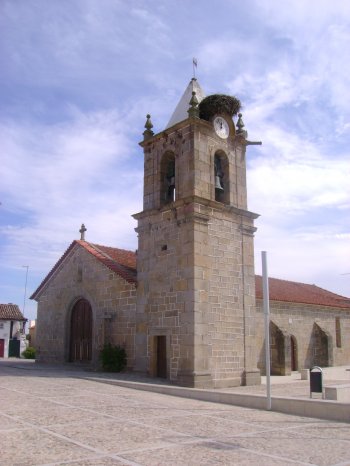
This fifteen hundreds temple has three naves with five ranks with round arches. The walls coverage is done with green and white glazed tiles and the tunnel vault are decorated with paintings from the 17th century. The sacristy has crossed vaults. On the main chapel stands out the polychromes glazes tiles, one altarpiece in baroque carve and four sixteen hundreds paintings. It is also worthy to mention the lateral altars carve and the sixteen hundreds candelabra, as well as a gothic pediment on the entrance right side.
Igreja de Nossa Senhora da Conceição
- heritage
Praça do Marquês de Pombal, 4050
4000-391, Porto
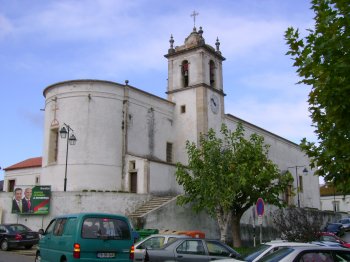
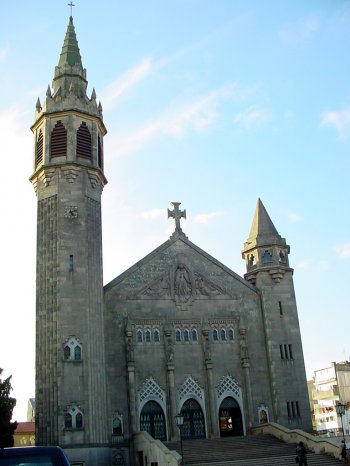
Revivalist neo-Gothic church, with a longitudinal drawing and three naves, being the main façade flanked by two asymmetrical towers. You can see a great influence of the gothic style, at the pointed arches and the constant presence of glass windows. The buttresses with the Santo António, São João de Deus, Beato Nuno Álvares Pereira and São João de Brito sculptures on top stand out, as well as the fine ornament on the arches and the friezes on the columns, examples of the Arab and Byzantine arts.
Igreja de Santa Maria de Gondar
- heritage
Lugar do Mosteiro
4600-643, Gondar
Initially belonging to a female monastery of the order of St. Benedict, founded in the 12th century. However, the extinction of the monastery, in 1418, and the subsequent construction of a new parish church dictated its gradual downfall. Despite the transformations suffered in the 18TH century, the original factory of this church, of small dimensions, constitutes a good testimony of late Romanesque architecture, as evidenced by its main portal. It is worth noting the dogs, of geometric decoration, their elevations sides and Corbels that accuse the existence of a porch on the South side of the Church.