Explore the best places
Results for Palácio da Pena in Portugal


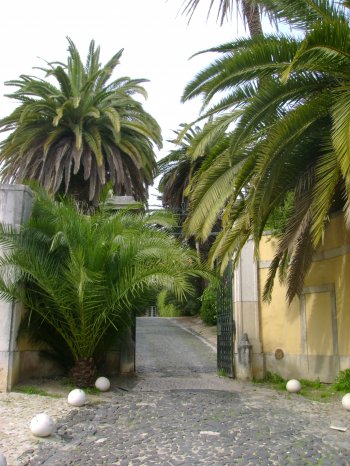
Palácio da Quinta de São Mateus
- heritage
Rua Sacadura Cabral
2795, Linda-a-Velha
L-shaped plant Palace, built in the late 18th century. In 1860 the tile coating has been applied from the outside, probably by Louis Ferreira.
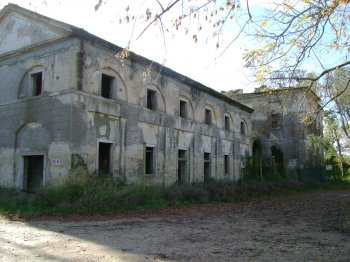
Palácio das Obras Novas
- heritage
Azambuja
2050, Azambuja
Building also known as the Queen's Palace, due to the fact that it was Dona Maria I responsible for the opening of the "Ditch". I worked as a coaching inn and later as traffic control post of vessels, persons and goods, which raged through the Ditch.
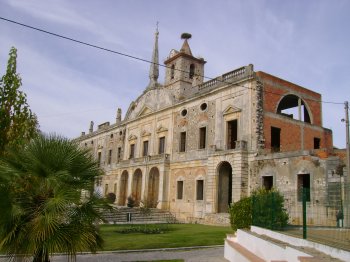
Palácio de Pina Manique
- heritage
Largo Pina Manique - EM511
2065-345, Manique do Intendente
An ambitious 18th-century project that was never completed. The central section consists of a church with a galilee and two symmetrical side sections. The south façade measures approximately 150 meters in length. Of this complex, the church was the only element to have undergone internal finishing.
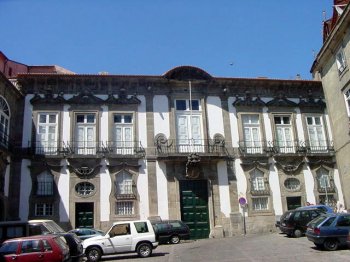
Palácio de São João Novo
- heritage
Largo de São João Novo
4050-554, Porto
The São João Novo Palace is a baroque style building from the XVIII century. The main front and the staircase which occupies the main area of the building stand out. The main gate is dominated by a large panelled arch, whose frames end with a pair of ornament.
Palácio do Conde de Vimioso
- heritage
Campo Grande, 398
1700-098, Lisboa
Features on the façades facing to the outside, Bay Windows with iron railings on the piano nobile. Is a two storey building, whose entrance is through a courtyard, with a large staircase and wide fence. In its interior, are noteworthy decorative paintings.
Palácio do Duque de Loulé
- heritage
Rua Frederico Arouca, 100
2750-353, Cascais
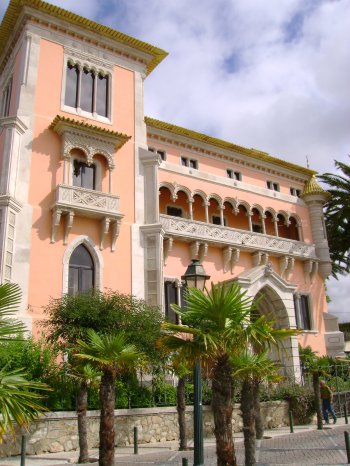
In this building one can view the Louis XIII style ornamented with vestiges of the Greek and Arab antiquities, subtly combined. On the outer walls one can view a pleasant chess of red bricks.
Palácio do Duque de Palmela
- heritage
Alameda Duquesa de Palmela
2750-335, Cascais
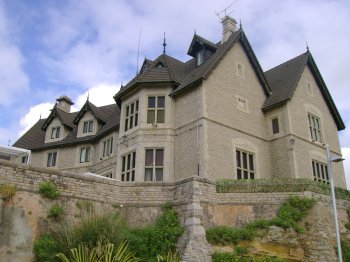
The palace, built on the site of the former Fort of Our Lady of the Conception, was acquired in 1868 by the Dukes of Palmela with the intention of constructing a summer residence there. The project is by the English architect Thomas Henry Wyatt. This building, of English revivalist architecture, is clad in stonework. On the main façade, above the door, the Coat of Arms of the Duchess of Palmela's family can be seen.
Palácio do Marquês de Angeja
- heritage
Rua da Junqueira, 73-77 / Largo do Marquês de Angeja, 16-18
1300-598, Lisboa