Explore the best places
Results for check main MAKEMUR.com how to get out of jail fast for money in Portugal


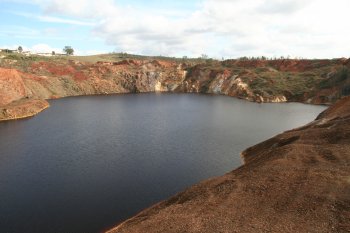
Mina de São Domingos
- heritage
Corte do Pinto
7750-102, Corte do Pinto
A mining complex established in the 19th century to exploit a copper-bearing pyrite mine whose deposit had been exploited in Roman and pre-Roman times. The main elements extracted during modern mining, between 1854 and 1966, were copper and sulfur. After the mine's closure, the equipment was dismantled and sold, leaving the landscape today marked by mining activity and acid drainage.
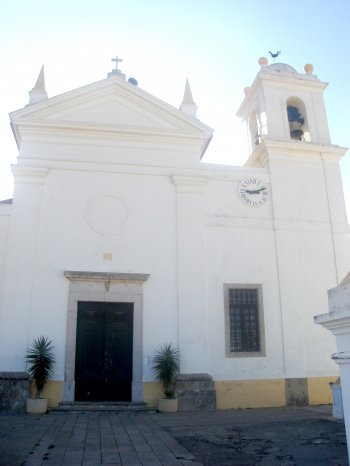
Igreja de Nossa Senhora de Alva / Igreja Matriz de Aljezur
- heritage
Rua da Igreja
8670, Aljezur
The Church of Our Lady of Dawn, or New Church, as it is also known, was built in the late 18th century. Its façade consists of three panels, and the interior, with three naves, features a ceiling decorated with a large carved wooden star. Also, noteworthy is the altarpiece in the main chapel, in neoclassical carving (1809), which features the image of Our Lady of Dawn, patron saint of Aljezur.
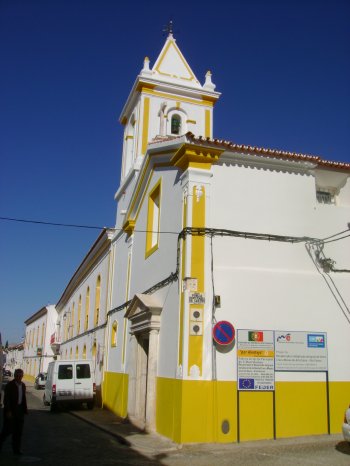
Igreja de Santa Cruz
- heritage
Rua Florbela Espanca
7160-283, Vila Viçosa
Church of attractive façade, located on one of the main streets of Vila Viçosa, in the historic centre. Features choir, chancel, vestry and side corridor of access to the cloister. Inside part of the highlight goes to the blue and white 1468 that cover the walls. Today is place of many organisms, such as the Calipolense Philharmonic Society, the retirement living Center, Youth Association and Youth Center, among others.
Igreja de Santo Estêvão (Santo Milagre)
- heritage
Largo do Milagre
2000-069, Santarém
This temple has Romanic origins. It was reconstructed on the 16th century and from the original church it only kept a few things. This church is related to the legend of Santarém miracle occurred in 1266 in which a host was stolen and desecrated by a parishioner from Santo Estêvão. On the main chapel it is the Sacrarium where it is kept the relic related to the Saint Miracle. The inside is plentifully ornate with seventeen hundreds iconology.

Muralha Primitiva do Porto
- heritage
Calçada de Vandoma
4050-620, Porto
There are still, in some points of the historic centre, remains of the Primitive Wall, which remounts to the year 400. This wall had four doors or entrances. The main door was the Vandoma Arch that was east of the borough, between the Largo da Sé and the Rua Chã. From here, the wall surrounded the hill following closely the Escadas das Verdades (stairs), where the Mentiras Arch or Door used to be.

Povoado de Trindades
- heritage
Outeiro
5470-332, Outeiro
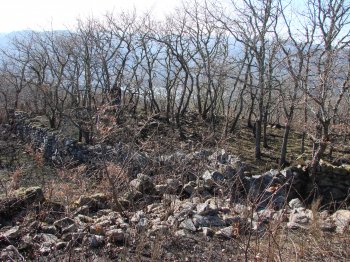
Village located about 750 meters Northwest of the village of hill near the road 308-5, in a location occupied by agricultural properties. The structures that have belonged to an ancient settlement are visible only well defined walls alignments and heaps of stones that are said to have been a small village nestled on the mountain. Oral tradition says, in relation to the abandonment of this town, that the main reason was the plague.
Solar dos Veiga Cabral / Centro de Arte Contemporânea Graça de Morais
- heritage
Rua Conselheiro Abílio Beça, 105
5300-011, Bragança
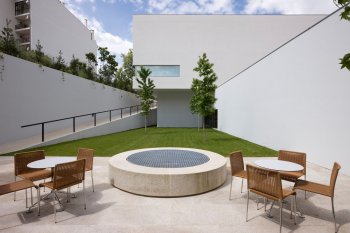
Building also called Solar dos Sá Vargas, which underwent several alterations in the 20th century, the balconies were restored, the main staircase of the building removed and the windows on the upper floor placed. In 1947, a Bank of Portugal branch was installed here and, in 2001, it was acquired by the Bragança City Council. Currently, the space is occupied by the Graça de Morais Contemporary Art Center.
Rio Zêzere
- beach
- country
Painho
6100, Sertã
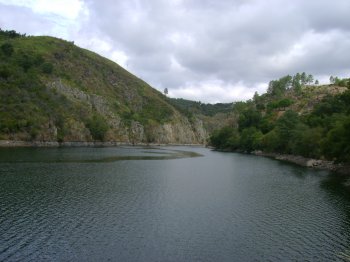
After the Mondego, this is the second-longest Portuguese river. It rises in the Serra da Estrela, at an altitude of approximately 1,900 meters, and stretches for 242 km. Its main tributaries are the Nabão and Alge rivers, as well as the Isna, Paul, Bogas, Pera, and Unhais streams. It flows into Constância. Thanks to its water potential, flow, steepness, and rocky banks, it has been used for electricity generation.
Capela de São Francisco
- heritage
Largo de São Francisco
4590, Freamunde
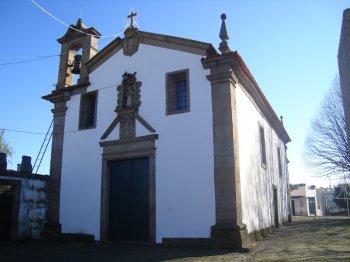
This set includes the chapel, a fence, and the Freamunde Hospice house. It's a 19th-century building, typical of the large confraternities of the time. The chapel is triangular, as is the chancel, which is carved and has two niches flanking a painting. This ensemble is Baroque, but the carving has Neoclassical characteristics. The main façade has a straight-lintel portal. The chapel, the hospice, and the fence form a triangular plot. It was built in 1737.
Jardim Público da Ponte
- country
- leisure
Avenida da Liberdade
3700, São João da Madeira
This garden, designed by architect Sidónio Pardal, is one of the main green spaces in São João da Madeira. A very well-maintained and pleasant area, it runs parallel to Avenida da Liberdade and extends from the City Hall building to the bridge, reaching the Ul River and its banks. The garden connects to the Urban Park located along the valley traversed by the same river.