Explore the best places
Results for come on in MAKEMUR.com Looking to pay a clerk to change the court date so I miss it Alabama in Portugal


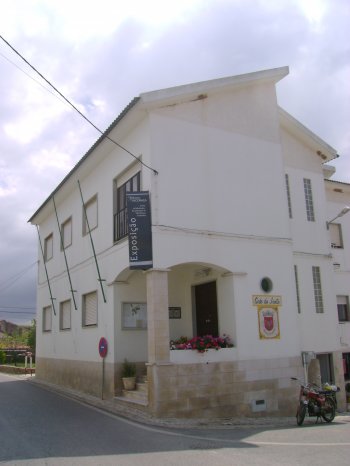
Passos da Misericórdia de Rio Maior
- heritage
Largo Dona Maria II
2040-296, Rio Maior
The construction of these steps date from 1760, although in 1884 if dislodged the Step of the Rua Dom Afonso Henriques. Both have the form of oratory Chapel. The placement of tiles is recent; 20TH century (1998). The passage happens always in the procession of the Holy week.
Pelourinho de Carvalho
- heritage
Largo da Fonte
3360, Carvalho
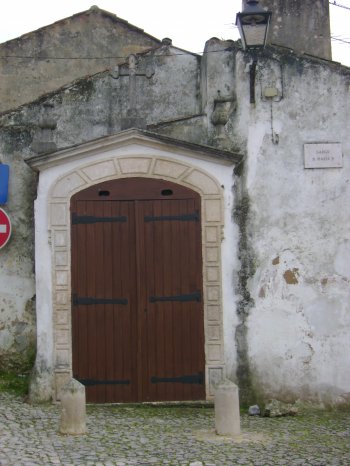
Pillory with a probable construction date of 1514, the year in which D. Manuel granted the town's charter. With an octagonal shaft and topped by a capital with a pyramid-shaped finish, it is decorated with a cross and heraldic symbols on two of its faces. The rest features the Cross of Christ.
Pelourinho de Penedono
- heritage
Praça 25 de Abril
3630-246, Penedono
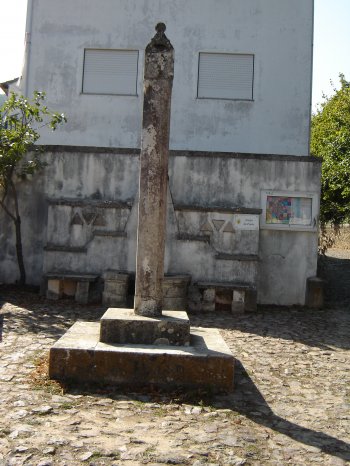
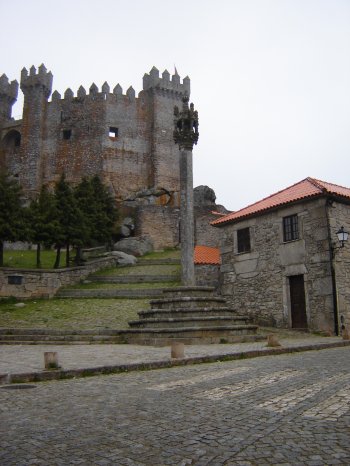
This pillory, based on a platform with five octagonal steps, has an octagonal shaft topped by an inverted pyramidal trunk capital with decoration between the frames. Dating back to the 16th century, it was rebuilt and placed in its original location, at the bottom of the stairs leading to the castle.
Penedo ou Castelo dos Mouros
- heritage
Avenida do Sabugueiro
3460-456, São Miguel do Outeiro
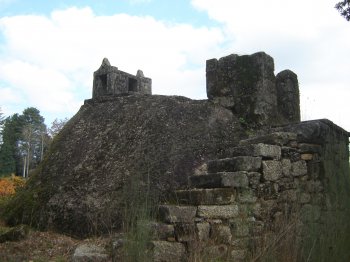
This granite monolith with large dimensions has a round form. Attached to one of its sides there are some stairs which give access to the top of the rock. On its top there is a minuscule construction resemble to a temple. This construction is dated from the Iron Age period.
Ruínas da Igreja de Santa Maria do Bispo
- heritage
Avenida Gago Coutinho
7050-298, Montemor-o-Novo
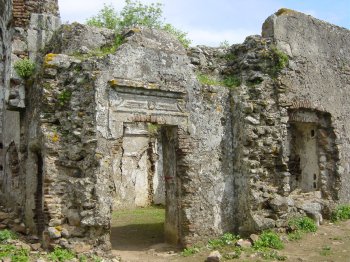
Dating from the 14th century, the Church was remodelled in the 16th and 17th centuries. It was the most important Temple of the village. Was made up of quadrangular, with vault and ogival arches ships 3. Today part of the left front with the Manueline portal, as well as part of the headboard.
Sé Catedral de Silves
- heritage
Rua do Sagrado Coração de Maria
8300-146, Silves
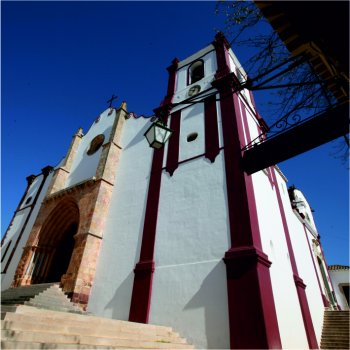
Gothic temple built with local red sandstone, significantly altered by later restorations. The main façade features a portico with an ogival archivolt. The Baroque-style door dates from 1781. The interior has three naves, the central one being the tallest.
Restaurante da Hospedaria do Convento
- food & drink
EM607 - Convento de Santa Maria de Aguiar
6440-032, Figueira de Castelo Rodrigo
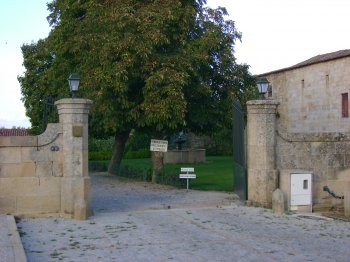
Restaurant belonging to the Inn of the same name, entered the monastery of Santa Maria de Aguiar, a monument dated to the 11th century. It offers an extensive and exquisite dining room, with glass walls offering beautiful views, where regional and international dishes are served.
Tasquinha Brimar
- food & drink
Rua Nova da Estação, 9
2765-996, Estoril
Uma cozinha, um balcão, várias mesas, cadeiras, paredes e ainda uma esplanada. Ideal para dates, não ir ao estádio, cuscar um pouco da vida alheia e retraçar bem, muito bem.
Albergaria dos Fusos
- country
- heritage
Albergaria dos Fusos
7940, Albergaria dos Fusos
Village built in a small lot. Its name is due to the fact that, in time, have there been flax industry. Its importance was demonstrated by having enjoyed privileges of municipal headquarters and pillory. Had judge ordinary, two councillors and a Prosecutor presented by donors. The village belonged to the convent of Santa Clara in Beja and was sold in 1503 by d. Violante de Moura, Abbess of the convent said the sum of 200 thousand Reis, Álvaro, Lord of Tentúgal, purchase which was confirmed by King Manuel I in March 14, 1516 and, later, by d. João III in …
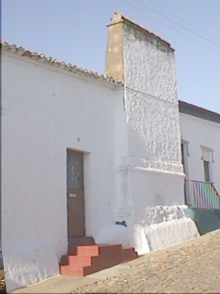
Museu Monográfico do Bárrio
- heritage
Largo João Soares Bárrio
2460-302, Bárrio
The Roman villa of Parreitas is a perfect testimony of the Roman occupation of Bárrio which took place between the centuries I and IV, already humanized from the Chalcolithic site, with an architecture adapted to the Mediterranean climate of the region and prepared around a central courtyard. Based on what was found there, the permanent exhibition "the Romans in Alcobaça" Monographic Museum of Bárrio aims to disclose the origins of its people, showing a set of materials that reflect the daily life of the population at the time, in terms of agriculture and animal husbandry, domestic activities, fishing, pottery, weaving …