Explore the best places
Results for Palácio da Pena in Portugal


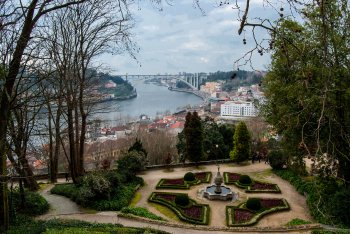
Jardins do Palácio de Cristal do Porto
- country
- leisure
Rua Dom Manuel II
4050-346, Porto
This late 19th century garden, designed by the architect Emile David, has exotic plants, rose gardens, fountains, ponds, animals, statues, water mirrors, avenues, concert spaces, a children's space, belvederes and a chapel. Inside, it houses the Rosa Mota Pavilion, a sport and cultural events' venue, the Almeida Garrett Library, among other equipments. In this landscaped complex the Garden of Feelings deserves to be highlighted, as it offers an excellent panoramic over the river Douro.
Jardins do Palácio do Correio-Mor
- country
- leisure
EN 8
2670, Loures
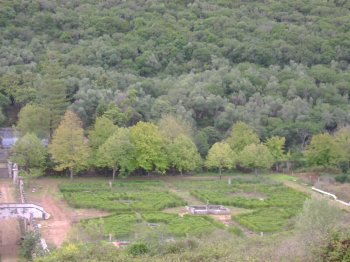
The main garden and the chapel garden, with boxwood hedges, fountains and 19th century statues, stand out. A stairwell ends in a tank with tile panels.
Parque do Palácio do Monteiro-Mor
- country
- leisure
Largo Júlio de Castilho, 2
1600-483, Lisboa
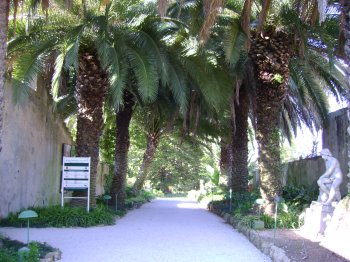
This Park dates back to the 18th century, having been remodelled in the romantic era. Are 11 hectares of land, where the gardens were delineated in terraces by the botanist Domingos Vandelli. Has large trees, an enormous amount of flowerbeds and plants, lakes, fountains and a rose garden. Here are the national costume Museum and the State Museum of theater.
Parque Infantil do Palácio da Justiça
- country
- leisure
Rua Pad'Zé
6230, Fundão
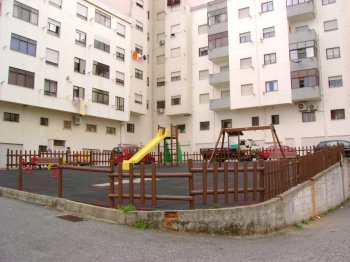
Sealed with synthetic floor space and some equipment of children's entertainment.
Casa dos Biscaínhos / Palácio dos Biscaínhos
- heritage
Rua dos Biscaínhos
4700-415, Braga
This is a noble house, from the XVII century. The first floor has 7 rooms from which the azulejos room and the dining-room stand out for its decoration with XVIII and XIX century works. The classification includes the gardens, the orchard and the wall. Presently, the Biscaínhos Museum is here.
Antigo Palácio dos Matos Azambuja
- heritage
Avenida Duques de Bragança
7160-209, Vila Viçosa
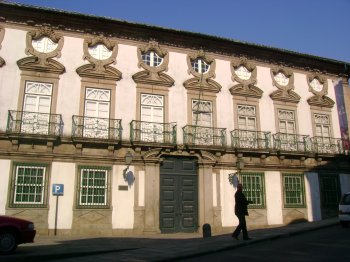
Former palace built in 1599, with a rectangular plan, with two floors and two bodies and a central courtyard, owned by the Matos Azambuja family. It later became the property of the Hintze Ribeiro family and, in 2007, it was sold. Inside you can see murals from the period of Queen Maria I, 19th-century marblework and wallpaper from the late 18th century.
Palácio dos Desportos de Torres Novas
- leisure
Torres Novas
2350, Torres Novas
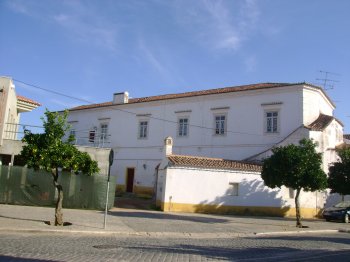
This space hosts sporting activities but also cultural spectacles and other initiatives. Offers 4500 places, eight locker rooms, rooms for exhibitions and other events, conference room, room for rehearsals, two rooms for press conferences, six press booths, régie, medical office, bars and restaurant.
Núcleo Museológico do Palácio de Monserrate
- heritage
Estrada de Monserrate
2710-405, Sintra
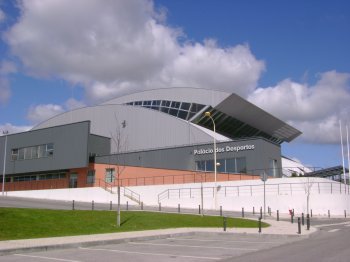
The current Palace, with an exotic Oriental plan, was built from an 18th century building that imitated a medieval castle. A possession of the Mello e Castro family, it was rented to Gerard DeVisme at the end of the 18th century, who bulit a neogothic manor. In 1856 it was acquired by Francis Cook, who built a new Oriental palace, with revivalist motifs, a true testimony to the romantic architecture. He also ordered the plantation of the Moserrate Park, that combines exotic and local plants, currently an important botanical museum. Nowadays, one may only visit the gardens.