Explore the best places
Results for Santa Maria do Bouro in Portugal


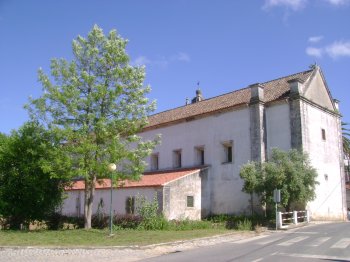
Igreja do Recolhimento de Santa Maria Madalena
- heritage
Rua Teófilo Braga
9580-535, Vila do Porto
This former convent was built in 1594 by father Corvelo Resende. This convent belonging to the order of the Poor Clares, which had as its Patron Saint Santa Maria Madalena, nothing remains. Inside, the altarpieces and the Rococo pulpit.
Rua de Santa Maria
- heritage
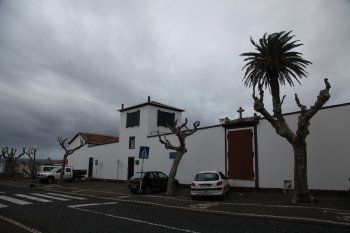
Rua de Santa Maria
4800-443, Guimarães
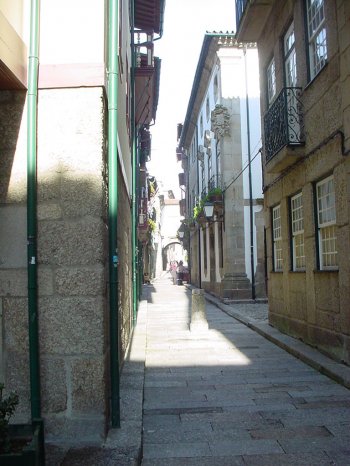
This street, the more medieval, was one of the first to be opened in Guimaraes, to make the connection between the convent founded by Mumadona and the Castle. Of great architectural value, scroll through it we can appreciate the convent of Santa Clara, the Arc's House, the Casa dos Peixotos region and the Gothic House of Valadares, among others.
Antigo Hospital do Espírito Santo e Capela de Santa Maria
- heritage
Largo do Município
4750-323, Barcelos
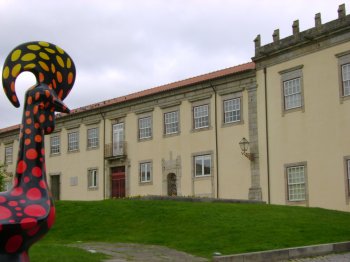
Current City Hall building of Barcelos, a construction that clusters former Hospital of the holy spirit that in the 14th century served as a service station for pilgrims to Santiago de Compostela and traces of the old chapel of Santa Maria of the 14th century.
Igreja de Santa Maria de Sobretâmega
- heritage
Rua da Igreja
4635-367, Sobretâmega
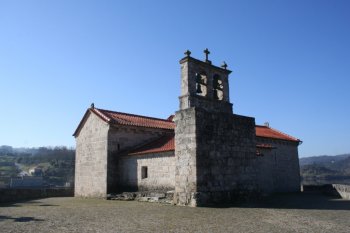
The Church of Santa Maria de Sobretâmega is a late medieval building that, however, retains a Romanesque flavor unique to this region. The location of this church, which replaced the parish church of the former parish of São Pedro de Canaveses, was an initiative of Queen Mafalda, founder of the inn and the bridge of Canaveses. In fact, it was the construction of the bridge itself that prompted the church's new location.
Museu do Papel Terras de Santa Maria
- heritage
Rua do Rio Maior, 338
4535-301, Paços de Brandão
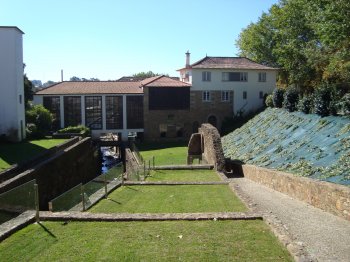
In this space, housed in a former sugar mill founded in 1822, you will learn about the history of the paper industry. The collections encompass the entire municipality of Santa Maria da Feira, where the paper industry has been a fundamental driver of the economy since 1708. In addition to artifacts and machinery, the watermark exhibition will highlight the different types of watermarks created by paper manufacturers in the Santa Maria region. Among the vast documentary collection, the collection of different paper qualities stands out, as well as watermarked papers from the 18th, 19th, and 20th centuries, representative of the …
Museu de Santa Maria de Lamas
- heritage
Largo da Igreja, 90 - Parque de Santa Maria de Lamas
4535-412, Santa Maria de Lamas
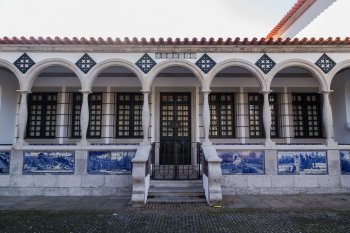
Surrounded by beautiful gardens populated with statues and sculptures, the Santa Maria de Lamas Museum was founded in 1950 and renovated in 2005. It comprises sixteen rooms and a remarkable collection of permanent exhibitions. There you will find rooms dedicated to sacred art, the cork industry, furniture, ethnography, statuary, natural sciences, ceramics, and curiosities. The museum's educational service conducts educational activities aimed at different age groups, focusing on raising awareness of art and cultural heritage.
Complexo Desportivo Municipal de Terras de Bouro
- leisure
Avenida 20 de Outubro
4840, Pesqueira
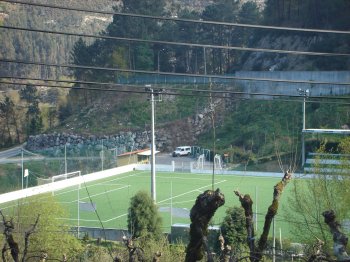
Sealed enclosure in synthetic floor with seating for 500 spectators. It offers showers, benches and lighting. Is used in the clashes of homemade Associação Desportiva de Terras de Bouro, sportsassociation founded in 1973.
Pousada Mosteiro de Amares
- hotels
Largo do Terreiro
4720-633, Amares
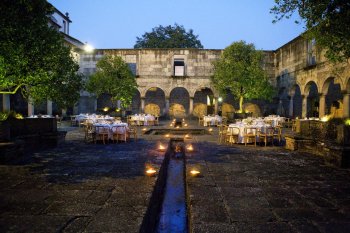
The Pousade de Santa Maria do Bouro, Amares, was a 12th-century former monastery of the Cistercian order, which was fully recovered and turned in one of the most beautiful hostels in Portugal.
Mosteiro de Santa Maria de Coz
- heritage
Rua de Santa Rita
2460-396, Cós
Founded in the 13th century by the abbot of Alcobaça, the Monastery of Santa Maria de Coz was one of the most important monastic complexes in the region and the most important monastery of the female branch of the Cistercian Order. The current building, of impressive simplicity, derives from works carried out mainly in the 17th century. The sober aspect of the exterior of the building contrasts with the Baroque interior. The church, about 50 meters long, reveals the grandeur of the old monastery and has coffered wooden ceilings, 17th-18th century tiles, and gilded altarpieces.