Explore the best places
Results for MAKEMUR.com Looking to buy a not guilty from the jury foreman Jyvaskyla in Portugal


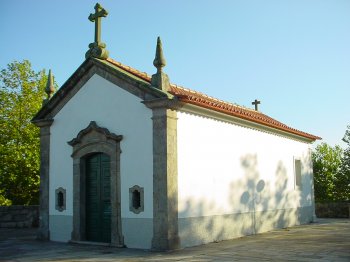
Capela de Santo Ovídio
- heritage
Monte de Santo Ovídio
4475, Santa Maria de Avioso
This chapel, dated from the 18th century, was raised on a granite monticule with a spiral ramp and traditional Portuguese pavement. Here died, in 1038, Dom Gonçalo Trastamires. A procession in honour of Saint Ovídio takes place every ear on the last Sunday of August, at the belvedere over the small town of Castelo da Maia.
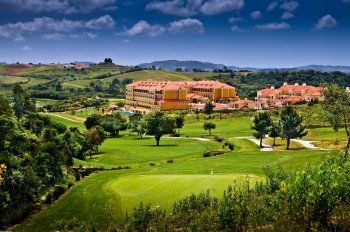
Campo Real Golf
- leisure
EM 619-1
2565-770, Turcifal
Twenty minutes away from Lisbon, this 18 holes court has a cafe and a terrace. It is a Course Par 72, planned by the architect Donald Steel. The members have several facilities available, namely an academy with professional lesons and a Club House where one may rest and have a drink after a course.
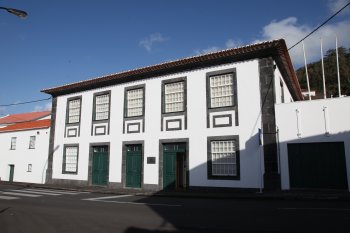
Museu Francisco de Lacerda
- heritage
Rua das Alcaçarias
9850-011, Calheta
Established in 1911, this museum represents the island's culture, showcasing regional ceramics, agricultural implements, basketry, ethnographic pieces related to the cult of the Holy Spirit, and linen works primarily from the 19th and 20th centuries. Also noteworthy is the collection dedicated to Maestro Francisco de Lacerda, a native of São Jorge Island.
Núcleo Museológico de São Cucufate
- heritage
Estrada de Vila Alva - Casa do Arco
7960, Vila de Frades
The archaeological ruins of S. Cucufate date from the 1st century AD and testify the passage of Roman civilization through the region, at a time when a villa was installed here, in the center of a farm. The archaeological excavations that were being carried out on the land also allowed the discovery of the medieval cemetery of the friars and mural paintings.
Galeria Casa dos Cubos
- art
Praceta Alves Redol
2300, Tomar
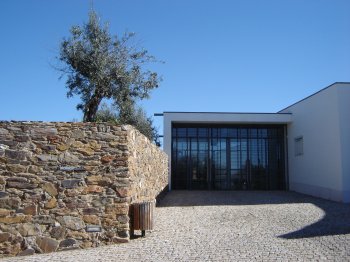
New cultural space in the city, situated on the banks of the river Nabão. Its name derives from the ancient measures of ability, the bushel and almude, time, currently designated as "cubes". Some of the services available are: cultural animation Division services, monitoring and environmental interpretation Center, senior University and space for exhibitions and training.
Boutique Hotel Poejo
- hotels
Avenida 25 de Abril, 20
7330-251, Santo António das Areias
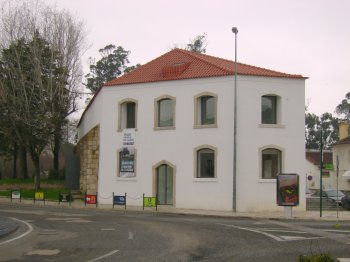
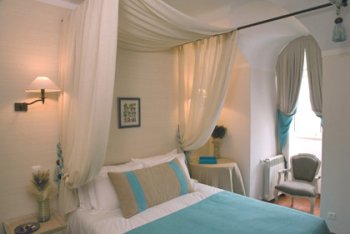
Boutique hotel located near the medieval village of Marvao and da serra de São Mamede, with thirteen separate furnished rooms and well equipped. The building, dating from 1919, was renovated in 2007, keeping a alentejana typical moth. Features a library, restaurant with regional dishes and good conditions for the practice of hunting.
Fortaleza de Peniche
- heritage
Campo da República, 609
2520-607, Peniche
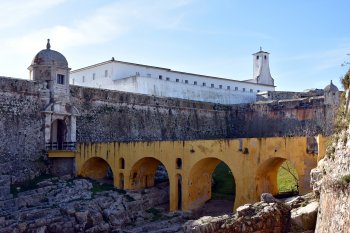
Due to the rocky base of the wall's sections, the citadel's fortifications are irregular. Inside the fortress, highlights include the Chapel of Santa Bárbara, the round bastion, the large cistern, the casemates, and the entire parade grounds. The citadel served as a political prison from the 18th to the 20th centuries. This space houses the National Museum of Resistance and Freedom.
Igreja Matriz de Azambuja / Igreja de Nossa Senhora da Assunção
- heritage
Largo da Igreja
2050-326, Azambuja
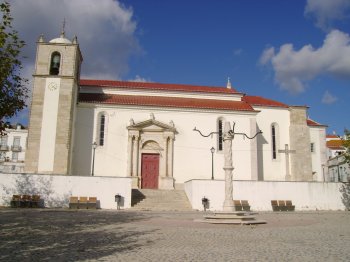
The building's main portal is topped by a triangular pediment and surmounted by an oculus flanked by two crevices. The interior features three naves, divided by arches and supported by Tuscan columns. The chancel features a ribbed vault with smooth quoins. Particularly noteworthy are the 17th-century carvings on the altars and the tile covering from the same period.
Igreja Matriz de Oliveira de Azeméis
- heritage
Rua da Igreja Matriz, 42
3720-214, Oliveira de Azeméis
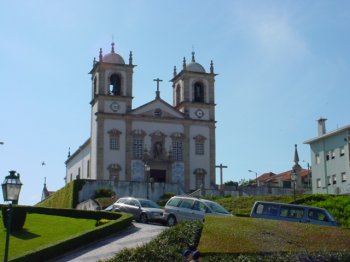
Built in 1719, this church was rebuilt in the mid-19th century. The facade features a portal flanked by two bell towers and a sculpture of Saint Michael. Access to the church is via a staircase made up of several baselines with intermediate levels. Of particular note are the baroque gilded altarpieces and in particular the main altarpiece, from 1731.
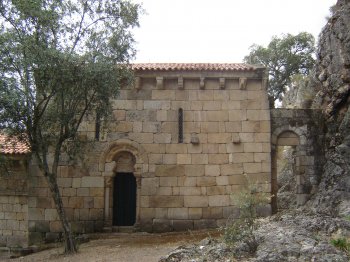
Igreja de São Pedro das Águias
- heritage
EN1116
5120-202, Granjinha
Romanesque temple built in the 12th century. On the front it has an ornate arch, supported by double columns and capitals. The decoration of the capitals deserves to be highlighted. The main facade is a short distance from the rock mass and was placed in the direction of the slope. Animal designs on the axial portal that signify the guard of the entrance to the temples and their sacred interior.