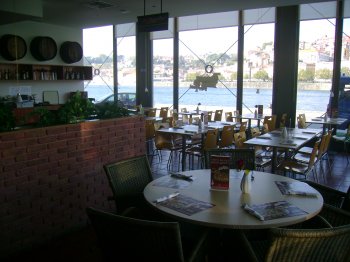
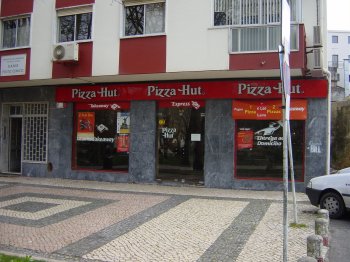
This restaurant belongs to a well-known international food chain. It serves mainly pizzas. The decoration is simple but with good taste. The service is very fast.
This restaurant belongs to a well-known international food chain. It serves mainly pizzas. The decoration is simple but with good taste. The service is very fast.
This restaurant belongs to a well-known international food chain. It serves mainly pizzas. The decoration is simple but with good taste. The service is very fast.
This restaurant belongs to a well-known international food chain. It serves mainly pizzas. The decoration is simple but with good taste. The service is very fast.
This restaurant belongs to a well-known international food chain. It serves mainly pizzas. The decoration is simple but with good taste. The service is very fast.
This restaurant belongs to a well-known international food chain. It serves mainly pizzas. The decoration is simple but with good taste. The service is very fast.
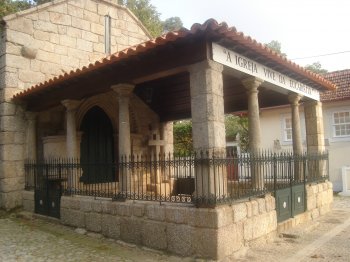
Judging by the architecture, this Chapel features a form of construction typical of the end of the 15th century and early 16TH century, showing similarities to the monastery of San Pedro de Instrumentals by the stones. The mural there patent is of great artistic beauty, the two-dimensional nature of the figuration and by drawing the faces of angels, performed in the mid-16th century and attributed to the painter Arnaus, one of the most interesting fresquistas of the Portuguese Renaissance. The chapel underwent conservation works in 2004 and 2005.
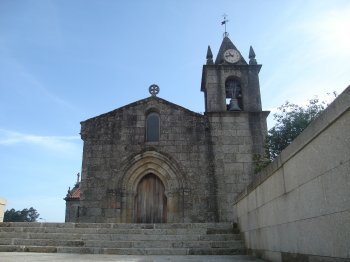
The construction date of this temple is estimated to be 1262, judging by the inscription at the entrance, although it may correspond to the reconstruction of an old 11th-century hermitage which, in turn, was built on a 7th-century Suevi-Visigothic building – archaeological excavations carried out in 1991 revealed a structure belonging to a pre-Romanesque temple. Of particular note is the existence of an image of Our Lady of Meinedo, in limestone and with traces of polychromy, which constitutes one of the rare examples of Romanesque sculpture in Portugal.
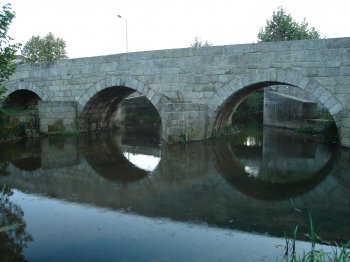
Although difficult to date, the construction of this bridge can be placed between the 17th and 18th centuries, considering its technical and constructive characteristics and judging by references in the Parish Memoirs of 1758. However, it may have been built during a period of increased circulation needs in the region during the 13th century, with strong demographic expansion, the Crusades, pilgrimages, and growing population mobility. Featuring four perfect semicircular arches, its typology is inspired by Roman constructions.