Explore the best places


Aldeia de Freineda
- country
- heritage
Aldeia de Freineda
6355, Vilar Formoso
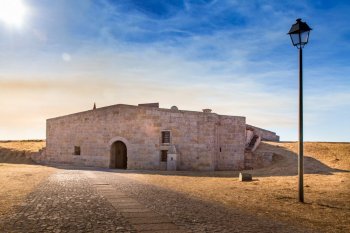
A village located on a plateau at 770 meters above sea level, on the right bank of the Coa River, Freineda was very important during the Napoleonic invasions. In fact, the headquarters of Wellington still exists today in the form of a baroque manor house, built in front of the main church. We suggest you to take a look at the fountains and cruises. Crafts are dominated by Arraiolos rugs, while the cuisine is characterized by roast kid and hare rice.
Voltar ao Cais
- food & drink
Avenida Major José Joaquim Paiva, 55
2600-450, Alhandra
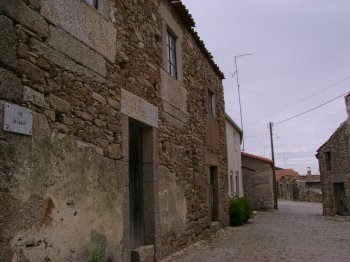
On the waterfront of Alhandra, facing the Tagus, the restaurant Back to the pier presents itself as a modern space, bright and very spacious. Once worked as a rice warehouse, as one realizes the frames exposed. The kitchen is traditional but with details that make the difference, both in fish in sight in the room, as in meat. On mild days, the meal Gets a special flavor in the beer or, more precisely, in return to Pier Terrasse.
Termas de Almeida Fonte Santa
- beach
- leisure
Encosta da Fonte Santa
6350-233, Almeida
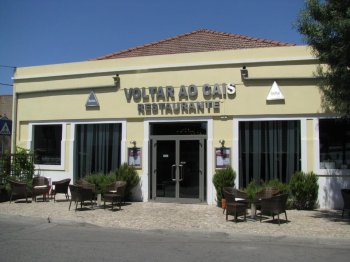
These thermal waters spring at an altitude of 560 meters, about 3.5 kilometers northwest of Almeida. The complex consists of a Balneotherapy treatment area, gyms, sauna, Turkish baths, massage rooms and a medical area. It is aimed at well-being and stress fighting, as well as the treatment of respiratory, skin, rheumatic and musculoskeletal diseases.
Igreja Matriz de Almeida / Igreja do Convento de Nossa Senhora do Loreto
- heritage
Rua Joaquim Carvalho dos Santos, 31
6350-234, Almeida
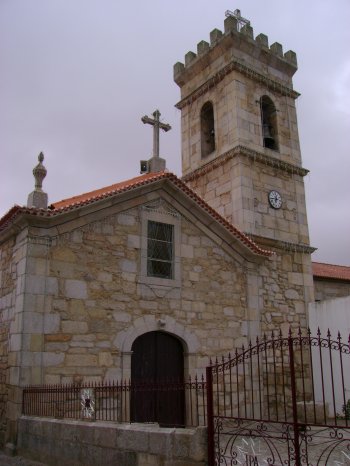
Built in the 16th century, the building initially housed the Convento das Freiras Terceiras Regulares de S. Francisco, dedicated to Nossa Senhora do Loreto. Later, in the 18th and 19th centuries, it was a military headquarters and hospital. After the explosion of 1810, it was remodeled and became the village's Mother Church. Inside, the Capela do Menino Jesus stands out, with a portal from 1699. Currently, the temple is dedicated to Nossa Senhora das Candeias.
Corpo da Guarda Principal em Almeida / Câmara Municipal
- heritage
Praça da Liberdade
6350-130, Almeida
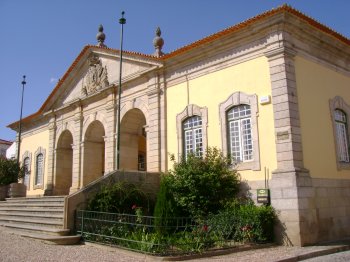
Close to the Quartel das Esquadras, the Town Hall of Almeida operates in a historic and emblematic building, dating from the 18th century and which previously housed the Former Body of the Main Guard. With a Neoclassical style, it is the last military building built from scratch for military purposes in Almeida. On the main façade, the three arches framed by pilasters stand out, as well as the triangular pediment, which integrates the royal arms. These show the shield surrounded by acanthus and baroque shells, supported by warlike elements.
Jardim de Almeida
- country
- leisure
Rua Serpa Pinto, 23
6350, Almeida
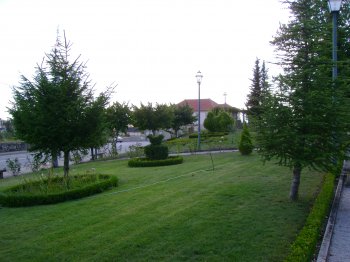
Simple, well-kept garden, with grassy areas and walking area. It has lighting and benches.
Quartel das Esquadras
- heritage
Rua da Muralha, 5
6350-148, Almeida
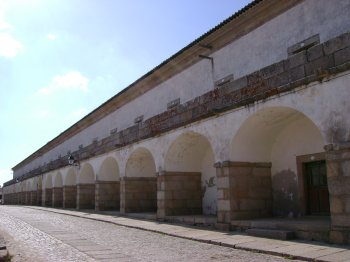
Located close to the Double Doors of Santo António, this building, with Baroque characteristics, impresses with its architecture with a long and narrow rectangular plant, distributed over two floors with transversal, vaulted barracks and a fireplace. The monument was built in the 18th century by the Count of Lippe, a German military and politician who served in the Portuguese Army, and functioned as an Infantry Barracks. Featuring a royal coat of arms on the façade, the Quartel das Esquadras is the final object of a set of infantry barracks with the same typology, usually visible in the Alentejo squares.
Museu Histórico Militar de Almeida
- heritage
Rua da Muralha
6350-234, Almeida
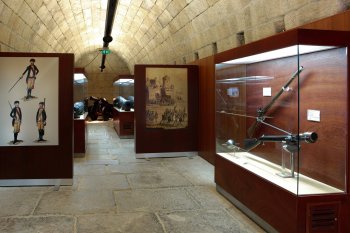
It is in the old town's casemates that the Military Historical Museum was created, an interactive space in which the History of Portugal is reconstituted, from medieval times to the most recent centuries, with a focus on the Peninsular Wars and, of course, on the invasion and siege of Almeida. Located in the basement of the Baluarte de S. João de Deus, within the walled area, the Casemates are 20 underground houses, made up of a perfect round vault, with the purpose of military defense. They were also known as Quartéis Velhos, given the lack of barracks to house infantry.
Picadeiro d'El Rey
- leisure
Largo do Picadeiro, 6
6350-234, Almeida
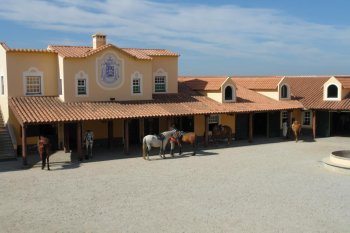
Located in the Bastion of Nossa Senhora das Brotas, onde war material was manufactured and repaired here. It also functioned as a barracks and, during the 19th century, it was ruined. Today it still retains many traces of its originality: a circular wall, the crown with the royal arms on the front and the part of the mangers. Here you can have classes and even hippotherapy sessions.
Castelo de Almeida
- heritage
Rua do Arco, 13
6350-106, Almeida
The Castelo de Almeida ruins can be found in the village's walled enclosure and are classified as a National Monument. Its origin is either Muslim or Leonese, while the second castle resulted from the rebuilding of the previous one during the reign of D. Dinis, at the end of the 12th century. In Gothic style, it occupied an area of around 100 meters, being one of the smallest castles built in the border area. A new renovation that took place in the 18th century turned it into a warehouse for ammunition and gunpowder. In 1810, during the Third French Invasion …