Explore the best places
Results for MAKEMUR.com subornar o juiz para reduzir a minha pena de prisão in Portugal


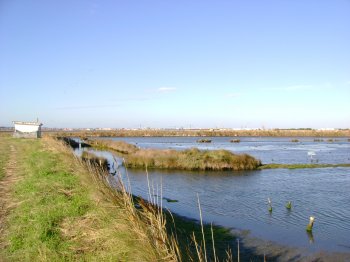
Vista da Ria de Aveiro da Rua da Pega
- country
Rua da Pega
3810-149, Aveiro
Marginal road to the Ria de Aveiro and the salt-works, which owns a bicycle way. For those who have no bicycle, why don’t use a Buga? Bugas are bicycles of free utilization that the Town Hall puts at everyone disposal. You can have a nice healthy ride combined with beautiful scenery.
Casino da Póvoa
- leisure
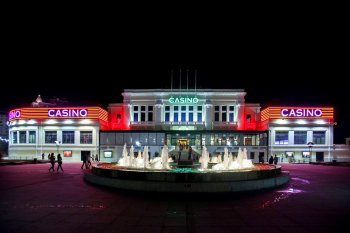
Edifício do Casino da Póvoa de Varzim
4490-403, Póvoa de Varzim
Cultural space where several shows take place. This building dating from the 30s of the 20th century also has a recreational component linked to the game that works as a pole of attraction for the city of Póvoa de Varzim. With three distinct cultural spaces: the Salão d'Ouro, the Atrium Piano Bar and the Egoísta restaurant.
Pousada Mosteiro de Guimarães
- hotels
Largo Domingos Leite de Castro
4810-011, Guimarães
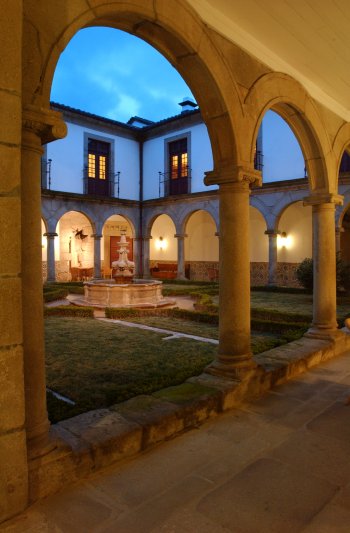
Pousada de Santa Marinha is located on the road that climbs to the city cradle of Portugal, Guimarães. The old cells of the monastery, 12TH century Augustin, were converted into 49 rooms and 2 suites modernly equipped. Penha Park, the garden of the monastery, granite fountains, the tiles and the cloisters invite to discover, in a tranquil setting.
HI Hostel Almada - Pousada de Juventude
- hotels
Quinta do Bucelinho - Pragal
2800-358, Almada
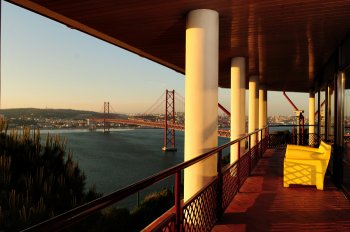
Located on the south bank of the Tejo river, by the Ponte 25 de Abril (April 25 Bridge), this space offers spectacular views of Lisbon. To get to the capital, one only has to get the train, the bus, the boat or go by car. Not far away, one can find the Costa da Caparica beaches.
Quinta de São Carlos
- hotels
Caminho do Meio São Carlos, 33
9700-222, Angra do Heroísmo
On this farm, whose earliest reference dates back to 1739, runs a small unit of turismo de habitação. Situated in one of the most beautiful areas of the island of Terceira, a few minutes from the city centre, offers six modern rooms and a nice outdoor area with approximately 8000 m2 of garden and Park.

Jardim Braamcamp Freire
- country
- leisure
Campo dos Mártires da Pátria
1150, Lisboa
Garden paying homage to the republican historian and archaeologist Anselmo Braamcamp Freire, although it is known among the inhabitants as Campo de Sant' Anna. It has trees, such as a cedar of Himalayas, a secular tree known as lovers’ tree. There are some statues, such as the statue of Sousa Martins. It has an esplanade, a multifunction pavilion, playground and lake.
Parque Dona Maria II
- country
- leisure
Parque Dona Maria II
4780, Santo Tirso
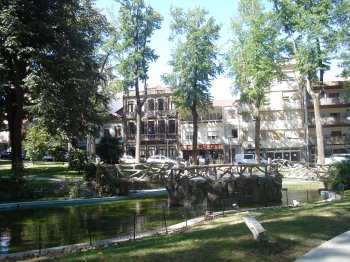
This park, together with the gardens of Largo Abade Pedrosa and Ribeiro de Miranda, are the structuring public green spaces of Santo Tirso. It overlooks the Ave River with views of the neighboring hills. It has a Tea House, a lake and a bandstand. As part of the International Museum of Contemporary Sculpture, this space houses a work by sculptor Fernanda Fragateiro.
Castelo de Portel
- heritage
Rua dos Arcos - Praça Dom Nuno Álvares Pereira
7220-375, Portel
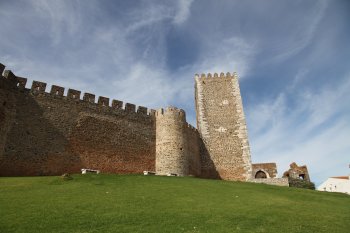
An important example of military architecture, this castle was built in the 13th century. It has the shape of an irregular octagon, and the keep, with rooms covered by Gothic vaults, is made of marble. Currently, the Palace of the Mayors and the Dukes of Braganza, and the Manueline-Mudejar chapel, remain. The residential buildings, barracks, and military warehouses in the Plaza de Armas are in ruins.
Cista de São Bento
- heritage
Rua de São Bento
4815-496, Caldas de Vizela
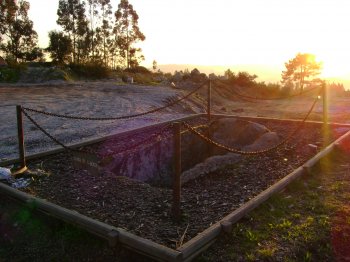
Roman Cita de Vizela, located in the parish of São Miguel, more precisely in the Sanctuary of São Bento. From the Bronze Age to the Iron Age, the cremation ceremony took place. The remaining ashes were kept in urns, which were placed in cists alongside smaller vases containing offerings to the dead.
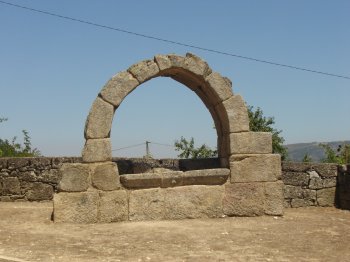
Arco de Paradela
- heritage
Valdevez
3610, Mondim da Beira
Memorial arch from the Middle Ages. It is associated with the passage of Count Pedro's funeral procession. For some, it is a monumental landmark that was erected to demarcate the limit of the Couto do Monastery of São João de Tarouca, for others it is a funerary monument built for the tomb of Diogo Anes, who in 1175 (12th century) was the owner of the land.