Explore the best places
Results for tapada real de VV in Portugal


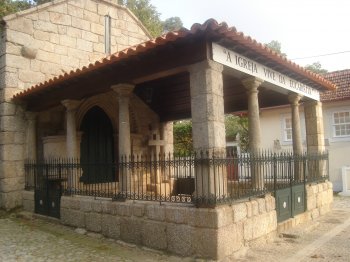
Ermida da Nossa Senhora do Vale
- heritage
Largo Vitorino Leão Ramos
4580-318, Cête
Judging by the architecture, this Chapel features a form of construction typical of the end of the 15th century and early 16TH century, showing similarities to the monastery of San Pedro de Instrumentals by the stones. The mural there patent is of great artistic beauty, the two-dimensional nature of the figuration and by drawing the faces of angels, performed in the mid-16th century and attributed to the painter Arnaus, one of the most interesting fresquistas of the Portuguese Renaissance. The chapel underwent conservation works in 2004 and 2005.
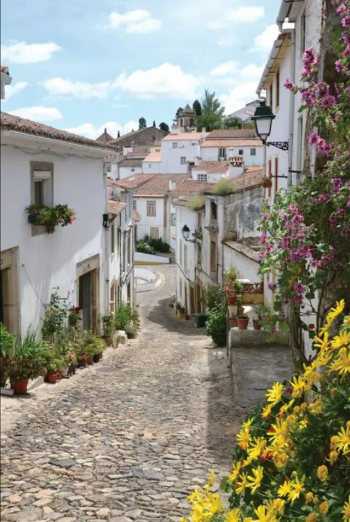
Judiaria de Castelo de Vide
- heritage
Rua da Judiaria
7320-190, Castelo de Vide
It is located in the medieval area of the village of Castelo de Vide, next to the castle, in the former Jewish quarter, as documented in the 14th and 15th centuries. The neighborhood was crossed by one of the castle's main communication routes, and its disintegration began during the reign of King Manuel I, following the decree imposing Catholic obedience on the Jews who, to avoid being forced to leave the village, gradually converted to New Christians. Hebrew symbols can be seen on some doorposts.
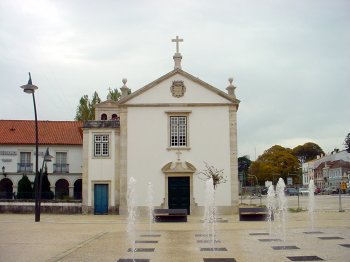
Igreja de São João Evangelista das Carmelitas
- heritage
Praça do Marquês de Pombal
3810-133, Aveiro
The construction began in 1610 as the Paço de D. Brites Lara (Palace), and in 1657 the Ordem das Carmelitas feminine convent, space where the church is integrated, was built. By the end of the XVII century the pulpits were built and the dressing in golden woodcarving began. In the next century the referred woodcarving was combined with azulejos (glazed tiles) from the Vital Rifarto factory. Already at the XX century, the building suffered repair works, being classified as National Monument.
Palácio Azurara / Museu - Escola de Artes Decorativas da Fundação Ricardo Espírito Santo
- heritage
Largo das Portas do Sol, 2
1100-411, Lisboa
In this building works, presently, the Museu de Artes Decorativas (Decorative Arts Museum). Also known as the Fundação Ricardo do Espírito Santo Silva (Ricardo do Espírito Santo Silva Foundation), this museum was created in 1953. Here is a magnificent collection of furniture and Portuguese decorative arts from the XVII and XVIII centuries. It is a characteristic exemplar of portuguese XVII century architecture, with posterior interventions, from which the north façade stands out.
Palácio Dona Maria da Silveira
- heritage
Praça da República, 1-7
2300-550, Tomar
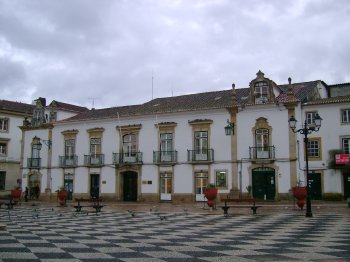
Mannerist Palace of long facades, in which all the decorative effort focuses on the main facade, divided by pilasters and crowned with pinnacles accented with cornice and Cyma with gargoyles in the shape of fish heads and pig's head. The roof is ripped by dormers, taking main facade a mansard roof and a Dormer ornate ostentosamente. The Palace belonged to Dom João de Souza Silveira, Alcaide-Mor to take, and later local authority services to take the family and Adam Cap.
Palácio de Eugénio Silva / Câmara Municipal de Santarém
- heritage
Largo do Município
2000-027, Santarém
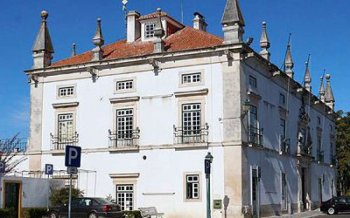
The Santarém City Council currently occupies this beautiful palace, a remarkable example of sunny 17th-century civil architecture. The property was acquired in 1954 from the heirs of the capitalist Eugénio de Carvalho e Silva, after whom it is named. A building with classical lines, it has an elegant and sober façade, with balcony windows and characteristic 18th-century moldings. Inside, highlights include the "Noble Hall" and the "Hall of Virtues of the Councilors" with 18th-century tile panels.
Palácio dos Grilos / Casa dos Professores / Colégio dos Grilos / Colégio de Santa Rita
- heritage
Rua Doutor Guilherme Moreira
3000-210, Coimbra
19th century building of plant in U, with three floors and facades topped off in double cornice. It was built in 1755 by Barefoot Hermits of St. Augustine, also known as friars crickets. After the extinction of the order, belonged to a State Organization, a Republic of students and several private educational institutions. In 1920, functioned as sporadic residence de Oliveira Salazar and Cardinal Cerejeira. Currently, works here the General Secretariat of the University and the Home of the University of Coimbra.
Igreja da Sé
- heritage
Praça da Sé
5300-265, Bragança
Even though it was initially destined to become a nuns convent, it ended up as the collge of the priests of the Companhia de Jesus at the time it was finished. In 1766 the Diocesano Seminar was established here and made enlargement works. Of this monument the most elaborated window, of 1749, a large window of 1685 and the tower, of 1930, stand out. Inside, a special note to the three domes with crosswork arches and the corbels, on the ceiling, the high altar, the choir, the cloister and the sacristy, for the painted panels on the ceiling.

Igreja da Trindade
- heritage
Rua da Trindade, 115
4000-220, Porto
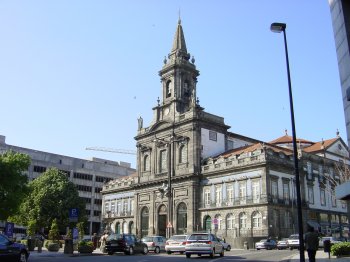
Planned by the architect Carlos Amarante, this church was built along the XIX century, by initiative of the Ordem da Trindade, at the Largo do Laranjal. The façade is classical and the walls are filled with neo classical retables. It stands out, in the principal chapel, a big panel representing the Baptism of Christ, by the painter José de Brito. The religious order also has several painting works, such as the Resende’s portraits and several copies of Italian painters, such as Rafael, Ticiano and Caravaggio.
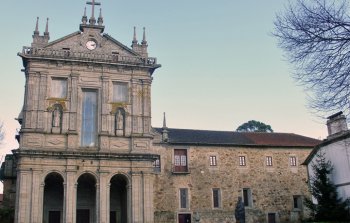
Mosteiro de Grijó
- heritage
Alameda do Mosteiro Grijó
4415-998, Vila Nova de Gaia
The primitive monastery, called Monastery of São Salvador de Grijó, was founded in 922 in the place of Muraceses. It was only in the year 1112 that it was moved to its current location. In 1770 the convent was extinguished, passing its assets to the Convent of Mafra. Of note are the gilded carvings and the 18th century tiles in the chancel, as well as the pipe organ, from the end of the 18th century and beginning of the 19th century. Also noteworthy is the tomb of D. Rodrigo Sanches, classified as a National Monument.