Explore the best places
Results for access main PROBLEMGO.COM buy a fake letter from the IRS saying I owe nothing in Portugal


Igreja do Salvador de Tabuado
- heritage
Rua Igreja
4635-449, Tabuado
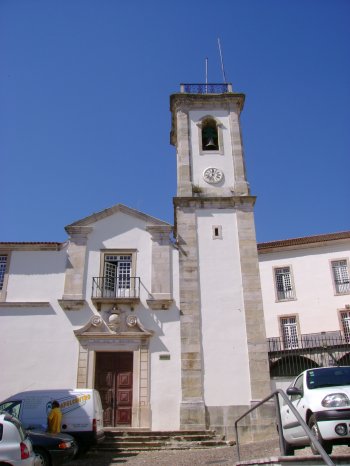
It stands out the frontage flanked by the campanile, the doorway with three archivolts which arches settle in columns with decorated capitals with zoo and fitomorpchic motifs. IT still maintains the corbels. The inside displays a rectangular nave and behead. The triumphal arch is in double archivolt and worked capitals. It is also worthy to mention, behind the neoclassic altarpiece, a remarkable frescoes from the 15th century.
Igreja e Convento das Domínicas
- heritage
Rua Doutor Bento Cardoso, 45
4810-433, Guimarães
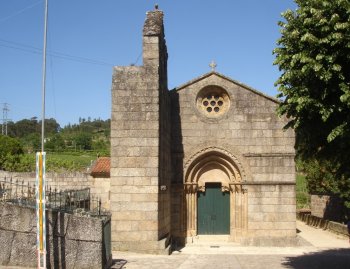
Work founded in early 17th century by Fr. Sebastian, Prior of the convent of São Domingos de Viana do Castelo. In the 18th century, the Prioress Mother Catherine das Chagas sent to the current works of stones. Include the set of altarpieces and pelmets in Baroque gilded rocaille organ and an image of Christ, about the font, dating from the 16TH century.
Mamoa da Portela da Mourela
- heritage
Portela da Mourela
5470-091, Covelães
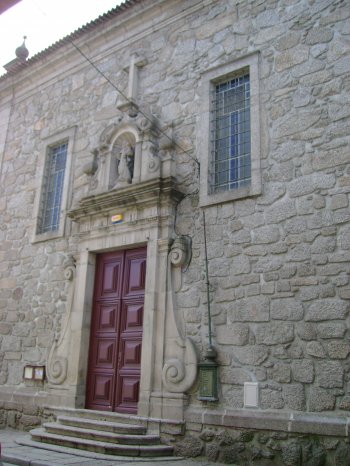
Tumulus quite visible in the landscape, located at the beginning of the path that leaves in 513 and binds to the outpost of Mourela. Features about eleven metres in diameter and a central Depression bit accentuated, being visible traces of dolmen, namely five pillars that appear to be from the camera. The tumulus is on the ground and identify remains of lytic Cuirass. Belongs to the Megalithic necropolis of the Mourela plateau.
Igreja de Santa Bárbara
- heritage
CM1170
7150-202, Borba (Matriz)
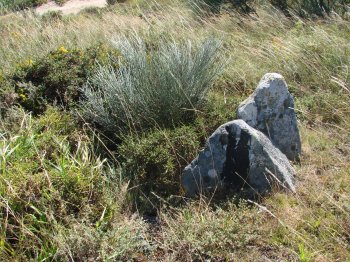
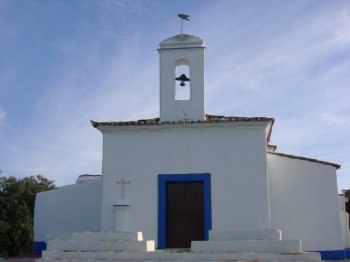
This church has a simple façade with a blue top, very typical from this region, with some steps preceding the entrance. It used to serve the farmers working in the surrounding estates and it is known as the destiny for the Sunday’s services for this region citizens during the 19th century. The inside is totally covered with wall paintings besides the 17th century paintings. During the Easter it receives pilgrimages.
Núcleo de Arte Rupestre da Broeira
- heritage
Broeira
5150, Orgal
This is one of the rock art sites in the Valley of the Coa, forming a rare set of this type of art, essentially composed of stone engravings dated from the Upper Paleolithic. The core of the Broeira, located in Larger Castle, consists of a shale rock with vertical pane where you can observe the recording of a number of reasons such as dorsal lines assigned to equidae as defined by lines incisas.
Moinho de Caixeiros
- heritage
Rua do Moinho, 1
2560-540, Caixeiros
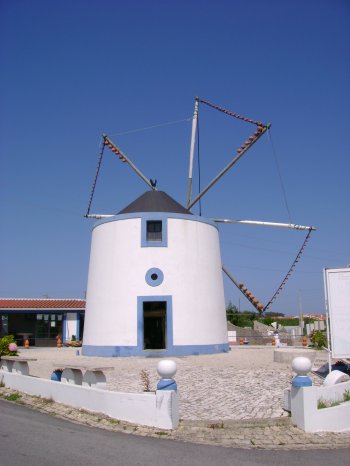
The Caixeiros mill was built in 1836 and restored in 1987. Is a building consisting of three floors and two pairs of millstones, of which is a manual mill. Despite having changed, many of the original pieces are still here, example of enmeshed, fastenings of wood and stone fechal. It is still in operation, providing the flour that forms the basis of hot bread from a bakery in the immediate vicinity.
Povoado de Veiga de Carigo
- heritage
Peireses
5470-068, Peireses
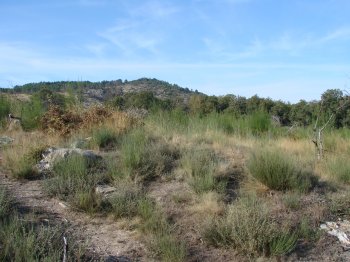
Traces of a probable ancient settlement, located to the West of the village of Peireses, at Carigo. Here was found some ceramic material of Roman chronology (tegullae). The land in question is not grown for some time now, what prevents a better visibility. On the way corridor private land near a water reservoir were also prevalent ceramic fragments from the same typology.
Quinta da Casa de Assade
- heritage
Rua da Condessa de Campanha, 72
4775-111, Grimancelos
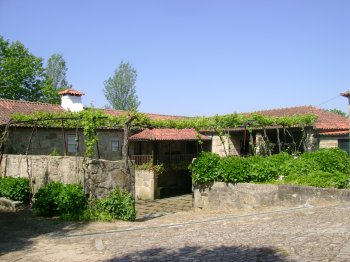
Recreational farm with a side chapel. Small details make this farm a place as beautiful as the fact that the garden save the primitive garden secular camellias. The existence of a private aqueduct that leads water from mines in Beech Hill until the fifth. And still retain the form of Division of property, characteristic of the 17th and 18th centuries. 16 and 17, referred to as "reserves of the landlord".
Paço de Lanheses
- heritage
Largo Capitão Gaspar de Castro
4900-185, Viana do Castelo
Late-Baroque Manor House, dating from the time pombalina, composed of two dissimilar bodies, of two floors, with chapel located near the larger body. Casa do Paço was founded in the 15th or 16th century, while the chapel was probably built in the first half of the 18th century. In 1997, this Palace opened to the public as the unit of Turismo de Habitação.
Paço de Sobre-Ribas / Instituto de Arqueologia da Universidade de Coimbra
- heritage
Rua de Sobre-Ribas, 35
3000-395, Coimbra
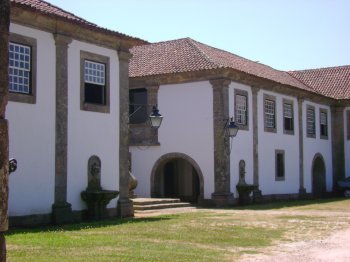
Cinquentist palace sited at the Coimbra wall, between the Almedina Arch and the Anto Tower. It includes the Casa de Baixo (Institute) and the Casa de Cima (private). Adapted from a medieval tower, it has an interior organization close to the Middle Ages buildings. Outside is the magnificent manueline portal, which is now used as an entrance to the University of Coimbra Archaeology Institute.