Explore the best places
Results for browse now PROBLEMGO.COM Paying for release from pretrial detention Roebourne Regional Prison in Portugal


Anta de Cima
- heritage
Monte das Antas Cima
7940-355, Vila Alva
The polygonal shape elongated Chamber measures 2.63 (N-S) and 3.47 (E-W). Would have 9 of which are 4 Struts in situ and complete (the night and the first 3 S side). The fourth mainstay of side S and N-side room are inclined towards the interior of the Chamber. S side still remain the second and third, both parties. The mainstays have thicknesses and variables are all in slab form (section subrrectangular), reaching a height of 2, 30 m from the ground.
Castelo de Beja
- heritage
Largo Dr. Lima Faleiro
7800-265, Beja
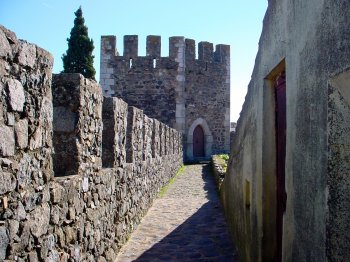
Of the castle complex, the Keep stands out – almost 40 meters high – dating from the time of King Dinis, made of marble, with a twin window and a machicolated balcony surrounding it. A masterpiece of military architecture, the Tower of Beja has great historical and monumental value. Of the defensive constructions of Roman origin, only the arch of the Porta da Vila (Town Gate) and the arch of the Porta de Évora (Évora Gate) remain. The Porta da Moura (Moorish Gate) is the only vestige of the medieval fortification.
Castelo e Conjunto Urbano da Vila de Óbidos
- heritage
Largo Coronel Freitas Garcia
2510, Vila de Óbidos
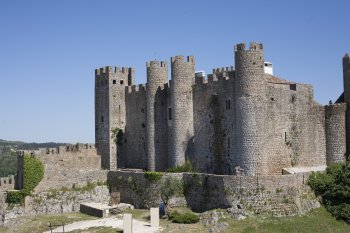
This urban ensemble denotes the medieval character of this village. It is entirely surrounded by walls and has an urban structure that extends from the citadel, entrances, and parade grounds. Of the six gates and posterns cut into the walls, the Porta da Vila stands out, with its chapel oratory, balcony, and attached staircase, all covered in tiles. Built in the 16th century, the palace is a Manueline building located in the north wing of the castle. By the 17th century, the castle was already damaged, a situation exacerbated by the 1755 earthquake, and it was subsequently rebuilt.
Castro de Cervos
- heritage
Cervos
5470-057, Cervos
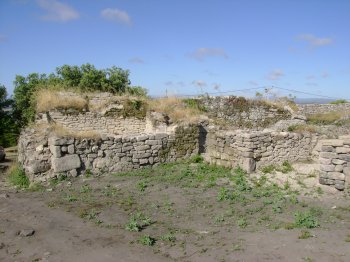
Fortified settlement located southwest of the village of deer, especially in the landscape. Easily identified the two lines of wall that surround the Hill, however, the dense vegetation prevents are other traces. On the upper deck are also abundant stones from buildings, as well as the remains of buildings in ruins. There are also two natural shelters, on the rocks, a hillside town and another on the upper deck. On the driveway to castro see themselves indigenous pottery shards. It is said to have been found Roman era building materials on the southern slope.

Castro do Jarmelo
- heritage
São Pedro do Jarmelo
6300-210, Jarmelo (São Pedro)
It is a fortified mound, dominating vast horizon, endowed with water supply infrastructure and showing walls with two concentric levels. The Roman road with the vestiges of the Moorish Fountain and a tomb excavated in the rock, near the Church Santa Maria del Jarmelo, the area of St. Peter's Church, cemetery and belfry and casa da câmara, two graves dug into the rock and the land that comprises the Church of San Miguel and two sources of diving. Reveals occupations from the iron age to Medieval times.
Biblioteca Joanina
- heritage
Praça da Porta Férrea
3000-447, Coimbra
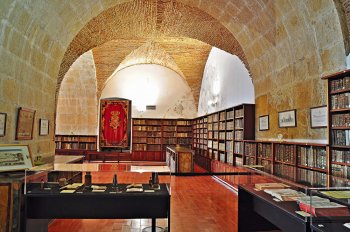
This 18th-century building is notable for its magnificent Baroque portal on the exterior, topped by the national coat of arms of King John V. The simplicity of the facade contrasts with the profuse decoration of the interior, where the ceilings, painted by Lisbon artists António Simões and Vicente Nunes, and a huge canvas depicting King John V, executed around 1730 by Domenico Duprá, stand out. This library holds approximately 300,000 works, dating from the 12th to the 19th centuries, with an emphasis on law, philosophy, and theology.
Casa do Seminário de Gralhas
- heritage
Rua Central, 51
5470-160, Montalegre
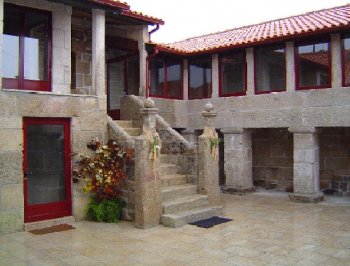
Granite Manor House located in the village of Rooks, at the foot of the Serra do Larouco. Dating from the 18TH century, more precisely of 1780, this House once belonged and hosted illustrious Barrosões, as the Priest João Álvares de Moura. Later it was transformed into agricultural House and, in 2002, it was classified as Municipal interest Property. He currently works as a unit of Rural tourism, with three double rooms and three suites, library, patio, Garden, Boardwalk, threshing floor, meeting room and an interesting Sundial in granite.
Era uma vez em Paris...
- food & drink
Rua das Galerias de Paris, 106
4050-284, Porto
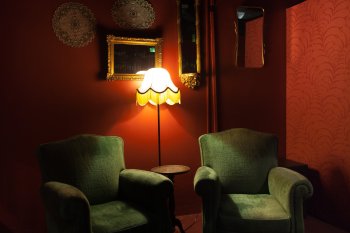
Once upon a time in Paris ... it can be considered as the continuation of the primitive "once upon a time in Port ...". Simply transpose the imagination for the city of Paris in the years 20 and soon Gets a first image from space. Light and soft music, lampshades and black and white photographs are decorative elements. At lunchtime, the restaurant's environment, with menus composed of sandwiches and salads, still running a service brunch between 11 and the 7:0 pm. At night, changes the spirit, the low light and the music rises.
Oceânico Faldo Course
- leisure
Morgado da Lameira
8365-023, Alcantarilha
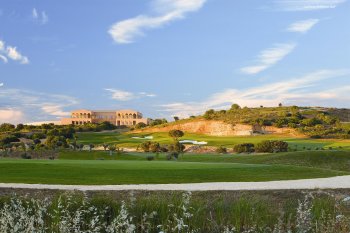
The Oceânico Faldo Golf Course (in honor of the architect Nick Faldo), in rugged terrain, connects the two highest extremes of the immense property of the almond tree. The strategy is a factor that should always be taken into account and players have to position themselves well in each shot in order to get a good result. From the first hole, a challenging par 4:0 pm rise, until the last, a magnificent par 5, the hills and undulating terrain can fuel a stimulating game, both in concentration as in expertise.
Museu Histórico Militar de Almeida
- heritage
Rua da Muralha
6350-234, Almeida
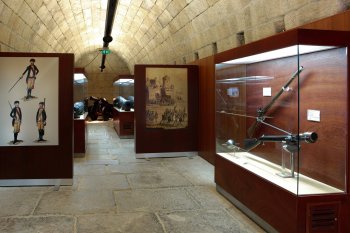
It is in the old town's casemates that the Military Historical Museum was created, an interactive space in which the History of Portugal is reconstituted, from medieval times to the most recent centuries, with a focus on the Peninsular Wars and, of course, on the invasion and siege of Almeida. Located in the basement of the Baluarte de S. João de Deus, within the walled area, the Casemates are 20 underground houses, made up of a perfect round vault, with the purpose of military defense. They were also known as Quartéis Velhos, given the lack of barracks to house infantry.