Explore the best places
Results for view portal now PROBLEMGO.com Buying early release from jail with payment options Georgia in Portugal


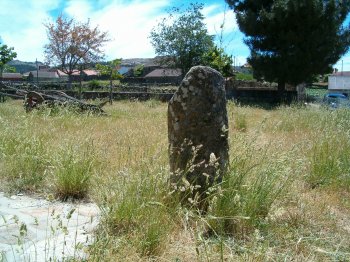
Marco Miliário de Cervos
- heritage
Arcos
5470-051, Cervos
Milestone anepígrafo from Pindo, arches, later being transferred to the school garden of deer. It is a medium-grained granite cylinder the rude, well cut out about one meter tall. Was fractured at the top, where there seem to be traces of letters. It is believed that signaled the Via XVII of the Antonine itinerary, which connected Bracara Augusta (Braga) to Asturica Augusta (Astorga) through Aquae Flaviae (Keys).
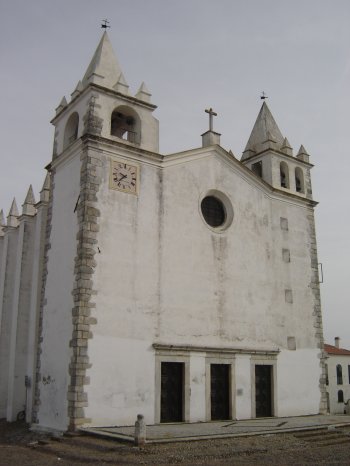
Igreja de Nossa Senhora da Assunção / Igreja Matriz de Vila Nova da Baronia
- heritage
Largo Francisco Manuel Fialho
7920-355, Vila Nova da Baronia
Large church with main façade flanked by towers with pyramidal and prismatic spires protruding in the lateral façades little foothills. Features vaulted nave, divided into five sections by torais arches, chancel and side chapels with cannon vaults simple. Simply decorated in the facade inside, only contradicted by the exuberance of azulejar. The classification includes the carving retables and tiles from the 17th century ("carpet") q
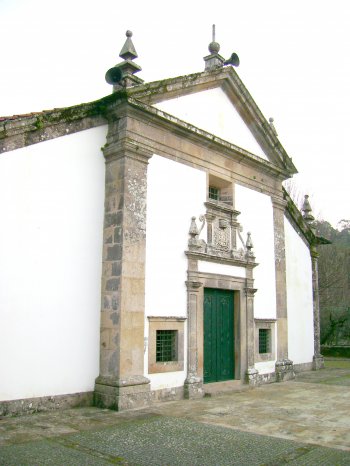
Igreja de Nossa Senhora da Boa Morte
- heritage
Monte de Nossa Senhora da Boa Morte
4990-288, Correlhã
Is a temple of three naves with wooden cover to form cross with the ribs painted, separated by arches full on pillars of quadrangular section. The choir-high is about pilasters, with wooden balusters and subcoro painted with representation of hell, celestial Court and others. Enhancement for the altarpiece in talha, from 1719. It should be noted that the classification includes all elements that are part of the set of sanctuary of pilgrimage and the place in which they deploy.
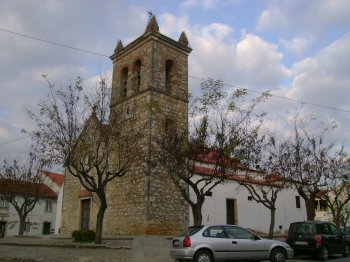
Igreja de Nossa Senhora da Purificação
- heritage
Rua da Igreja
2070-403, Pontével
This is the main church of Pontével, a town located about five kilometers from the municipal seat. It is believed to have been founded in 1302 and has been rebuilt several times, most recently in the 17th century. Some of its most distinctive features are the three bronze bells, with intricately worked edges, in its bell tower, as well as the late 16th-century tiles and the baptismal font.
Necrópole de São Gens e Penedo do Sino
- heritage
Lavandeira
6360-302, Celorico da Beira
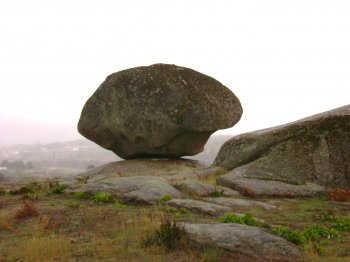
This is an ancient cemetery with four types of tombs: bathtub-shaped, triangular, anthropomorphic, and carved into movable stones. Near these graves is the Penedo do Sino, a pedunculated granite block, shaped by weathering, and well-known for its strange and beautiful balance. This site was occupied between the 1st and 2nd centuries and later between the 12th and 13th centuries, although it is believed that this necropolis dates from the 6th to the 14th centuries.
Núcleo de Arte Rupestre da Faia
- heritage
Cidadelhe
6400-191, Cidadelhe
A core composed of figures engraved in granite, representing two opposing bovids and a sequence of four bovid heads pointing toward the ground, which are associated with schematic paintings from recent prehistory. Certain painted lines add unengraved details, suggesting the hypothesis that some of the elements are Paleolithic. It is a UNESCO World Heritage Site (1998) and a National Monument by IGESPAR, part of the Côa Valley Archaeological Park.
Núcleo de Arte Rupestre de Vale de Moinhos
- heritage
EN222
5150, Vila Nova de Foz Côa
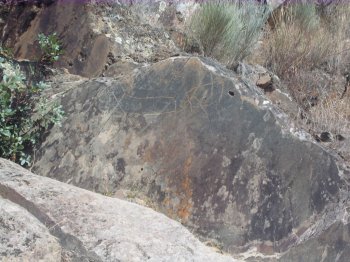
This is one of the rock art sites in the Valley of the Coa, forming a rare set of this type of art, essentially composed of stone engravings dated from the Upper Paleolithic. This core consists of two rocks that have support writing of filiform reasons. On the left bank of ribeira is a vertical panel in shale showing how central motif equidae, while on the right bank can observe various Zoomorphic representations.
Palácio da Mitra
- heritage
Largo Félix da Silva Avelar Brotero
2660-119, Loures
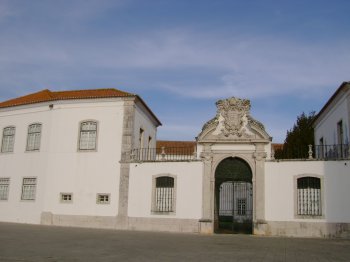
Former residence of archbishops, Palácio da Mitra or Palácio dos Arcebispos is a 16th-century building in the shape of a "u", which features typical Portuguese tiles in the rooms, also characterized by the thematic decoration of the time (representations of rural scenes, seasons or cooking). The church was completely rebuilt in the 16th century. The statues that decorate the interior rooms of the palace are from this period, as well as the monumental fountain, in Baroque style.
Igreja da Ordem Terceira de São Francisco
- heritage
Largo de São Francisco, 50
8000-142, Faro
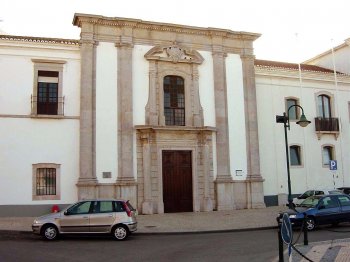
The construction of the primitive church was initiated at th end of the 17th century. Considred insufficient for all the faithful that came by, it was enlarged from the middle of the 18th century until the first decades of the 19th century, at which time the façade was finished. The tiles on the walls of the main chapel and the vault, reconstructed after the earthquake of 1755, are of the 18th century. One should pay close attention to the interior with rococo sculptures.
Muralhas de Setúbal
- heritage
Centro Histórico de Setúbal
2900, Setúbal
Setúbal was once surrounded by two belts of walls. The first, called Muralha Afonsina for being constructed during the reign of King D. Afonso V, traced out the boundaries of Setúbal. This wall was made to protect this fishermen community from the attacks of pirates. The second wall was constructed during the reign of King D. João IV and was made to protect the village that expanded outside the first walls.
