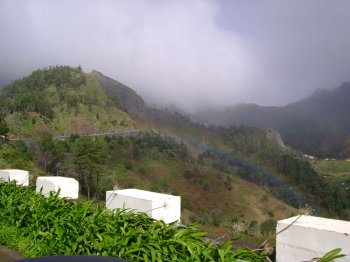
Explore the best places


Castelo dos Mouros
- heritage
Cimo da Serra
2710-405, Sintra
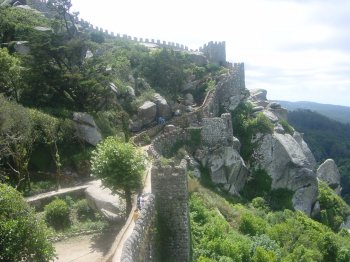
This castle was built in the 12th century and later underwent several modifications, mainly during the reign of King Ferdinand II. Its current appearance possibly dates from this period. Of the original Moorish castle, the cistern, the battlement line, and the square towers that reinforce the wall remain. Inside its enclosure, there is a ruined Romanesque chapel.
Palácio Nacional da Pena
- heritage
Estrada da Pena
2710-609, Sintra
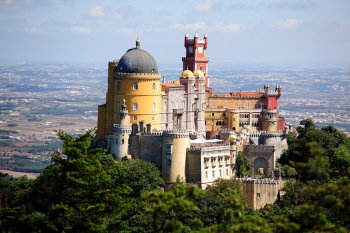
The Pena National Palace was built on the ruins of a Manueline-style convent and served as a summer residence for the monarchs. This work perfectly combines Neo-Gothic and Neo-Manueline elements with Muslim and Indian elements. This combination, along with the lush vegetation of the Pena park, accentuates its exotic and fantastical aspect. Inside, the ambiance of a royal residence is preserved.
Convento dos Capuchos
- heritage
Serra de Sintra
2710, Sintra
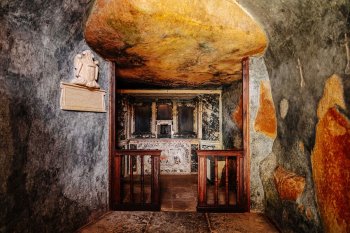
Built amidst cliffs and vegetation, this convent is also known as the Convent of Santa Cruz da Serra or of Cork. A simple, rustic construction, it was founded in 1560 by D. Álvaro de Castro, fulfilling a vow he made to his father, D. João de Castro. Everything in this space is miniature: the cells, lined with cork, the refectory, and the small church with its marble altar, whose vault was carved from the rock itself. It is believed to have been abandoned in 1834, following the suppression of religious orders decreed by the liberal regime.
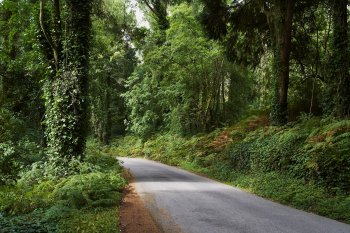
Serra de Sintra
- country
Serra de Sintra
2710, Sintra
Located west of Lisbon, it belongs to the sedimentary fringe of Estremadura. It is 10 kilometers long, 5 kilometers wide and 30 kilometers in perimeter, reaching its maximum altitude (540 meters) at Cruz Alta. Integrated into the Sintra/Cascais Natural Park, it is divided into two landscapes: one is the extensive agricultural area north of Colares that encompasses the São João das Lampas plateau, the other is the coastal strip between the mouth of the Falcão River and the Citadel of Cascais, ending at Cabo da Roca. Presenting magnificent natural beauty, due to the variety of vegetation, paths and lakes, it …
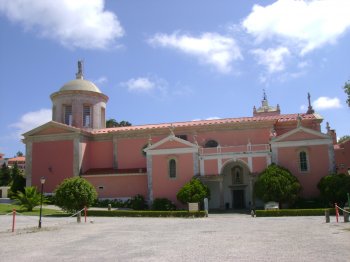
Igreja da Penha Longa
- heritage
Quinta da Penha Longa
2710, Linhó
A 16th-century single-nave church with a Mannerist side portico and a magnificent dome topped by a statue representing Saint Michael the Archangel. In the chancel, with a Greek cross plan, stands a Baroque altarpiece, gilded and painted, with double columns and twisted archivolts. Also, noteworthy inside are the paintings, tiles, and statuary.
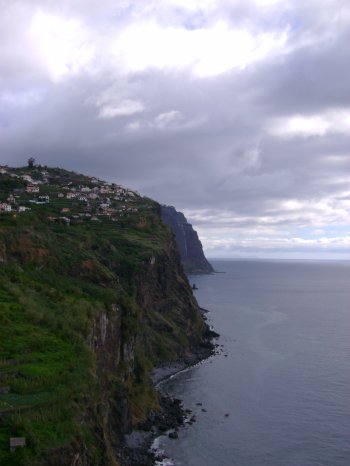
Miradouro do Forte
- country
- leisure
Cruz
9350, Ribeira Brava
A space offering a beautiful view over the ocean and the surrounding area.
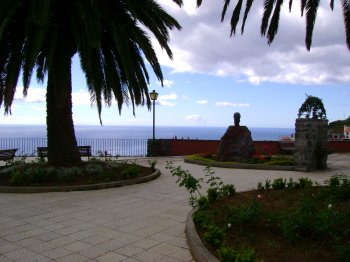
Jardim do Doutor Faria Paulino
- country
- leisure
Rua Padre José Antero
9350, Ribeira Brava
A very pleasant and beautiful space, with flowerbeds, wooden benches, and a statue in homage to Doctor Faria Paulino. Great views of the sea.
Jardim do Poiso
- country
- leisure
ER104
9350, Ribeira Brava
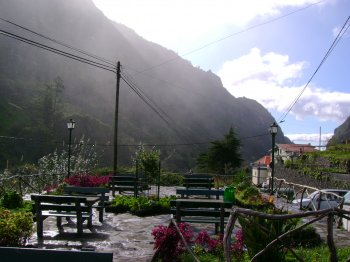
A very pleasant and beautiful space, with flowerbeds, wooden tables and benches, and a small fountain.
Miradouro de Serra D'Água
- country
- leisure
ER228
9350, Ribeira Brava
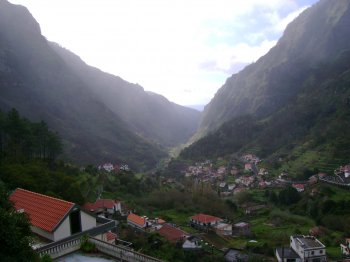
This location offers excellent panoramic views over the valley with its abundant forest vegetation and the high mountains surrounding it.
Miradouro da Terra Grande
- country
- leisure
ER228
9350, Ribeira Brava
This location offers excellent panoramic views over the valley with its abundant forest vegetation and the high mountains surrounding it.