Explore the best places
Results for PROBLEMGO.COM comprar um vídeo falso de álibi de que não estava no local do crime in Portugal


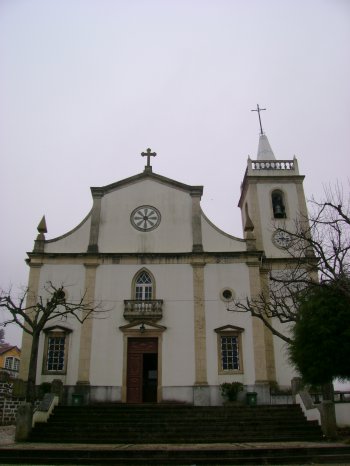
Igreja Paroquial da Pampilhosa da Serra / Igreja de Nossa Senhora do Pranto
- heritage
Lugar da Igreja
3320, Pampilhosa da Serra
Church dating from the second half of the 16th century. Religious architecture, with a regional character. Parish church with a wide nave and a three-leaf façade, following an architectural scheme common in the region in the 18th and 19th centuries. Highlights include the 16th-century collateral altarpiece in polychrome Ançã stone, perhaps originally from a Coimbra workshop that followed João de Ruão, the Neo-Gothic altarpieces with carved carvings, and a late 18th-century sculpture in polychrome wood (Our Lady of the Rosary).
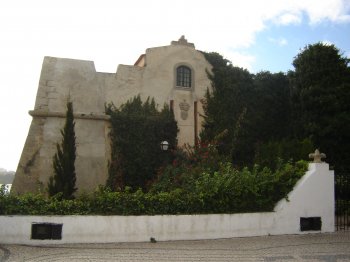
Forte de São Clemente
- heritage
Largo de Brito Pais
7645-234, Vila Nova de Milfontes
From this fortress, built at the end of the 16th century, one can view almost the entire Vila Nova de Milfontes. Originally built with a polygonal plan, with canon areas and two triangular bastions, it was damaged in seevarl ways in 1638. During the reign of D. João IV it underwent changes and its military capacity grew bigger. A model of the military mannerist architecture, it was later turned into a residence and a medieval turret with battlements was added to it. Currently, the trench and the walls are surrounded by vegetation and flowers.
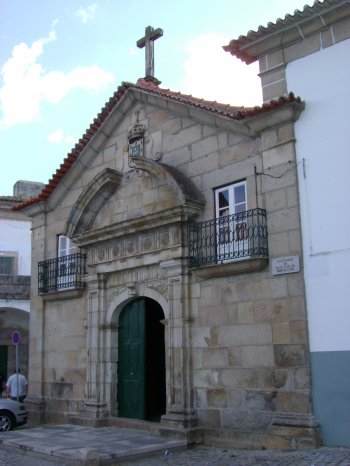
Igreja e Hospital da Misericórdia de Almeida
- heritage
Rua Dr. Chegão
6350-234, Almeida
The Church consists of two volumes and by a nave, chancel and vestry. On the facade can be seen two Windows of lintel rectum and, Center, on the pediment are the Crown and the Royal arms. Inside, one of the highlights is the chancel, late-Baroque style. The hospital consists of two floors, and in the second, you can admire a tile Panel commemorating the founding of the Santa Casa da Misericórdia de Almeida. The interior still preserves the mortuary and a former Fund-raiser, who had direct access to the Church.
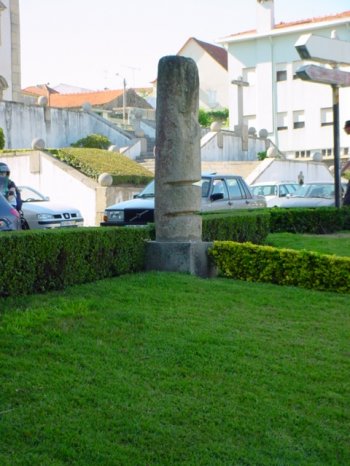
Marco Miliário da Rua Doutor Bento Carqueija
- heritage
Rua Doutor Bento Carqueija
3720-214, Oliveira de Azeméis
The milestone, one of the testimonies of the Antiquities of Oliveira de Azeméis, was found during the demolition of the Church of Ul, in the late 18th century. Removed from their place of origin had several locations, finding itself today exposed at the square near the Church. This milestone marks the 12TH Mile until Langobriga (Civitas in Fiães, Santa Maria da Feira) and probably the Mile route between 16TH LX Braga and Lisbon, and was erected during the rule of Emperor Tiberius, between 23 and 24 of our age.
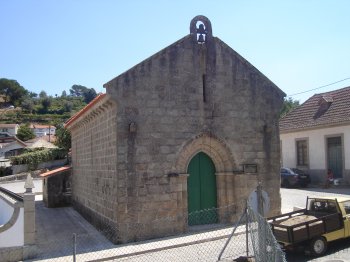
Igreja de Nossa Senhora da Natividade de Escamarão
- heritage
Largo Artur Soares de Almeida
4690-632, Souselo
This Romanesque-Gothic temple features carved stonework on the portals, triumphal arch, and the transept's light recess. The side altars of the triumphal arch feature 15th- and 16th-century Mudejar tiles and remains of frescoes. It is a volumetric and stylistic example that may help reconstruct the structure of the Church of São Cristóvão de Nogueira, with which it shares similar decoration at the level of the axial portal. Noteworthy is the large window on the east-facing elevation, with a broken, semi-detached arch and similar decoration to the portico.
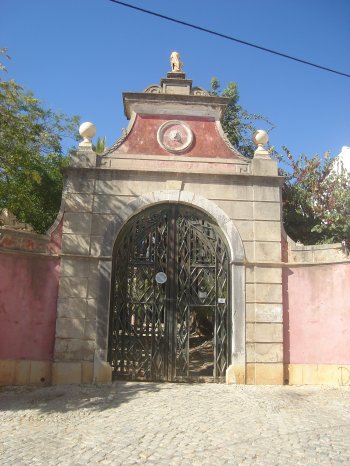
Palácio de Estoi
- heritage
Rua da Barroca, 22
8000, Estoi
The romantic taste of the first owner is reflected in the beautiful landscaping that you chose for the construction of this Palace, highlighting the beautiful gardens that surround the space. Presents part of the tiled facades with diverse decoration and floral scenes. Inside, the highlight goes to the decoration, the furniture, the Chapel, the Hall, the visiting rooms and dinner, both tea pavilions and the home of the crib. The gardens in several plans, drawn like late-romantic, feature staircases, lakes and marble statuary and ceramics. Currently, works here a Pousada de Portugal.
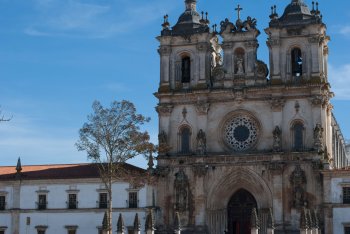
Mosteiro de Alcobaça
- heritage
Praça 25 de Abril
2460-018, Alcobaça
Built by Cistercian monks between 1178 and 1254, the Monastery consists of three sections: the Church and the North and South Wings, which respectively housed the apartments of the kings and visiting court, and the residences of the Abbot and the monks. The original façade retains the battlements on the side roof, the Gothic portal, and the large side windows. The Church is the largest in Portugal and contains the tombs of King Pedro I and Inês de Castro. Also, noteworthy are the Ambulatory and the Chapel of St. Bernard, the Chapel of Relics, and the Chapel of the Lord …
Ponte Velha de Cabril
- heritage
Cabril
5470-013, Montalegre
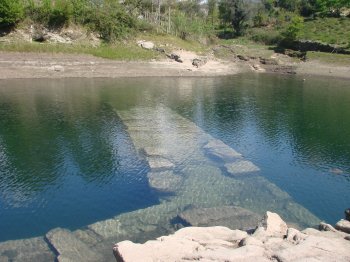
Roman bridge of solid masonry construction of granite, dating from the Medieval period. Features a round arch erected with a care unit isódomo, which wins a gap about two feet wide. The Board rises in easel and the bow is heavily consolidated on the banks through two divergent pegões. The pavement consists of regular slabs and has no guards. It lies on the river Cabril, being most of the year submerged, with only noted when the water levels of the albufeira de Salamonde descend.
Via Romana XVII do Itinerário de Antonino
- heritage
Penedones
5470-069, Montalegre
This Roman road emerges from albufeira about one kilometre south-west of the chapel of Saint Alexius, in Penedones, next to the graves. This location until Tariq, the former EN 103 adopted the route of Via romana, passing West of castro de São Vicente, the village of Chã, Peirezes, Peirezes and Gralhós bridge. It was built in the time of the first Roman Emperor Augustus, as evidenced by the anepígrafo milestone. Is an integral part of the route of the Via romana XVII, between Braga and Astorga.
Via Romana de Peireses
- heritage
Peireses
5470-068, Montalegre
This Roman road emerges from albufeira about one kilometre south-west of the chapel of Saint Alexius, in Penedones, next to the graves. This location until Tariq, the former EN 103 adopted the route of Via romana, passing West of castro de São Vicente, the village of Chã, Peirezes, Peirezes and Gralhós bridge. It was built in the time of the first Roman Emperor Augustus, as evidenced by the anepígrafo milestone. Is an integral part of the route of the Via romana XVII, between Braga and Astorga.