Explore the best places
Results for Santa Maria do Bouro in Portugal


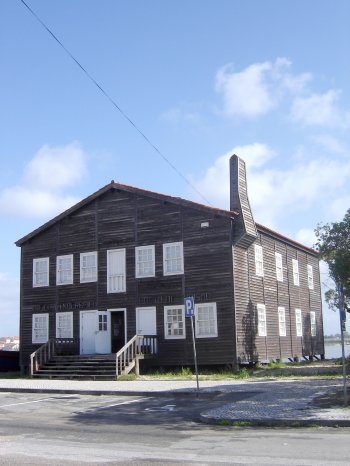
Museu Palheiros de Mira
- heritage
Avenida da Barrinha, 55
3070-792, Mira
This museum, housed in a traditional haystack, presents a review of fishing activities in the central region, particularly in the Gândara area. It features exhibitions by renowned national painters and documentation on the Mira pillories, the watermill route, the Casa do Visconde (Viscount's House), the Mira Parish Church, the Praia de Mira chapel, the dunes, lagoons, pine forests, tree species, and local animals.
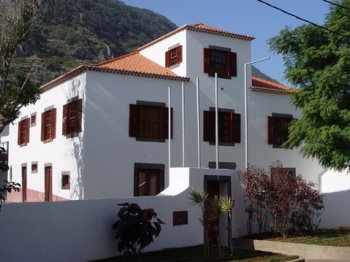
Núcleo Museológico de Machico
- heritage
Rua do Ribeirinho, 15
9200-102, Machico
The Machico Museum Center is a cultural institution created by the Machico City Council, after the restoration of the Solar do Ribeirinho property (built in the 17th century). In this museum you can find, in an interactive way, stories and characters that made up the current City of Machico throughout its almost 600 years of history, distributed across the four thematic areas on display.
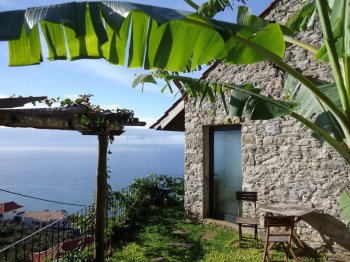
Calhau Grande - Madeira Rural Cottages
- hotels
Caminho do Massapez, 10
9370-077, Calheta
The Casa do Calhau Grande integrates six independent houses (Tent, Haystack, junior, Shoemaker, Taken and pebbles), with privacy, with rustic and cosy environment. All is possible to obtain a 180° panoramic view over the Atlantic. It has private parking, a good area of gardens, swimming pool, an agricultural area, with fruit trees, vegetable cultivation and biological quality herbs.
Casa Raiz
- hotels
Rua da Moagem, 811
2240-104, Areias
Located in the parish of Chãos, a typical village of Ferreira do Zêzere, home root is built in stone in the region, which gives it a charm of its own. It offers a warm traditional fireplace and ample spaces inside, including a large living room with mezaninne. Inserted in a natural environment, is the ideal space for retreats, weekends for recreation and tourism, events and training workshops.
Estação Arqueológica da Quinta dos Patudos
- heritage
Rua José Relvas
2090, Alpiarça
Castro surrounded by a wall, probably with an acropolis surrounded by another internal wall. Nearby are the necropolises of Tanchoal and Meijão, which must belong to the Iron Age, with ashes and artifacts. This set includes the village of Alto do Castelo, which presents a sequence of occupations from the Chalcolithic to the Roman period, and the village of Cabeço da Bruxinha, which does not have a defined chronology.
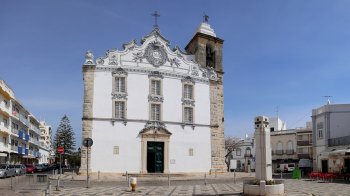
Igreja Matriz de Nossa Senhora do Rosário e Capela de Nosso Senhor dos Aflitos
- heritage
Praça da Restauração
8700-350, Olhão
17th century church that took 17 years to be built. In the façade are worthy of notice the six big windows placed as if in civil building, ornamented with baroque motifs. Inside stands out the triumphal arch decoration and the crucified Christ sculpture at the secondary altar. At the back of the church was built the Capela dos Aflitos, standing out the glazed tile panel with the crucified Christ.
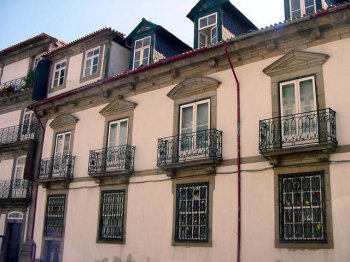
Edifício do Antigo Clube Inglês do Porto
- heritage
Rua das Virtudes, 11
4050-630, Porto
The building of the old Clube dos Ingleses (English Club) has two floors. The upstairs floor has balcony windows with iron bars ended by triangular and curved forms’ frontons. The main front opens to the ancient garden with three curved doors. Inside the building the hall with six arches, based on pillars, the stucco decoration and the paintings on the ceiling stand out.
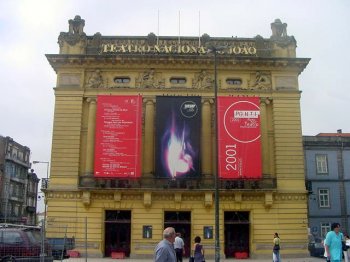
Edifício do Teatro Nacional de São João
- heritage
Praça da Batalha
4000-102, Porto
The São João Theatre was open in 1798, at the present Praça da Batalha. This theatre, which became the binding meeting point to the romantic generation, was destroyed by a fire in April, 1908. Nowadays, the Companhia Nacional do Teatro São João, totally rebuilt by Marques da Silva, is one of the main buildings in the city and stage for the most important cultural shows of the city.
Fojo do Lobo do Avelar
- heritage
Montalegre
5470, Montalegre
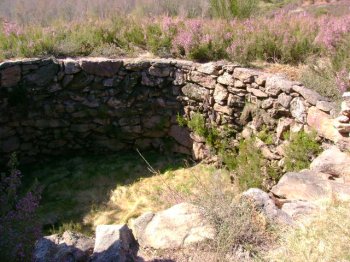
The Fojo do Lobo of Avelar is one of the great points of interest in Montalegre, making part of the trail of the Ourigo. This is a hunting trap for wolves, consisting of two stone walls that converge into a hole empedrado about 2 feet tall, in which animals would fall after beset by popular. Covered in vegetation, also recalls the times when the Wolf was feared in Sierra.
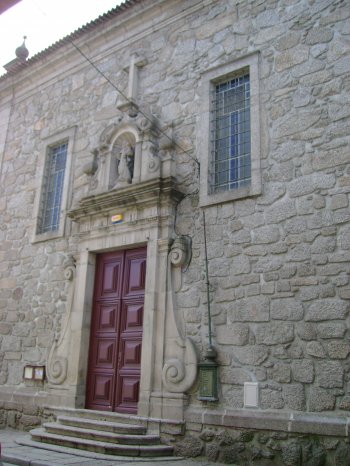
Igreja e Convento das Domínicas
- heritage
Rua Doutor Bento Cardoso, 45
4810-433, Guimarães
Work founded in early 17th century by Fr. Sebastian, Prior of the convent of São Domingos de Viana do Castelo. In the 18th century, the Prioress Mother Catherine das Chagas sent to the current works of stones. Include the set of altarpieces and pelmets in Baroque gilded rocaille organ and an image of Christ, about the font, dating from the 16TH century.