Explore the best places
Results for Santa Maria do Bouro in Portugal


Núcleo Urbano de Vila Viçosa
- heritage
Vila Viçosa
7160-253, Vila Viçosa
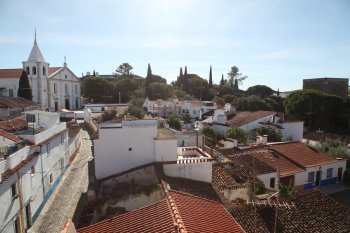
After the reconquest, at the end of the 13th century, there was a military reorganization, of which this set of medieval nuclei with the respective walls is part. This village knew two urban extensions, the second being, in the 16th century, the one that brought an increase in construction. It was at this time that, for example, the Ducal Palace was built. Fortunately, this expansion was taken care of, having Terreiro do Paço as a starting point.
Palácio de Gama Lobos
- heritage
Rua Nossa Senhora de Fátima, 205
8100, Loulé
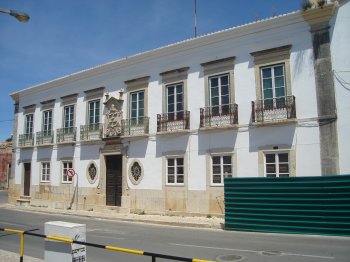
The Gama Lobos palace is a noble house, with a coat of arms, dating back to the second half of the 18th century, and is the most expressive example of that period in Loulé. It is also known as the Palácio dos Espanhóis (Spaniards Palace), because ot shelterd the Spanish refugees during the Civil War. Currently, the House of Music of the municipality of Loulé and the Music Conservatory of Loulé are installed here.
Postigo do Carvão
- heritage
Rua da Fonte Taurina, 24
4050, Porto
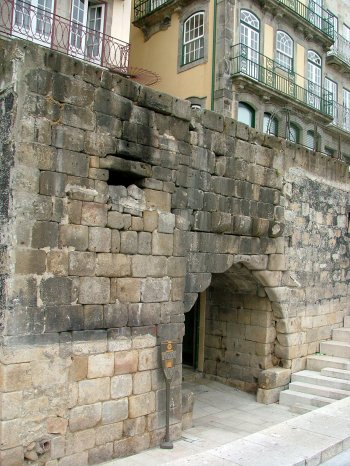
This was, with its iron railings, one of the medieval entrances in the city. Located between the Rua da Fonte Taurina and the Cais da Ribeira, under the Muro dos Bacalhoeiros, this is the only wicket belonging to the XIV century medieval wall that still stands nowadays. It is in a quite hidden place, between the Rua da Fonte Taurina and the Cais da Estiva or Alfândega Velha.
Quinta do General / Quinta do Mosteiro
- heritage
Avenida Dom Dinís de Melo Castro
7150-105, Borba
Cradle of Melo e Castro family, this farm remains, even today, owned by the same family for over four hundred years. It was known as Quinta do Mosteiro, because it was assumed that, in its interior, there would be a ruin that was thought to be an abandoned monastery. Your inner estate is vast and includes statues, tiles, fountains and ruins that served as a place of leisure of the owners.
Paço de Lanheses
- heritage
Largo Capitão Gaspar de Castro
4900-185, Viana do Castelo
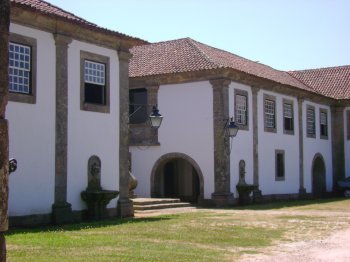
Late-Baroque Manor House, dating from the time pombalina, composed of two dissimilar bodies, of two floors, with chapel located near the larger body. Casa do Paço was founded in the 15th or 16th century, while the chapel was probably built in the first half of the 18th century. In 1997, this Palace opened to the public as the unit of Turismo de Habitação.
Trilhos do Sol - Ecocamping
- hotels
Rua Dr. Ruy de Andrade
2090-310, Alpiarça
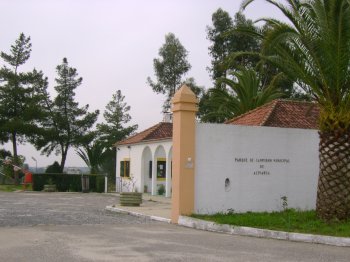
Located in the vicinity of the dam of the Patugos, the parque de campismo de Alpiarça offers numerous services and facilities such as bar\/restaurant, swimming pools, in order to provide a pleasant stay. Offers you also the possibility to do hiking or cycling on the banks of the Tagus River. Also the Museum of bigeye tunas and the nature reserve of the Sorraia horse, as points of interest to visit.
Santuário da Nossa Senhora do Pilar
- heritage
Monte do Pilar
4830-343, Póvoa de Lanhoso
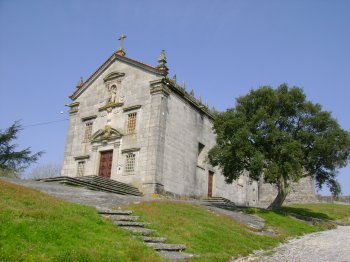
This chapel is placed next to a fort in Lanhoso and it is composed by five chapels of the Way of the Cross representing some of the stcenes of the Golgotha drama. The image of the Saint has its origins on the Sanctuary in Monte do Pilar in Vila Nova de Gaia and it arrived at Póvoa de Lanhoso in 1680 through the devotee André da Silva Machado a wealthy merchant from Valdemil.
Santuário de Nossa Senhora do Fetal
- heritage
Rua Nossa Senhora do Fetal
2440, Reguengo do Fetal
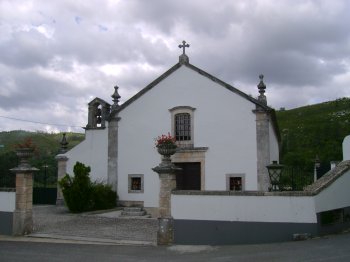
The Sanctuary of Nossa Senhora do Fetal is composed by a small church and a cemetery, both built on the 16th century. Here is where the Holly Spirit festivity takes place, based on the story of a child that shepherded the cattle and begged for bread to survive. Hence, in this festivity everybody receives bread, sponsored by the “emperor”, someone that made a promise and as a consequence has to bear all the expenses.
Cabo Espichel
- country
Cabo Espichel
2970, Cabo Espichel
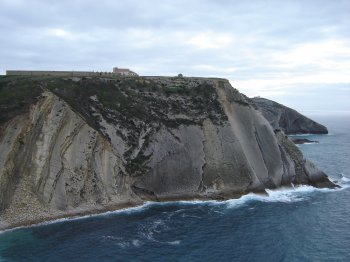
One of Portugal's most famous capes. From its cliffs, one can see the Setúbal peninsula (to the south) and the vastness of the Atlantic Ocean (to the west). The human mark on this inhospitable site is given by the presence of the Ermida da Memória (Chapel of Memory), the Church of Nossa Senhora do Cabo (18th century), and the lighthouse. A magnificent landscape that invites ti photography.
Praia do Burgau
- beach
Burgau
8650, Burgau
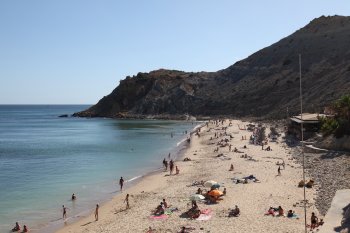
Burgau is the end of the municipality of Vila do Bispo. This beach is home to a small fishing port that, along with the surrounding scenery, paints a picturesque spot, despite the already growing hotel infrastructure. The sand is long but narrow, composed of a pebble area used by children to build in the sand. The cliffs bordering the sand open up this beach. The sea is very calm, ideal for swimming.