Explore the best places
Results for Vila Praia de Âncora in Portugal


Fábrica de Chá de Porto Formoso
- leisure
ER1-1
9625-421, Porto Formoso
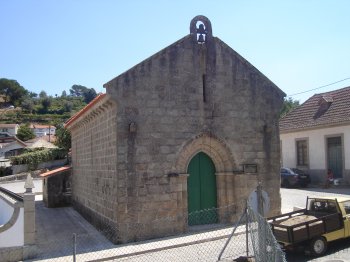
For a long time, São Miguel Island was the only place in Europe where tea was manufactured. Fábrica de Chá Porto Formoso was founded by Amâncio Machado Faria e Maia and operated between the 1920s and the 1980s. Recently, it has been undergoing a recovery process. Visitors can enjoy the estate's vast panoramic gardens, visit the museum space and the tea factory itself. Afterwards, they can relax and taste one of the factory's specialties in the tea room. It has a private park.
Moxama
- leisure
Vila Real de Santo António
8900, Vila Real de Santo António
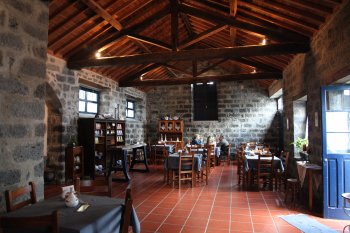
O atum é um peixe rico em proteínas, nomeadamente em Ómega 3, essencial ao bom funcionamento do coração e do cérebro. É um prato tão vulgar no Algarve que em terras do Sota-vento, onde é particularmente apreciado, chamam-lhe o "porco-do-mar", por não haver praticamente nenhuma parte do atum que não sirva de alimento.
Museu do Vinho do Porto
- heritage
Rua da Reboleira, 33-37
4050-492, Porto
Located at the Cais Novo Warehouses, where the wines of the Companhia Geral de Agricultura das Vinhas do Alto Douro used to be stored, this is a building that was constructed by the family Pinto da Cunha Saavedra in the 1700s. This space shows the privileged location of Oporto, as a commercial outpost, and relates mostly to the Port wine, the transportations, mainly along the Douro river, and the ways of life that were generated from those activities, namely with th coming of several foreign colonies. It has several programs for specific audiences.

A Casa do Ouvidor
- hotels
Estrada Regional, 22
9940-312, São Roque do Pico
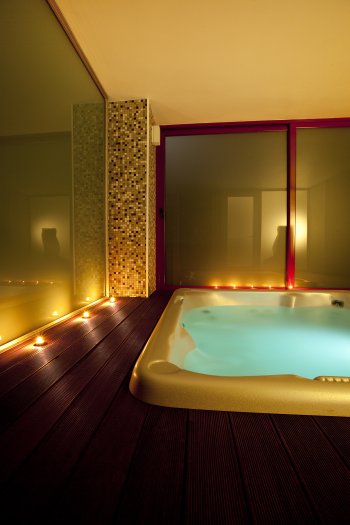
The Casa do Ouvidor is the result of the reconstruction of an 18th century house adapted for Rural tourism in Casa de Campo. Composed of three independent units of accommodation type T2, is equipped with everything needed for an enjoyable stay, providing moments of full rest. Have garden, pool and jacuzzi integrated in a landscape of exception. Wherever you are in Pico Island, all you have to do is take the Regional Road St. Roch-Mercy and 21.8 km arrives at the House of Ouvidor.
Igreja Matriz de Vilar Formoso
- heritage
Largo da Igreja
6355-264, Vilar Formoso
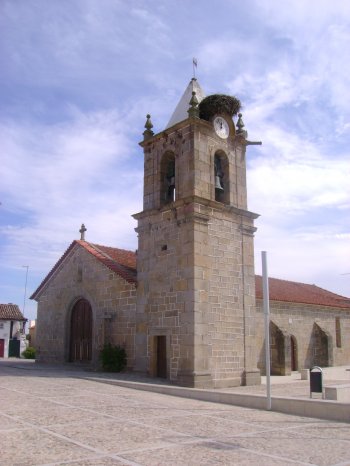
It is assumed that this church was built in the 13th century or 14TH CENTURY, by the Templars. Inserted in the center of the first urban core of this parish, the Igreja Matriz de Vilar Formoso retains elements of its original building. It consists of nave, chancel, vestry and Chapel located near. The chancel has Mudejar ceiling of "alfarge" style, painted; the main altarpiece is in gilt and Mannerist structure, although, in the attic, to be visible to transition to the national style, dressing room and painted side panels. The font is the primitive.
Igreja Paroquial da Pampilhosa da Serra / Igreja de Nossa Senhora do Pranto
- heritage
Lugar da Igreja
3320, Pampilhosa da Serra
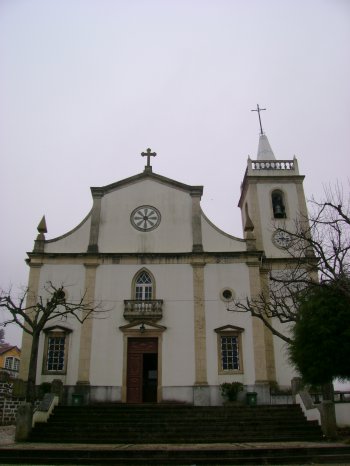
Church dating from the second half of the 16th century. Religious architecture, with a regional character. Parish church with a wide nave and a three-leaf façade, following an architectural scheme common in the region in the 18th and 19th centuries. Highlights include the 16th-century collateral altarpiece in polychrome Ançã stone, perhaps originally from a Coimbra workshop that followed João de Ruão, the Neo-Gothic altarpieces with carved carvings, and a late 18th-century sculpture in polychrome wood (Our Lady of the Rosary).
Fortim do Faial
- heritage
Tojal
9230-067, Faial
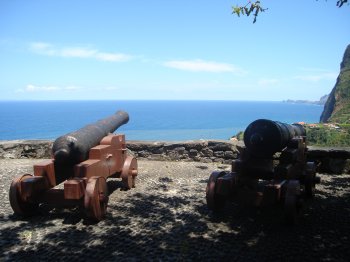
Built at the beginning of the 20th century, the Faial Fortress recreates a military battery, semicircular in plan, with ten English cannons that were fired during celebrations dedicated to Our Lady of the Nativity. It has a support house where the São Roque do Faial Parish Council exhibition room is located. From this point it is possible to observe a large stretch of the coast and, on clear days, Porto Santo, Serra da Penha d'Águia and the northern part of Ponta de São Lourenço.
Igreja e Hospital da Misericórdia de Almeida
- heritage
Rua Dr. Chegão
6350-234, Almeida
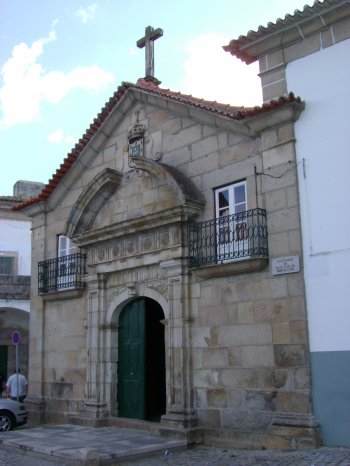
The Church consists of two volumes and by a nave, chancel and vestry. On the facade can be seen two Windows of lintel rectum and, Center, on the pediment are the Crown and the Royal arms. Inside, one of the highlights is the chancel, late-Baroque style. The hospital consists of two floors, and in the second, you can admire a tile Panel commemorating the founding of the Santa Casa da Misericórdia de Almeida. The interior still preserves the mortuary and a former Fund-raiser, who had direct access to the Church.
Marco Miliário da Rua Doutor Bento Carqueija
- heritage
Rua Doutor Bento Carqueija
3720-214, Oliveira de Azeméis
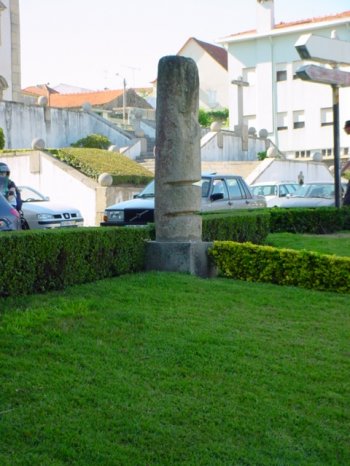
The milestone, one of the testimonies of the Antiquities of Oliveira de Azeméis, was found during the demolition of the Church of Ul, in the late 18th century. Removed from their place of origin had several locations, finding itself today exposed at the square near the Church. This milestone marks the 12TH Mile until Langobriga (Civitas in Fiães, Santa Maria da Feira) and probably the Mile route between 16TH LX Braga and Lisbon, and was erected during the rule of Emperor Tiberius, between 23 and 24 of our age.
Igreja de Nossa Senhora da Natividade de Escamarão
- heritage
Largo Artur Soares de Almeida
4690-632, Souselo
This Romanesque-Gothic temple features carved stonework on the portals, triumphal arch, and the transept's light recess. The side altars of the triumphal arch feature 15th- and 16th-century Mudejar tiles and remains of frescoes. It is a volumetric and stylistic example that may help reconstruct the structure of the Church of São Cristóvão de Nogueira, with which it shares similar decoration at the level of the axial portal. Noteworthy is the large window on the east-facing elevation, with a broken, semi-detached arch and similar decoration to the portico.