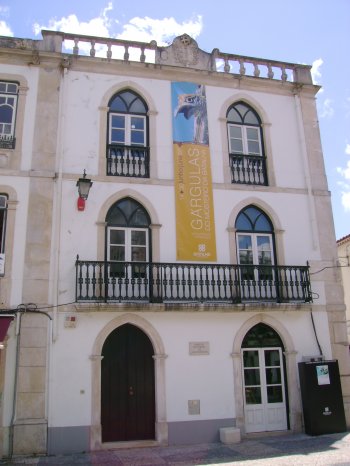
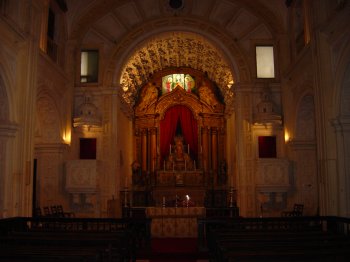
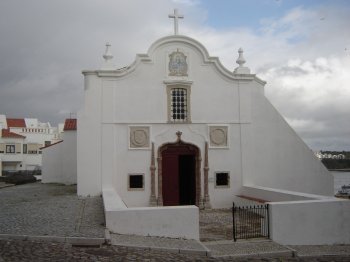
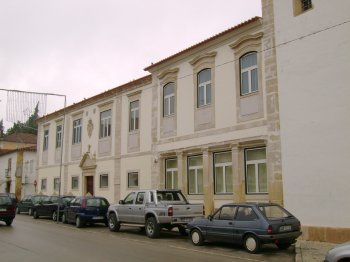
Located at the former Colégio da Sapiência, this museum opened its doors in 2000. Here you may enjoy a place equipped with show-window destined to shelter temporary exhibitions and a room where works of art belonging to the house collection are kept. You may also visit the chapel and a turret which offers a beautiful panoramic view over the city.
The Mirachoro I offers well-equipped apartments and spacious, with wooden furnishings and a comfortable seating area. The complex offers an outdoor swimming pool, a garden and a courtesy bus to Praia da Oura.
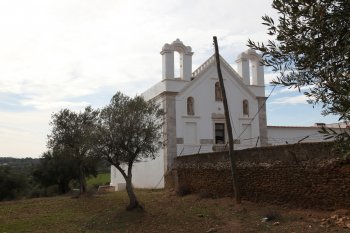
A Franciscan convent founded in 1547 by Dom Teodósio I, Duke of Braganza. It underwent extensive renovation in 1726 and, in 1834, was converted into a warehouse for agricultural implements. Currently, it stands vacant and on private land.
The Corcéis, by João Fragoso, are at the Praça D. João I. The statues are in bronze and settled on polished granite plaques. They are two equal elements, where a young boy tries to tame a wild horse.
This historic building was rebuilt in 1585 by King Felipe I and converted to cultural use in 1990. The museum includes pieces from the Paleolithic to the Baroque. Its main collection is the punic treasure of Gaio.
The Casa de São Cucufate is a villa of the reign of Queen Mary I, fully restored to offer the tourist all the desired comfort. Rural style with living room and fireplace and interior courtyard.
The Igreja da misericórdia was founded by King Dom Manuel I around 1510, along with the Lady of Grace hospital. Highlighting the paintings by Gregório Lopes and Domingos Vieira Serrão in the triumphal arch.
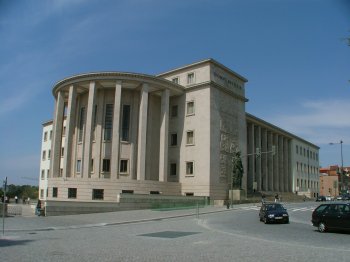
It was built in three years, from 1958 to 1961, at the place where the Mercado do Peixe used to be. It I more impotent seen from a distance, at the back, since the atrium is at the 4th level.
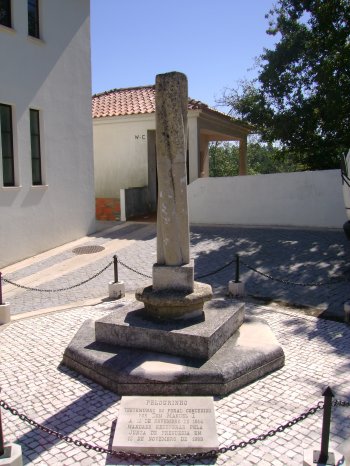
This pillory was transformed into a Calvary and it presents a three steps base above which it is settled a square base column. It witnessed the Foral granted by King D. Manuel I in the 12th November of 1514.