Explore the best places
Results for MAKEMUR.com how much to bail someone out immediately Daugavpils in Portugal


Igreja de Santo Cristo do Outeiro
- heritage
Largo da Igreja
5300-711, Bragança
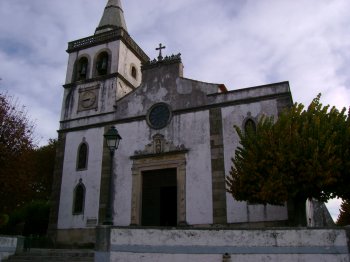
A monumental temple that stands out for its symmetry and proportion balance. The main façade has a magnificent portal, topped by a large rose window, and sided by two bell towers with a pyramidal ending. In the interior, baroque, a special note to the altars in polychrome and golden carvings.

Palácio de São João Novo
- heritage
Largo de São João Novo
4050-554, Porto
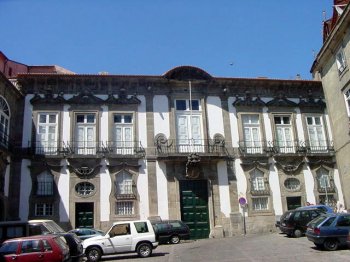
The São João Novo Palace is a baroque style building from the XVIII century. The main front and the staircase which occupies the main area of the building stand out. The main gate is dominated by a large panelled arch, whose frames end with a pair of ornament.
Palácio do Marquês de Pombal / Palácio dos Condes
- heritage
Largo Marquês de Pombal, 21
2780-289, Oeiras
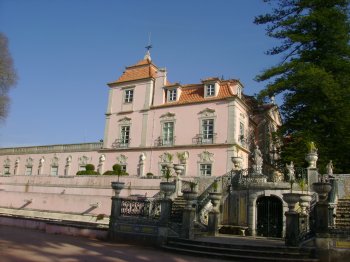
A Pombaline-style palace built in the second half of the 18th century, it served as a leisure estate for the Marquises of Pombal. Highlights include the chapel with 18th-century paintings, the tiles inside and out, two 18th-century statues by Machado de Castro, and the waterfalls in the gardens.
Igreja Paroquial de Figueiró dos Vinhos / Igreja Matriz de São João Baptista
- heritage
Praça da República, 1
3260-409, Figueiró dos Vinhos
On the facade of this temple, the Renaissance portal stands out, topped by a pediment interrupted by a niche with the sculpture of Saint John the Baptist. Highlights include the 15th century triumphal arch, the “Baptism of Christ” altarpiece by José Malhoa and mannerist paintings from the Diogo Teixeira cycle.
Igreja Românica de Santa Maria do Castelo de Vilar Maior
- heritage
Rua do Cemitério
6320-601, Sabugal
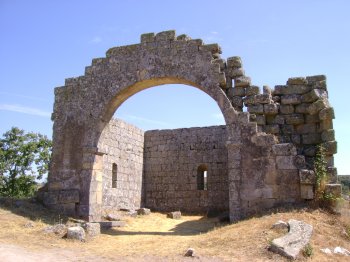
This building has a rectangular plan and it is believed that it was built on the XIII century. It only preserved the area corresponding to the main chapel, in ruins and without cover and the triumphal arch. The cornice stands out, adorned by half spheres and settled in corbels decorated with geometric and zoomorphic motifs.
Igreja da Ordem Terceira de São Francisco
- heritage
Largo dos Terceiros
7350-238, Elvas
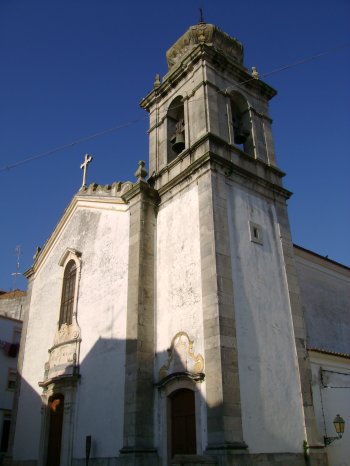
A single-nave church featuring 18th-century tiles depicting the life of Saint Francis of Assisi, the carvings in the chancel, and the imagery stand out. The temple was built between 1701 and 1719. Finishing work continued for several years, with the date 1761 inscribed on the door.
Portal da Igreja do Convento de Jesus
- heritage
Praça Miguel Bombarda e Rua Acácio Barradas
2910-790, Setúbal
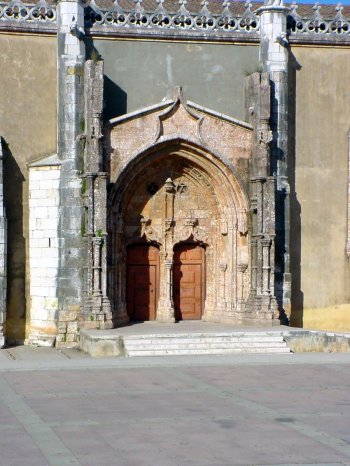
This construction is from 1490 and has Diogo Boitaca signature. This is a highly important work on the Portuguese architectonic history; hence it is one of the first constructions to present Manueline architecture features. To stand out the main chapel and the glazed tiles revetment from various periods.
Rua de Dom João I
- heritage
Rua Dom João I
4835-063, Guimarães
This street is filled with old houses with wooden balustrade balconies. D. João I padrão (a large stone cross with the Kings Coat of Arms) dated from the XVI century stands out, as well as the São Domingos Order dated from the 19th century.

Pelourinho de Mondim da Beira
- heritage
Rua do Pelourinho
3610-052, Tarouca
This platform has three square steps where it is settled a pedestal in cube. Here it is where the square shaft comes out with chamfered corners. The top is developed in frames increasing with flat surfaces composed by threads in which in one of the sides there is the Portuguese Coat of Arms.

Praia do Alvor
- beach
Praia do Alvor
8500, Portimão
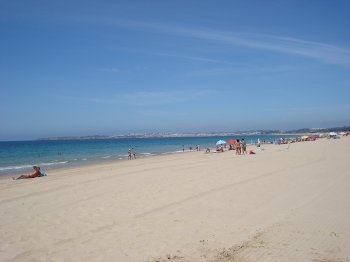
Large beach, very touristy and well-equipped. The location of the beach stands out, since it is located next to one of the most important wetlands in the country, which is home to migratory birds. It has infrastructure for the practice of various modalities. It is part of the "Accessible Beaches" network.