Explore the best places
Results for Forte in Portugal


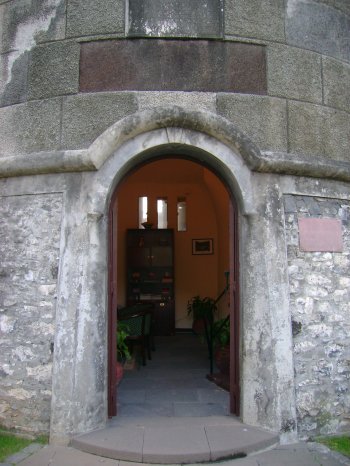
Fortaleza de Buarcos
- heritage
Rua 5 de Outubro, 1
3840-248, Buarcos
Fortress bulwarked from the 17th century that had the objective of protecting the village and the port. Together with the Fortim de Palheiros and the Fort of Santa Catarina in Figueira da Foz, it integrated the defensive system of this stretch of coast, particularly the old seaport of the village.
Muralhas da Praça de Almeida
- heritage
EN340
6350, Almeida
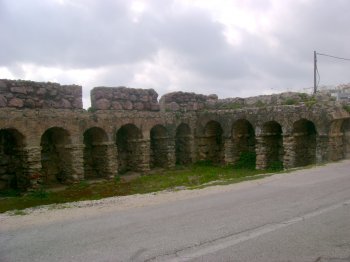
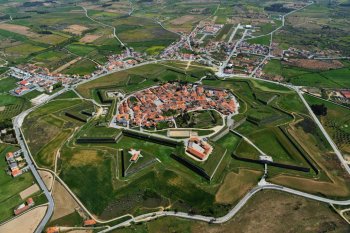
The Praça-Forte de Almeida, built during the 17th century, is the main ex-libris of the walled town. From an aerial view, it is possible to accurately identify a huge 12-pointed star surrounding its well-preserved walls, a National Monument since 1910. In Praça-Forte, several historical battles took place, given its proximity to the Spanish border, and here takes place recreations that usually attract a lot of public. The largest recreates the famous explosion of 1810, during the French invasions. Take a good look at the Double Doors of Santo António and São Francisco.
Igreja de São João Baptista do Castelo, Fortaleza e Muralhas
- heritage
Largo da Boa Nova - Monte Brasil
9700-136, Angra do Heroísmo
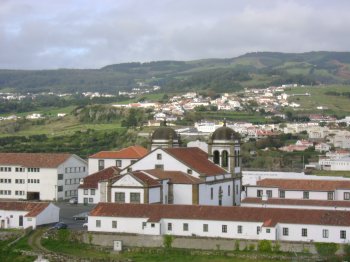
Monument dating from the 17th century and consists of five bastions: Santa Catarina, São Pedro, good news, Espírito Santo and Santa Luzia. In 1959, the Fort suffered conservation works, in 1997 the Church was fully recovered and in 2000\/2001 was rebuilt the wall.
Monumento aos Combatentes do Ultramar
- heritage
Avenida Brasília
1400, Lisboa
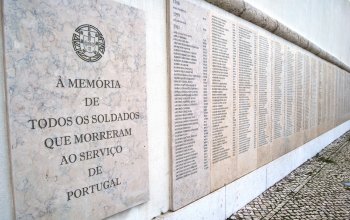
Monument in honour of those who died in combat, in defence of national ideals and on continuity of Portugal as independent country. By Carlos Batista and Warrior Badshah, the tribute is made through the headstones placed in the wall of the Fort, with the official list of fighters who gave their lives for Portugal.
Ruínas da cidade velha de Santa Luzia
- heritage
Monte de Santa Luzia
4900-408, Viana do Castelo
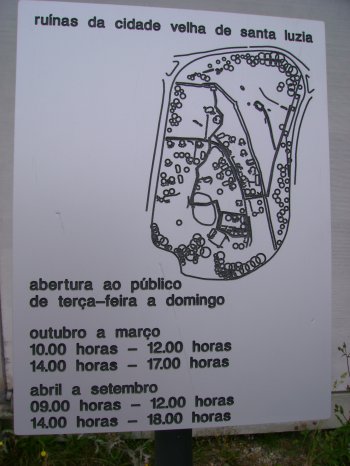
This is one of the most important hill forts in upper Minho. Initially it was occupied in the 8th century a.C, and it was developed afterward during the Roman period being occupied until the 5th century. It presents three wall lines with reinforcement towers and several houses with different plans.
Castelo de Castelo Melhor
- heritage
Rua do Castelo, 15
5150-109, Castelo Melhor
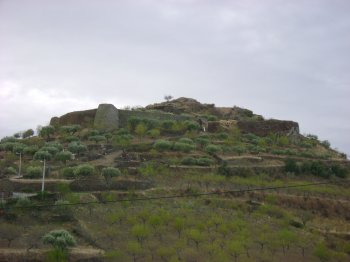
Possibly built upon a Lusitanian hill fort, this castle sits on a hill. It retains some sections of the wall, gates, a small tower, and a cistern with a regular plan. It is possible to observe the perimeter of the wall that surrounded the inner courtyards and the Keep. From a distance, it resembles a king's crown planted on a mound of earth.
Fortaleza de São João Baptista
- heritage
Rua do Castelo, 17
9000-206, Funchal
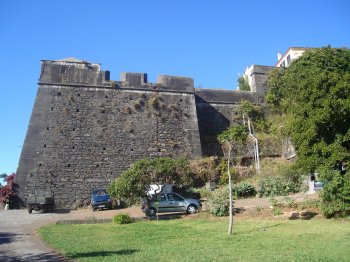
Fortress built in the second half of the 17th century. Initially was the city's gunpowder store (intended for all forts and towers on the island) and used to defend the city from corsair attacks, also functioning as a prison. From the mid-twentieth century, it was handed over to the navy, which installed the Armada Communications Center there.
Santuário de Nossa Senhora da Assunção
- heritage
Avenida Nova
5360-493, Vila Flor
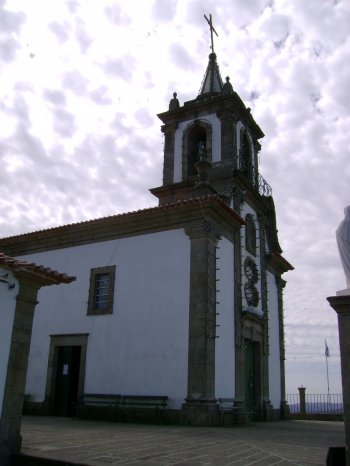
Sanctuary located at approximately 760 meters above sea level, at the head of Vilas Boas, where there was an ancient Celtic fort. It consists of a church dating from the 17th century, outbuildings and a set of six chapels. It is a neoclassical Marian sanctuary, from which you can obtain magnificent views over the region.
Castelo de Marvão
- heritage
Rua do Castelo
7330, Marvão
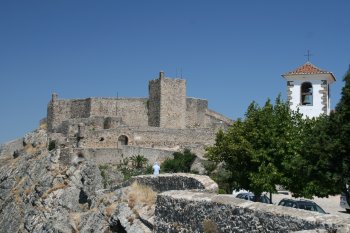
An imposing defensive complex located in a location of great panoramic beauty. Most of the castle's buildings date from 1226 and 1230. It was modified and expanded in the 15th, 16th, and 17th centuries. During the reign of King Dinis, bastions, walls, and forts were built. From the reconstruction, only the keep and some sections of the wall remain.
Fortim de São Bento
- heritage
Rua Gago Coutinho e Sacadura Cabral
9350-213, Ribeira Brava
Commissioned by Governor Duarte Sodré Pereira to defend that anchorage, this small fort was built in the early 20th century to replace an earlier 16th-century fortification dedicated to Saint Sebastian, which had been destroyed by a strong alluvial flood in 1803. It is a circular tower with a revivalist design, retaining the original Baroque inscription and coat of arms.