Explore the best places
Results for castelo in Portugal


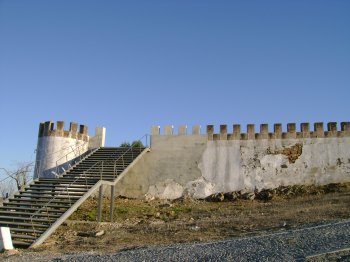
Castelo da Vila de Monforte
- heritage
Monforte
7450-142, Monforte
Castle located on top of a very strong hill, which gave rise to the name of the village. Currently, only a few remains remain, one of the medieval towers and some sections of the wall. Conquered by King Afonso Henriques in 1139, this town was populated by King Afonso III in 1257. In 1512 King Manuel granted it a new charter. Built by King Dinis in 1309, this castle was built on Roman foundations and had a wall surrounding the entire town.
Castelo de Alcácer do Sal
- heritage
Rua do Castelo
7580-197, Alcácer do Sal
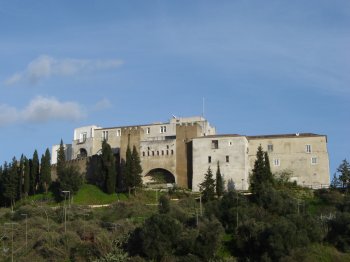
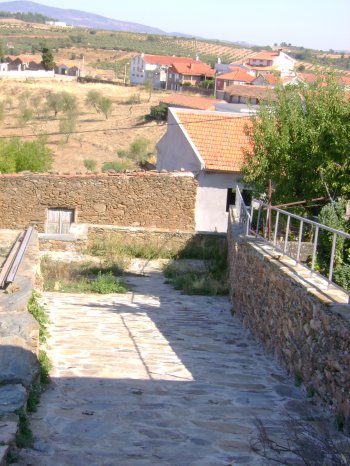
A moorish castle that was built during the 6th century. Conquered by the Portuguese crown in 1217, it ceased being used for military purposes in the 15th century. In the 16th century, the Order of Aracoelli founded a convent there, where they remained until 1834. Currently, one can visit the ruins of the catle, of the Aracoelli convent, of the church of Saint Mary that dates back to the 13th century and vestiges of several houses.
Castelo de Alter Pedroso
- heritage
Alter Pedroso
7440-151, Alter Pedroso
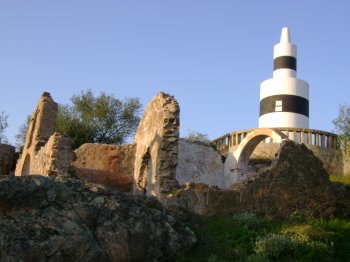
All that remains of the old castle is the pointed door and some sections of ruined wall, located around 400 meters above sea level. Initially built in the 13th century, the castle was heavily damaged in the 17th century.
Castelo de Alter do Chão
- heritage
Largo Barreto Caldeira, 8
7440-022, Alter do Chão
In the heart of the town, in a large square, stands this imposing medieval castle, with a quadrangular plan and protected by cylindrical cubes, crowned with battlements, Gothic portals and a tall square keep. This, around 44 meters high, has a hall with a barrel-vaulted ceiling. At the entrance to the fortress, an armored marble tombstone inscribes the record of the castle's foundation, in 1359, by King Pedro I. At that time it was constituted as a defensive articulation with Estremoz, Fronteira, Évora Monte, Avis, Alter Pedroso, Marvão and Portalegre. King João I, Master of Avis, made Nuno Álvares Pereira …
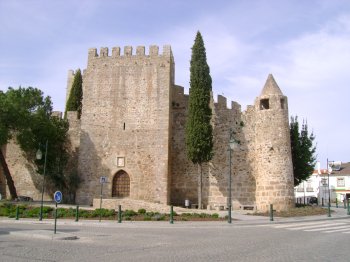
Castelo de Amieira do Tejo
- heritage
Praça Dom Nuno Álvares Pereira
6050-136, Amieira do Tejo
Castle ordered to be built by Álvaro Gonçalves Pereira in 1350, having undergone several modifications in the following centuries. This castle was part of a vast line of fortresses and watchtowers that protected the much attacked banks of the Tagus River. Its architectural design indicates a function aimed at the protection and refuge of populations. Made of dressed granite, it is an important symbol of Portuguese military architecture of the time. Located in a privileged location, on the banks of the Tagus River, it has a good panoramic view. It is shaped like a quadrilateral and is flanked by four …
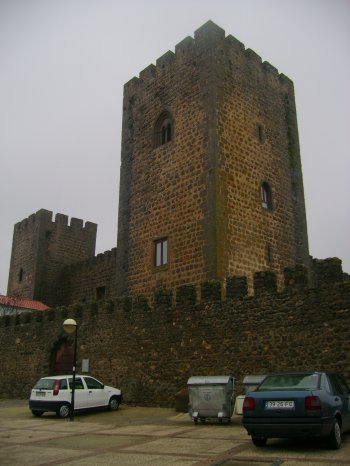
Castelo de Campo Maior
- heritage
Rua dos Quartéis, 8
7370-102, Campo Maior
Castle where some sections of the medieval wall and the north tower are still visible. Of the 17th-century fortified perimeter, the moat and counterscarp are largely preserved, along with bastions, gates and barracks. The castle has two of its six towers, with a rectangular plan. The Manueline molding stands out in the western tower. A large hall, with two naves divided by strong ashlar pillars, has a groin vault. Ordered to be rebuilt by King Dinis in 1310, it is assumed that fortifications existed in this area of Campo Maior since Roman or Visigothic times. During the reign of King …
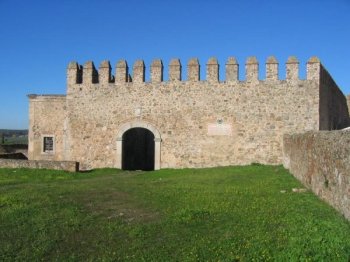
Castelo de Carrazeda de Ansiães
- heritage
EM632, 1
5140-144, Carrazeda de Ansiães
Ruins of the walled town remain from the castle of Carrazeda de Ansiães, including the S. Francisco Door, the Fonte Vedra Door, the S. João and the S. Salvador Door, flanked by two towers, and the Keep. Inside the walls there are remains of buildings, including the Romanesque church of S. Salvador.
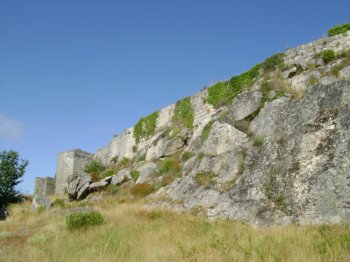
Castelo de Castro Laboreiro
- heritage
EM1160
4960-061, Castro Laboreiro
Ancient medieval fortification located at an altitude of 1033 meters. Currently, almost in ruins, it retains an enclosure delimited by walls and two doors. The Porta do Sapo (Frog Door) stands out. At the site of the primitive rock fortification, there are traces of prehistoric and Iron Age occupations.
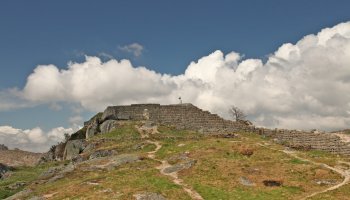
Castelo de Faria (vestígios)
- heritage
Rua Nossa Senhora da Franqueira
4755-406, Pereira
Castle where you can find traces from the Bronze end to the late Roman era. Considered one of the most important and powerful fortresses of medieval times, consists of three lines of walls (probably from the iron age) surrounding the town, and inside the main enclosure by a medieval castle donjon, with traces of walls, remains, perhaps, the town mayor.
