Explore the best places
Results for castelo in Portugal


Castelo de Idanha-a-Nova
- heritage
Rua da Misericórdia, 3
6060-109, Idanha-a-Nova
Old Castle belonging to the order of the Templars, built in the 13th century. This just leaves a section of the castle wall and sidewalk access to the highest point.

Castelo de Linhares da Beira
- heritage
Rua do Castelo
6360-080, Linhares da Beira
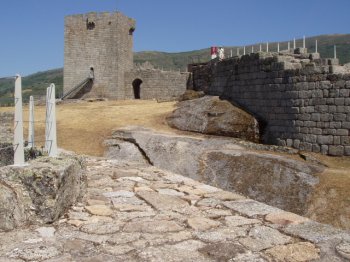
Located on a hill at an altitude of approximately 800 meters, in the foothills of the Serra da Estrela mountain range, this castle is believed to have been a fortified settlement occupied by the Romans and destroyed by the Moors in the 9th century, before being reclaimed by King Dinis. Only the enclosure defined by two towers with several floors remains.
Castelo de Miranda do Douro
- heritage
Largo do Castelo, 2-A
5210-225, Miranda do Douro
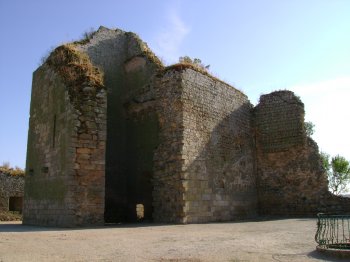
Of the original castle, only a portion of the citadel remains, along with some sections of the walls interrupted by turrets, and the Porta da Traição (Traitor's Gate). Several entrances open into the castle's surrounding walls: the Porta da Senhora do Amparo (Lady of Protection), the Porta Falsa (False Gate), and the Postigo. Still standing, but badly damaged, is the keep.
Castelo de Montemor-o-Novo
- heritage
Montemor-o-Novo
7050, Montemor-o-Novo
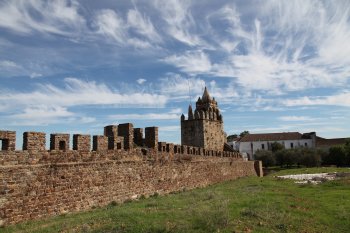
Of the wall, built during the reign of King Dinis, the main section remains, defended by eleven turrets. The fortress, currently in ruins, already existing during the reign of D. Sancho I, has a rectangular plan and is protected by two towers. The Santarém and Sol gates are in good condition; The Angel Gate has some weaknesses and the location of the Évora gate and tower is unknown.
Castelo de Montemor-o-Velho
- heritage
Rua Infante Dom Pedro
3140-262, Montemor-o-Velho
The castle is the largest medieval fortress on the Mondego line and one of the largest in the country. Its current appearance is due to a complete renovation carried out in 1331. At this time, a Palace was built for the princesses, a building that was successively transformed until the Manueline period, the date of the last known renovation. The Keep Tower also dates from this campaign by King Afonso IV, topped by pentagonal battlements, with the upper floor surrounded by boulders and elongated corbels. Inside, the Church of Santa Maria da Alcáçova is preserved, a Gothic temple from the …
Castelo de Monção (vestígios)
- heritage
Avenida Doutor António Felgueiras
4950-437, Monção
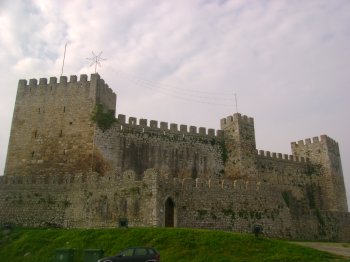
Of the original castle, built by D. Dinis in 1306, only two gates and some sections of the medieval wall remain. Examples of the 17th-century fortification include the Salvaterra Gate, some curtain walls, and bastions. The tower, a contemporary of D. Pedro I and D. Fernando, is another surviving element of the fortress.
Castelo de Pena de Aguiar
- heritage
Castelo
5450-280, Castelo
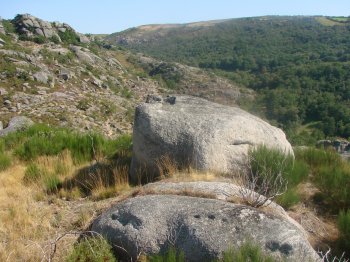
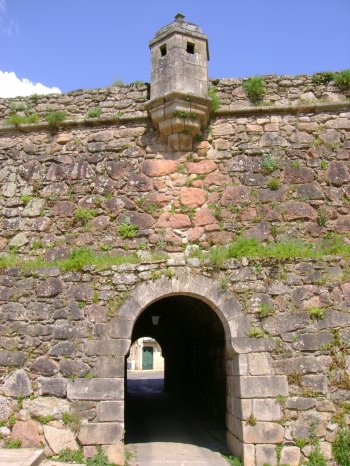
Aguiar Castle is a unique rock castle, whose current structure dates back to the 9th or 10th centuries. Situated on a massive granite boulder, archaeological finds have revealed three major levels of occupation: Prehistoric, Celtic, and Roman. Access to the building is via an entrance with six staircases, beneath an ogival portal. Climbing some rocks leads to the highest point, from which a sweeping panorama over the entire Aguiar Valley is offered. The building includes a vaulted-ceilinged room, as well as the embrasure room, a window with privileged strategic visibility.
Castelo de Penas Róias
- heritage
Penas Roias
5200-311, Mogadouro
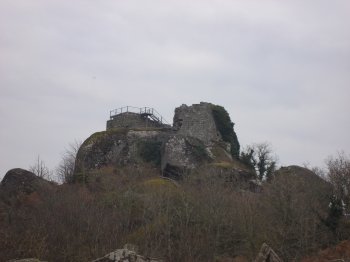
A short distance from the village of Penas Roias are the remains of this castle with a quadrangular structure. All that remains of the castle is the keep, the remains of a circular cube and some sections of the wall. This castle provided the first line of defense in the northeast of Trás-os-Montes, together with the castles of Algoso, Miranda do Douro, Outeiro, Vimioso and Mogadouro, with which it formed a strong defensive group.
Castelo de Penha Garcia
- heritage
Largo da Igreja, 1
6060-370, Idanha-a-Nova
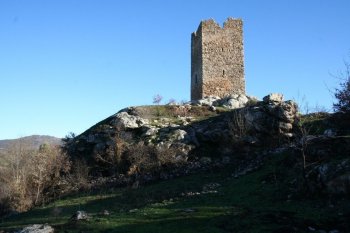
Castle which is believed to have been built between the 12th century and the 13th century, of which only exist some sections of its walls. It was formerly the residence of the Mayor, the set of walls, two tanks and a tower. This former strong square received the first Charter of Dom Afonso II in 1256 and, in 1510, Dom Manuel gave him new Charter. The site of the ancient castle you can admire an important set of ancient houses of schist and the pillory.
Castelo de Pitões das Júnias
- heritage
Pitões das Júnias
5470-370, Pitões das Júnias
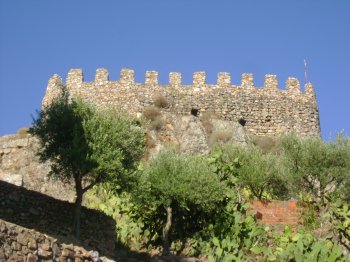
In the northern village of Gerês, on top of a small hill, about 1130 meters above sea level, can be found in granite outcrops several tears, which indicate the foundations of a building almost rectangular plant. The pair of these there are still circular fittings on the side of the same rocks, similar to those used on jambs doors for docking of ashlars superiors. On site and under the outcrop there is a simple shelter, where they found small fragments of medieval pottery. At the top there is a sink, of quadrangular shape with 3.80 meters long, 1.5 meters wide …